
The second after
7 different scenarios gamed out

In 1983, ABC aired “The Day After.” A two-hour movie about nuclear war between the US and the Soviet Union, set in Kansas. Eighty million Americans watched it. The president watched it. Reagan wrote in his diary that it left him “greatly depressed.” Nobody could look away.
I keep thinking about that movie right now.
Because the rumour circulating - in serious circles, not just on X - is that the US or Israel could drop a nuclear weapon on Iran. And unlike most of the people throwing this idea around like a dinner party talking point, I want to actually game it out. All of it. Not just the nuclear scenarios - every scenario that I can think of, from the most contained to the most catastrophic. Because “attacking Iran” isn’t one thing. It’s at least seven different things, with seven completely different sets of consequences, and the vagueness with which serious people discuss it suggests they haven’t thought past the press conference.

Let’s establish where we are first.
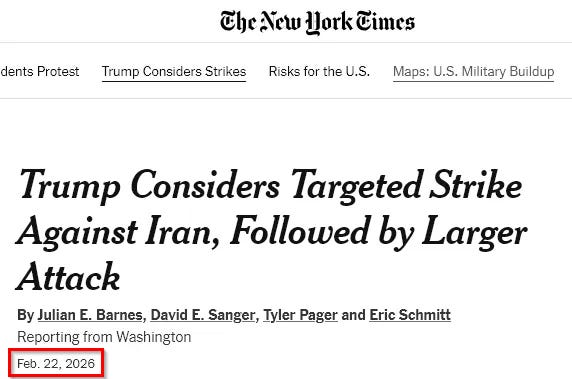
The New York Times reported earlier that Trump has told advisers he is leaning toward an initial limited strike intended to demonstrate resolve, with a much larger decapitation campaign to follow later in the year if Iran doesn’t capitulate. To back this threat, Trump has concentrated 40-50% of deployable US air power in the region. Two stages, with an indefinite escalation ladder above that.
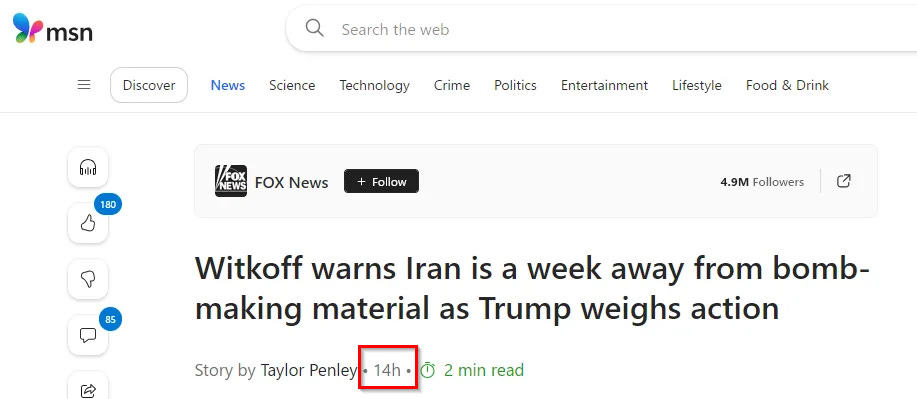
Meanwhile, Steve Witkoff - Trump’s own special envoy - says Iran is “a week away” from a nuclear weapon. One week. Eight months after Trump declared the program “completely and totally obliterated”…
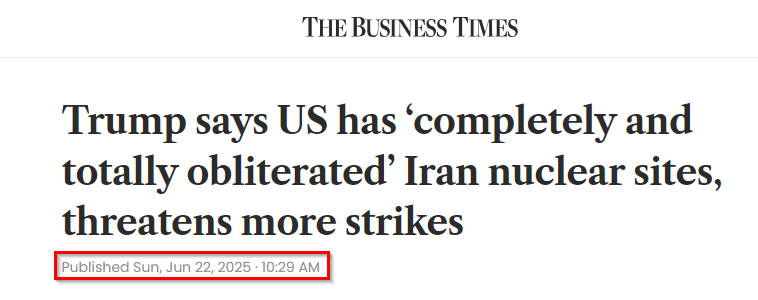
The 440 kilograms of 60% enriched uranium that was supposed to be buried under Fordow moved out before the June 2025 bombs dropped. Satellite imagery caught sixteen cargo trucks leaving the facility days before Operation Midnight Hammer [link]. A single transport cylinder carries the whole stockpile. It fits in a pickup truck. The DIA assessed the June strikes set the program back “a matter of months,” with low confidence. Iran is currently boring “Pickaxe Mountain” - a new tunnel complex south of Natanz, drilled through granite at 80-100 meters, specifically designed to survive the GBU-57 bunker busters that were the whole point of the last operation. They learned. They adapted. They’re already building the generation after next.
This is the backdrop.
Now let’s game the scenarios.
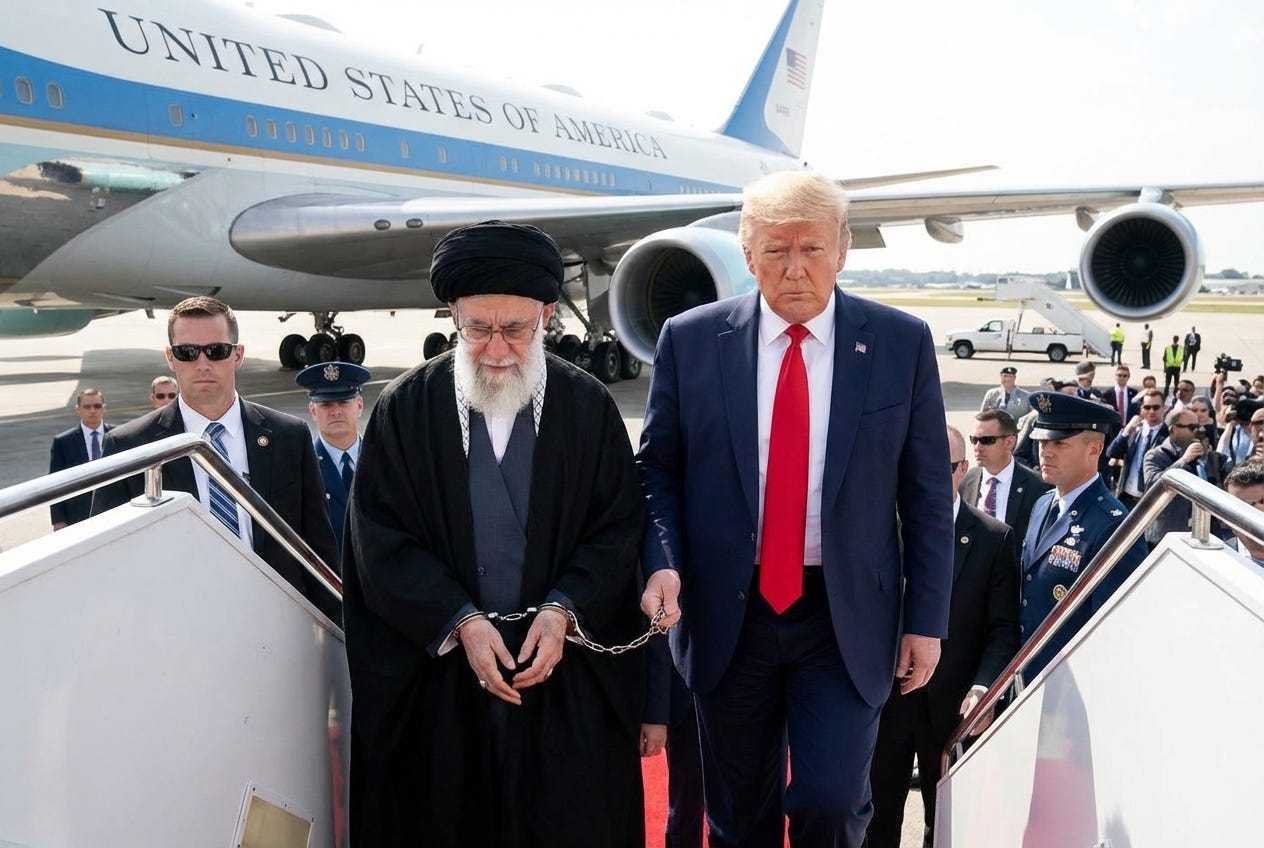
The second after... a limited strike
This is the most likely outcome. Trump hits a handful of visible targets - some radar installations, a missile production facility, something that photographs well. He goes on Truth Social. “IRAN’S MILITARY CAPABILITY HAS BEEN DESTROYED.” He pulls the plug within days.
Sounds familiar? It should. Venezuela ran the same script. A swift, “overwhelming” operation, a sitting president in handcuffs, Trump walking into a room like he’d just invented gravity. The operation allegedly involved something Trump later called a “discombobulator” - I am not making that word up - some undisclosed secret weapon that made the whole thing clean and frictionless. The generals are apparently high on their own supply, convinced that whatever worked on Maduro scales to 90 million Iranians with hypersonic missiles and a forty-year grudge. Iran is not Venezuela. But Trump doesn’t need Iran to be Venezuela. He needs the story to be Venezuela.
The logic is straightforward. He needs a PR win, not a military victory. His Israeli principals need proof of loyalty, not necessarily a finished job. A limited strike lets him check both boxes without committing to the grinding, expensive, politically toxic conflict that a full campaign would become.
Iran’s reaction to this scenario is the critical variable. Tehran has stated unequivocally it will respond hard to any attack. But “hard” is relative and Iran is not without strategic intelligence. A proportional, calibrated retaliation - targeting a US base in the region, firing a salvo of missiles at Israeli military installations - allows Iran to satisfy its domestic audience and maintain deterrence credibility without triggering the full American response that would end the regime. The June 2025 war established a rough grammar of escalation and de-escalation that both sides understand. Iran knows how to hit back without hitting so hard that Trump has no choice but to escalate further.
Internationally, a limited strike and rapid de-escalation produces condemnation from China, Russia, and most of the Global South, some Security Council theater, and then life goes on. The precedent is set. The region lives with it. Markets spike on the opening, correct within days, metals get a brief premium then fade. This is the scenario where everything your instincts tell you about gold and silver in wartime is actually correct - a short, sharp geopolitical premium, then normalisation.
Don’t mistake “most likely” for “comfortable.” Even this scenario has a fuse attached to it. Right now, the USS Abraham Lincoln and the USS Gerald Ford are in the region. Iran has made no secret that it considers US naval assets legitimate targets. A “limited” US strike that Iran answers by targeting the Lincoln doesn’t stay limited for long.
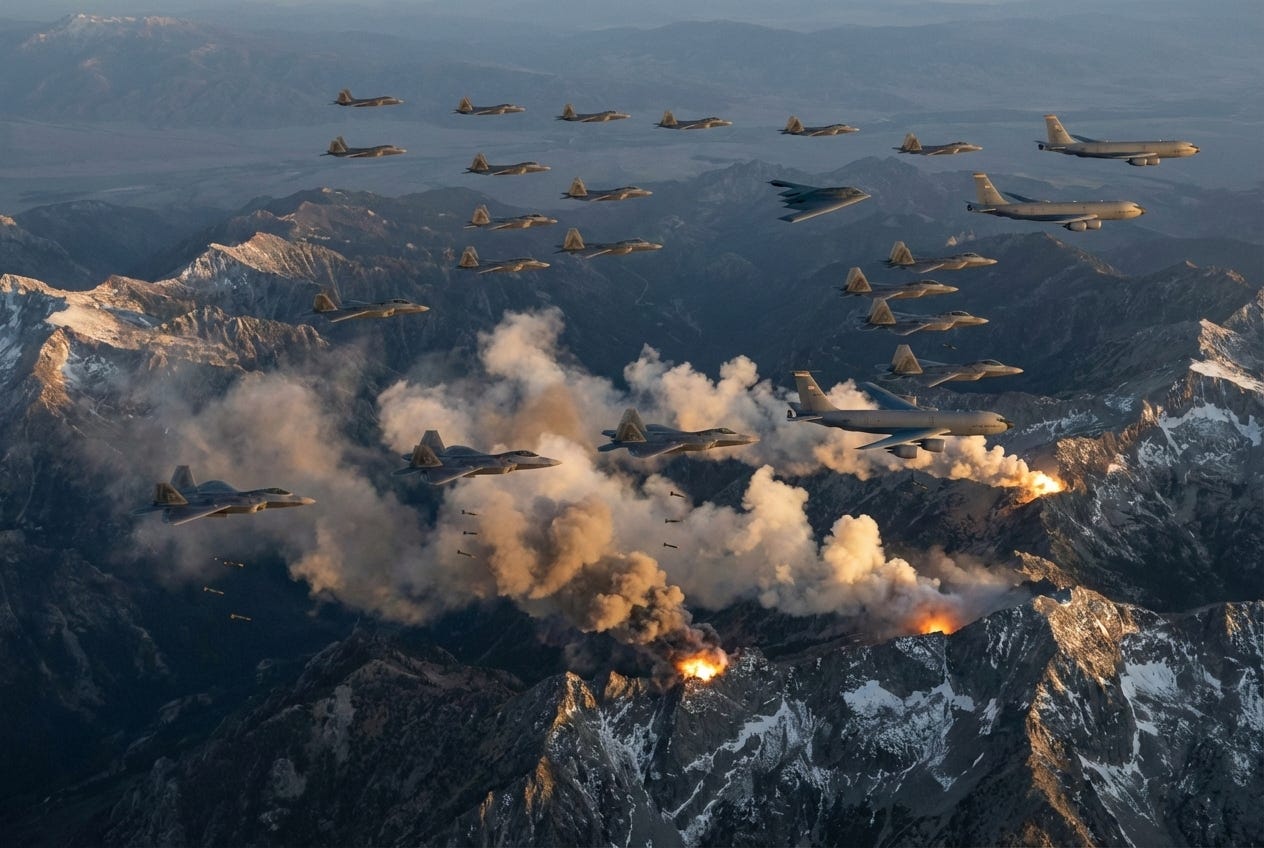
The second after... full conventional escalation
This is where the morons truly come alive. The idea that a second round of conventional strikes - bigger, more sustained than June 2025 - succeeds where the first one failed, degrading Iran’s reconstituted missile arsenal, resulting in a compliant Tehran? This armchair keyboard analyst has more strategic sense than whatever is being passed around as intelligence in those briefing rooms, and I mean that with full sincerity and zero embarrassment.
The US couldn’t force the Red Sea open against the Houthis. Half a country. No navy. Couldn’t do it. Iran are not the Houthis.
Israel’s interceptor stocks are depleted - Arrow 3s, THAADs, SM-3s all have production cycles measured in years. Iran has already reconstituted its medium-range ballistic missile stockpile to pre-war levels. The precision of those Iranian strikes has been extensively documented: in June, they hit military installations inside Tel Aviv while leaving adjacent civilian buildings standing. They put a missile through a 40-foot rotating satellite dish at the US communications hub in Qatar. That’s not some random shelling. That’s a message. Everything can be hit. Including assets the US has historically assumed were untouchable.
I imagine that Iran’s response to a full conventional campaign would not be a mirror of June 2025. They’ve had eight months to prepare, to harden, to reposition, to pre-aim. The missile salvos would be larger and more precise. US bases across the region - Qatar, Bahrain, the UAE, Jordan - are within range of Iranian medium-range missiles, and Iran has stated it will use them. The Lincoln and the Ford become the most expensive targets in naval history. We have never seen a US carrier sunk since World War Two. We may find out whether that streak continues.
Hezbollah in the meantime is biding its time. It lost its main supply corridor through Syria when Assad fell, and took serious losses in 2024-25, but it has deep weapons caches in Lebanon and it has not been destroyed. A full US-Iran war is the event Hezbollah has been conserving capacity for. Hamas is militarily degraded but Gaza has a median age of roughly 18, and Israel’s conduct there has been the most efficient recruitment engine imaginable. Every flattened neighbourhood produces another cohort with nothing left to lose and nowhere else to go. Constrained on weapons, yes. Unlimited on manpower. The Houthis remain functional. The axis doesn’t activate in a limited strike. In a full conventional campaign, it does.
This is also where the Greater Israel dimension stops being subtext. US Ambassador Mike Huckabee told Tucker Carlson on camera that Israel has a biblical right to conquer the entire Middle East - from the Nile to the Euphrates. The joint condemnation that followed was not a diplomatic note. It was a letter signed by Saudi Arabia, Egypt, Jordan, UAE, Indonesia, Pakistan, Turkey, Qatar, Kuwait, Oman, Bahrain, Lebanon, Syria, and Palestine, plus the OIC, the Arab League, and the GCC. Every state in the region whose cooperation the US depends on for basing rights, overflight, logistics, and intelligence - signing a single document expressing “strong condemnation and profound concern.” Every one of them just had their population handed an undeniable statement of what this war is actually for. Managing domestic political pressure against US military operations becomes structurally impossible for every one of those governments. Tucker Carlson got detained in Israel for broadcasting the interview, which tells you something about how comfortable they are with that particular cat being out of the bag.
The operational consequences of that letter are immediate. Closed airspace means longer routes. Longer routes mean aerial refuelling tankers aren’t a convenience - they’re the difference between a strike aircraft making it home and ditching into the Persian Gulf. Taking out the tankers in the opening salvo is the obvious move. Returning strike jets, low on fuel, diverted around closed airspace, are forced down at the same regional bases already pre-aimed by Iranian missiles. No air-to-air engagement required. Iran doesn’t shoot the planes down - it just strands them, and finishes the job on the ground at leisure. However, the US ain’t stupid either - they’re placing their tankers at Souda Bay in Greece, well outside conventional Iranian missile range.
Internationally, a full conventional escalation breaks the Gulf coalition the US has spent decades building. China accelerates its military posture in the Pacific, correctly calculating that the US is fully consumed. Russia uses the moment in Ukraine. Energy markets detonate as Hormuz becomes a live question - 20% of global oil supply transits that strait. The global economy, already fragile, takes a shock it is not positioned to absorb.
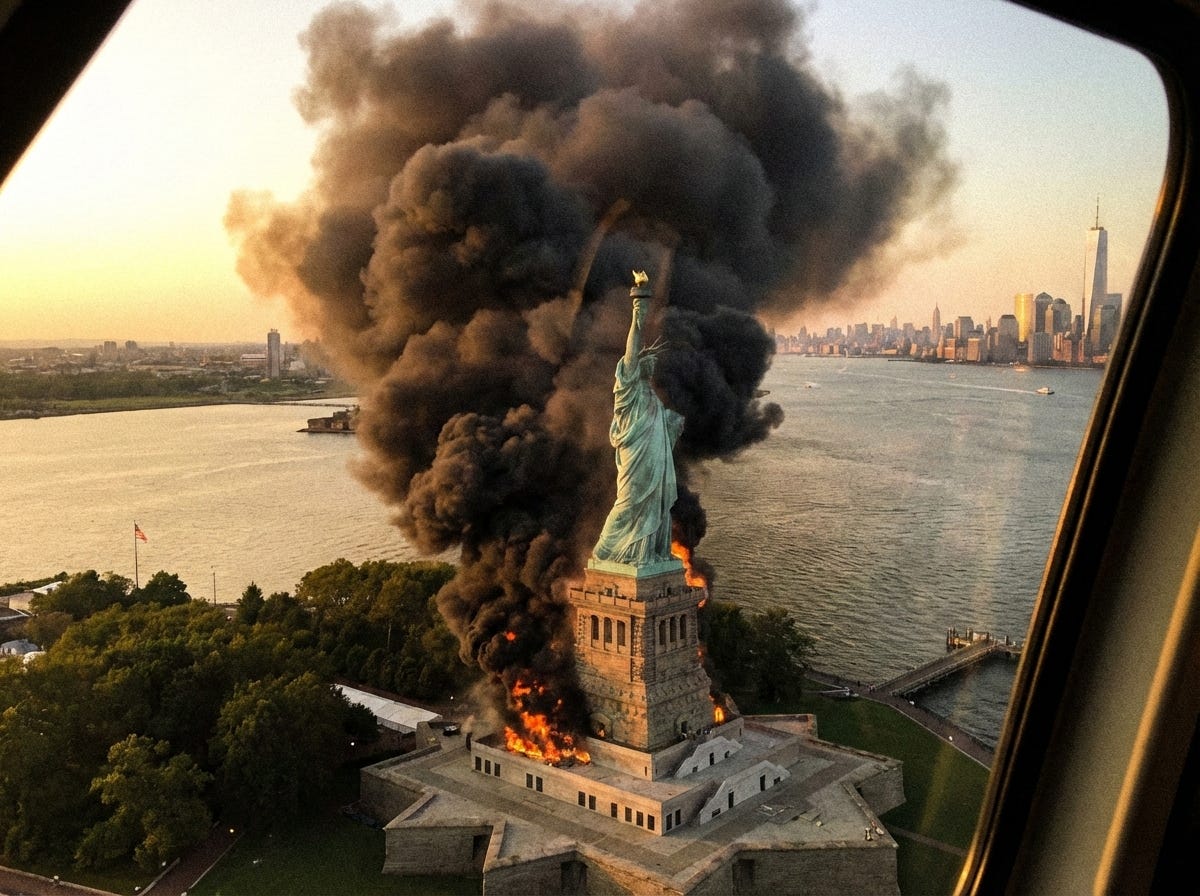
The second after... the war comes home
This is the scenario that mainstream analysis will not say out loud, so I will.
If I were running the Iranian intelligence services, watching two American carrier strike groups position off my coast and seeing my country openly threatened with decapitation strikes, I would have my assets pre-positioned inside the United States. Not as speculation. As basic strategic doctrine - it’s exactly what every serious state actor would do, and what the US does everywhere it operates. Dead-man switches. Pre-positioned cells near critical infrastructure. The kind of capability that ensures any attack on Iran carries a domestic American price tag.
Iranian intelligence services are not amateurs. The porous southern US border that has been a domestic political flashpoint for years is also, from Tehran’s perspective, an opportunity that would be irrational not to exploit. This isn’t paranoia. It’s the logical extension of thirty years of Iranian strategic thinking about asymmetric deterrence.
Iran’s strategic logic here is not nihilistic - it’s deterrent. The threat of bringing the war home is precisely what makes the threat credible. Whether Tehran would actually execute this, and at what level of US provocation, is an open question No1 has an answer to...
Internationally, an attack on US soil changes everything. NATO Article 5 gets invoked for the second time in NATO's history and the political pressure on European governments to support a US retaliatory campaign becomes enormous. China and Russia face an impossible balancing act between condemning terrorism and not endorsing unlimited US military retaliation. The Global South fractures. Some governments privately view it as blowback for US aggression. None of them will say so publicly. The world holds its breath for what comes next, which is almost certainly one of the following four scenarios.
For anyone still thinking about their portfolio at this point... a major US city absorbing a coordinated attack - even a conventional one, let alone a radiological device using material from that 440-kilogram stockpile nobody can locate - does not produce a metals rally. It produces panic, martial law, market closures, and capital controls. The financial system doesn't reprice around a geopolitical premium. It seizes. The price of silver is irrelevant if the exchange is closed and your broker's phones are down.
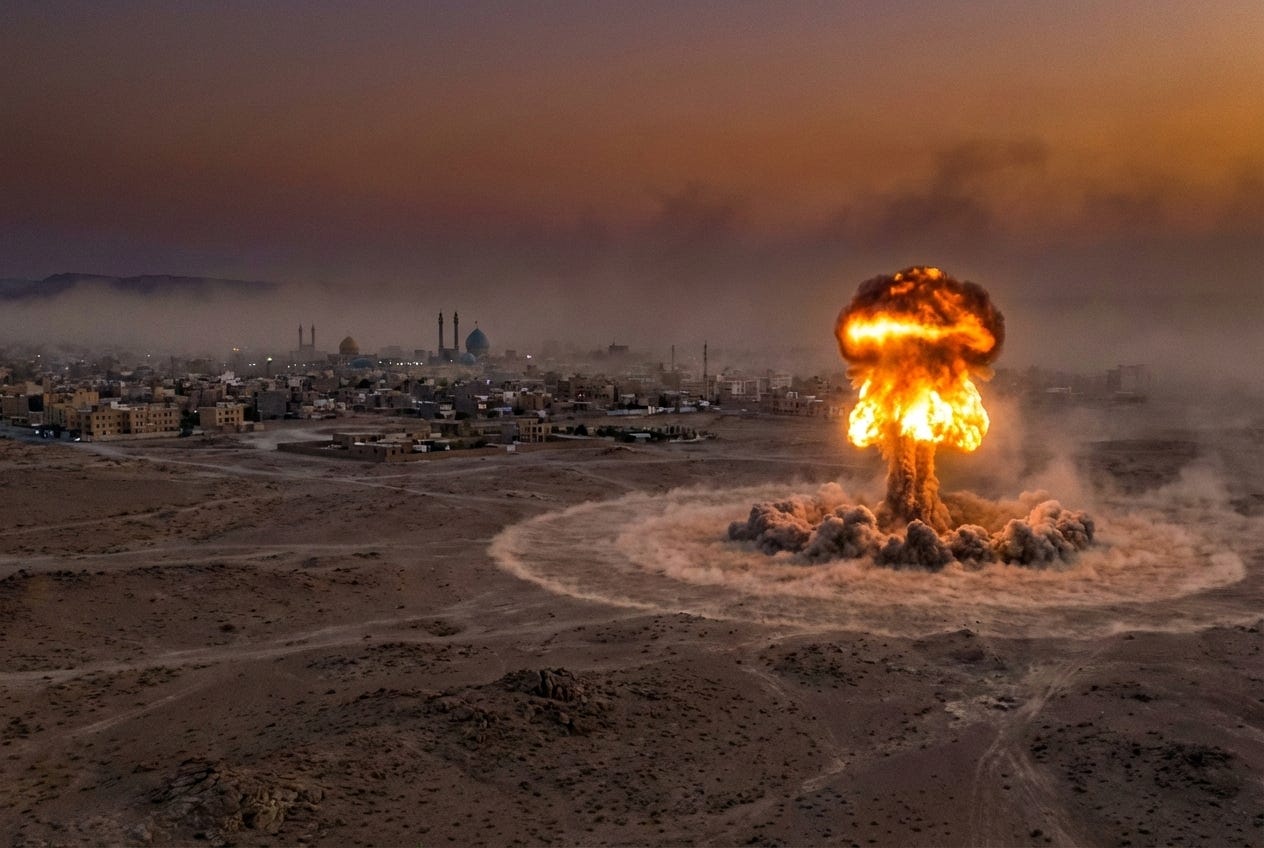
The second after... a tactical nuke on Fordow
The “surgical” option. The B61-12 gravity bomb with variable yield - dial it down to something “manageable” - to finally reach what those 12 GBU-57 bunker busters couldn’t. Fordow is buried 80-90 meters under rock, 30 kilometres from Qom, a city of 1.2 million people and one of the holiest sites in Shia Islam.
“Variable yield” is a comforting technical term. Fallout is not a variable yield concept. It goes where the wind takes it. A near-surface detonation - which is what’s required to actually threaten a hardened underground facility - generates vastly more fallout than an airburst. Prevailing winds carry it east toward Afghanistan and Pakistan, north toward the Caucasus and into Turkey, west across Iraq. Chernobyl contaminated a continent from a reactor accident. This would be deliberate.
The actual absurdity would be to nuke a facility to destroy uranium stockpiles that are no longer there. The material moved before the bombs dropped in June. JD Vance acknowledged as much on ABC. Rafael Grossi said it publicly. So a tactical nuke on Fordow destroys empty tunnels, produces the third use of nuclear weapons in human history, kills hundred of thousands of people in Qom, and contaminates the entire region. It does not touch the material it claims to destroy.
Iran’s response: obviously without restraint. The June 2025 grammar of calibrated retaliation no longer applies the moment a nuclear weapon is used on Iranian soil. Iran has conventional ballistic missiles capable of reaching anywhere in the region, and Khamenei in October 2025 formally authorised the development of miniaturised nuclear warheads for ballistic missiles - not rumour, reported fact. Whether those warheads exist yet is the question. Whether Iran would use everything it has in response to a nuclear attack is not a question.
Internationally, this is a civilisational rupture. The third nuclear use in history, first since 1945, against a Muslim-majority country, near one of its holiest cities. China doesn’t issue a statement - China convenes. The Shanghai Cooperation Organisation, which includes Iran as a full member, becomes an explicit counter-alliance almost overnight. India, which has been carefully balancing between blocs for years, cannot stay neutral when fallout drifts toward its northern territories. Russia has its permanent justification for anything it chooses to do next. The Non-Proliferation Treaty doesn’t just die - it gets vaporized. Saudi Arabia, currently in enrichment negotiations with Washington as this article is written, draws the obvious lesson. So does Turkey. So does Egypt. Every government capable of pursuing a nuclear program now has its answer to the question of whether being non-nuclear keeps you safe.
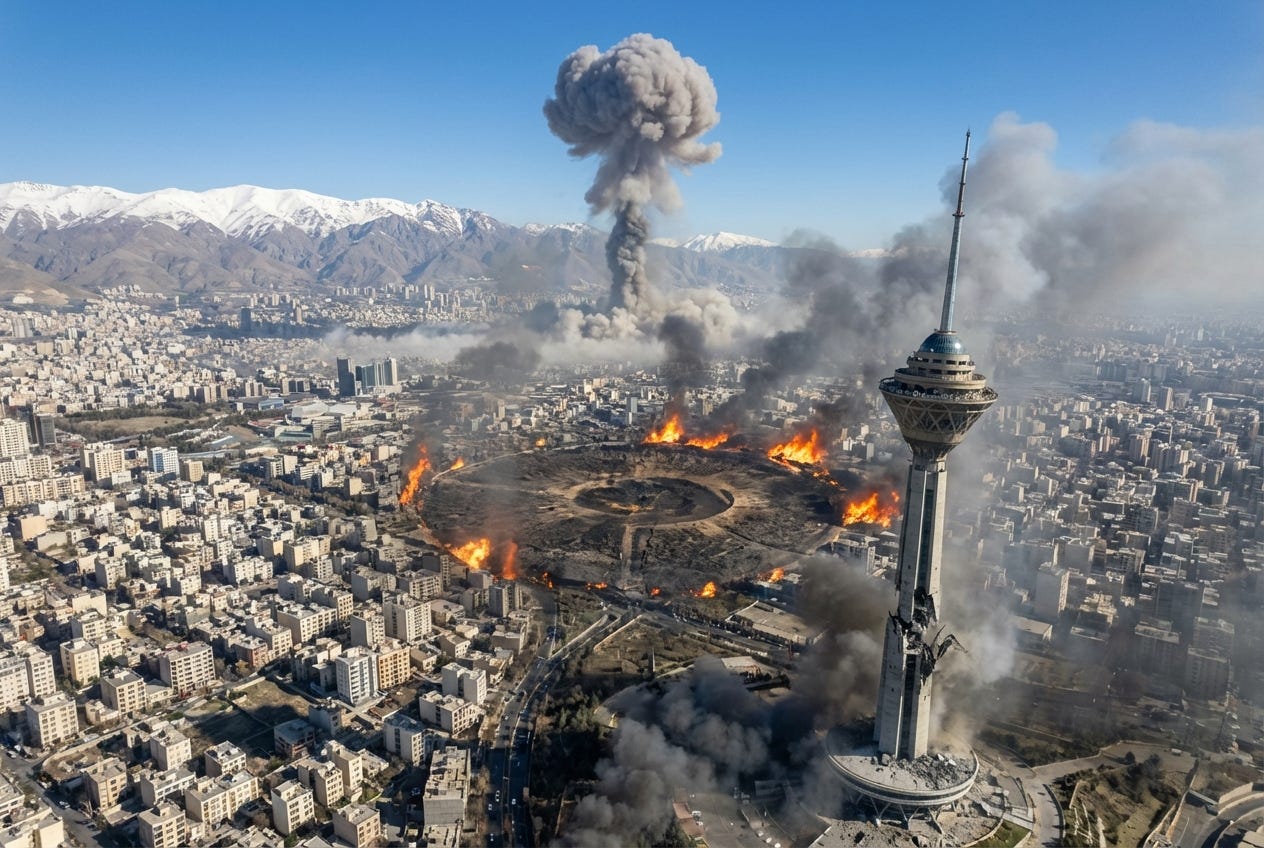
The second after... Tehran
Nuke the leadership. Khamenei, the Revolutionary Guard command structure, the decision-making apparatus. End the regime the way you end a chess game. By toppling the board.
This is the scenario the Christian Zionist contingent around Trump actually wants. Huckabee’s interview wasn’t a gaffe - it was a statement of intent. A nuclear decapitation of Tehran is that ambition with a delivery mechanism attached.
Tehran has ten million people. Even a “small” tactical device produces a fireball, a blast radius measured in kilometres, and a radiation plume crossing Afghanistan and Pakistan within days. The fallout reaches India within a week from a significant surface burst. Eastern Europe gets detectable contamination. And the Iranian state - much of it - likely survives in hardened bunkers and retaliates anyway, because decapitation strikes almost never actually decapitate. They just remove the people most inclined to negotiate.
Tehran already war-gamed this by delegating full authority to Larijani with a four-layer succession structure in place for all key roles, treating decapitation as a live operational probability. A strike on Tehran doesn't remove the decision-makers. It activates the ones already waiting.
Iran’s response in this scenario is maximum and unrestrained because there is nothing left to lose. Every military asset Iran has - missiles, drones, proxies, whatever nuclear capability exists - gets used. The Ford and the Lincoln face the full weight of Iran’s anti-ship arsenal. Israel faces the largest missile barrage in its history with a depleted interceptor stockpile. Every US base in the region is targeted simultaneously.
Internationally, this produces permanent realignment. Every non-Western nation that has spent thirty years being lectured about international law and human rights now has its defining image. The case for non-proliferation collapses entirely - if having no nuclear weapons means you can be nuked by states that have them, the rational response is obvious, and every government capable of acting on that response will. The US doesn’t become a pariah. It becomes the proof of concept for why everyone needs the bomb.
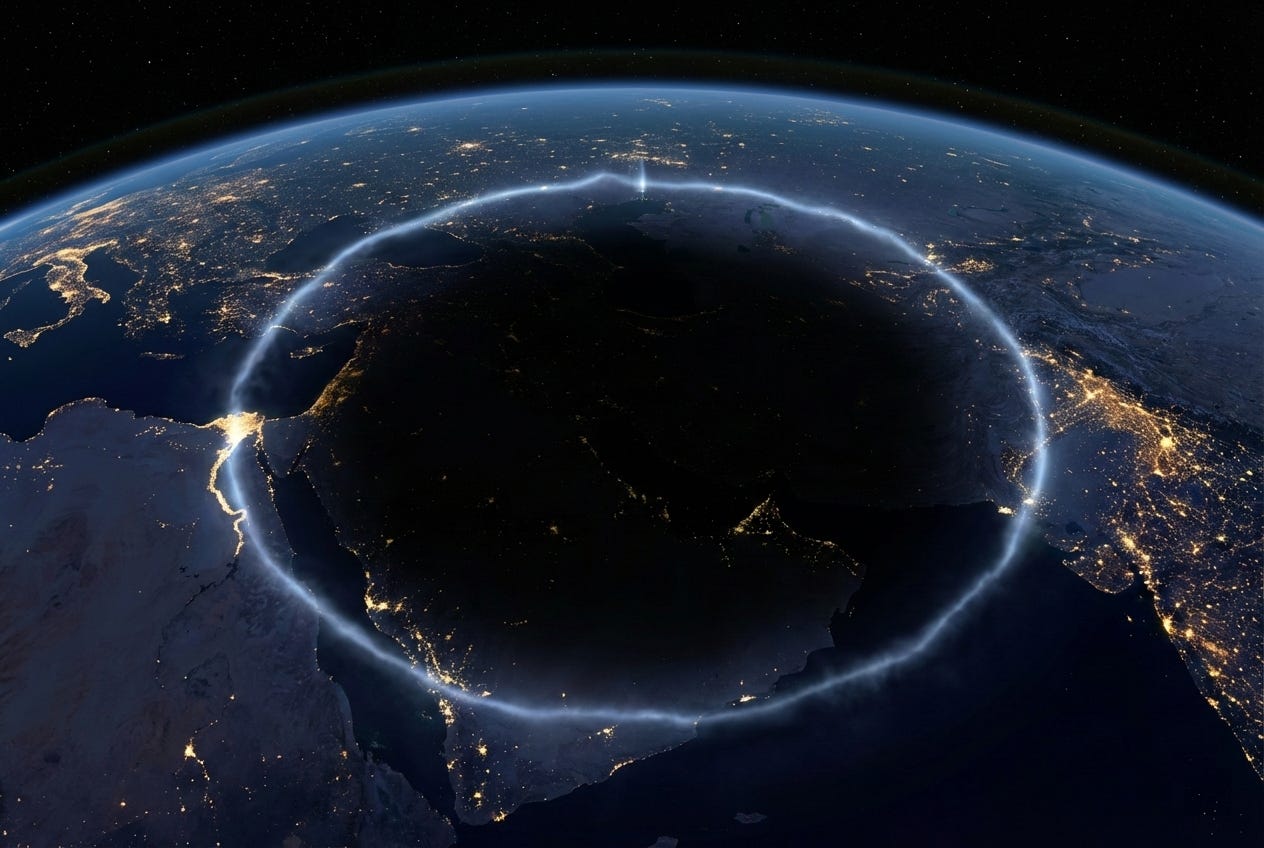
The second after... the lights go out
Detonate a nuke above 30 kilometres. Fry the electromagnetic infrastructure without a ground-level blast. No mass civilian casualties, no fallout, just a degraded military. Clean. Surgical. Clever.
Except. It isn’t.
An EMP at sufficient altitude affects a radius of hundreds to thousands of kilometres depending on yield. Saudi Arabia, the UAE, Jordan, Kuwait - American allies whose cooperation the entire regional strategy depends on - lose civilian power grids simultaneously. Hospitals. Water treatment. Financial systems. Oil infrastructure. Military hardware, hardened and sitting in cave complexes under mountains, largely survives. Iran’s missile force - the specific threat the whole exercise is designed to neutralise - is probably fine, because hardened military systems exist precisely to survive EMP.
What you’ve created is a regional humanitarian catastrophe affecting countries that weren’t parties to the conflict, for near-zero military gain against the actual target.
Iran’s response is complicated here because the opening move is invisible - no blast, no immediate attribution, just everything going dark across the region. Iran doesn’t wait to understand what happened. Pre-positioned launch orders exist for exactly this kind of ambiguous scenario. The missiles are already in the air before the first damage assessment comes in.
Internationally, this is chaos before it’s anything else. The first 24 hours produce no clear picture of what happened, who did it, or what the scope of damage is. Oil markets convulse as Gulf infrastructure goes offline. The global financial system takes a shock before anyone knows why. When attribution lands, the reaction combines the nuclear taboo violation with the added dimension that American allies were the primary casualties. The optics are unrepairable and the explanation - “we were trying to hit Iran” - is not a defence.
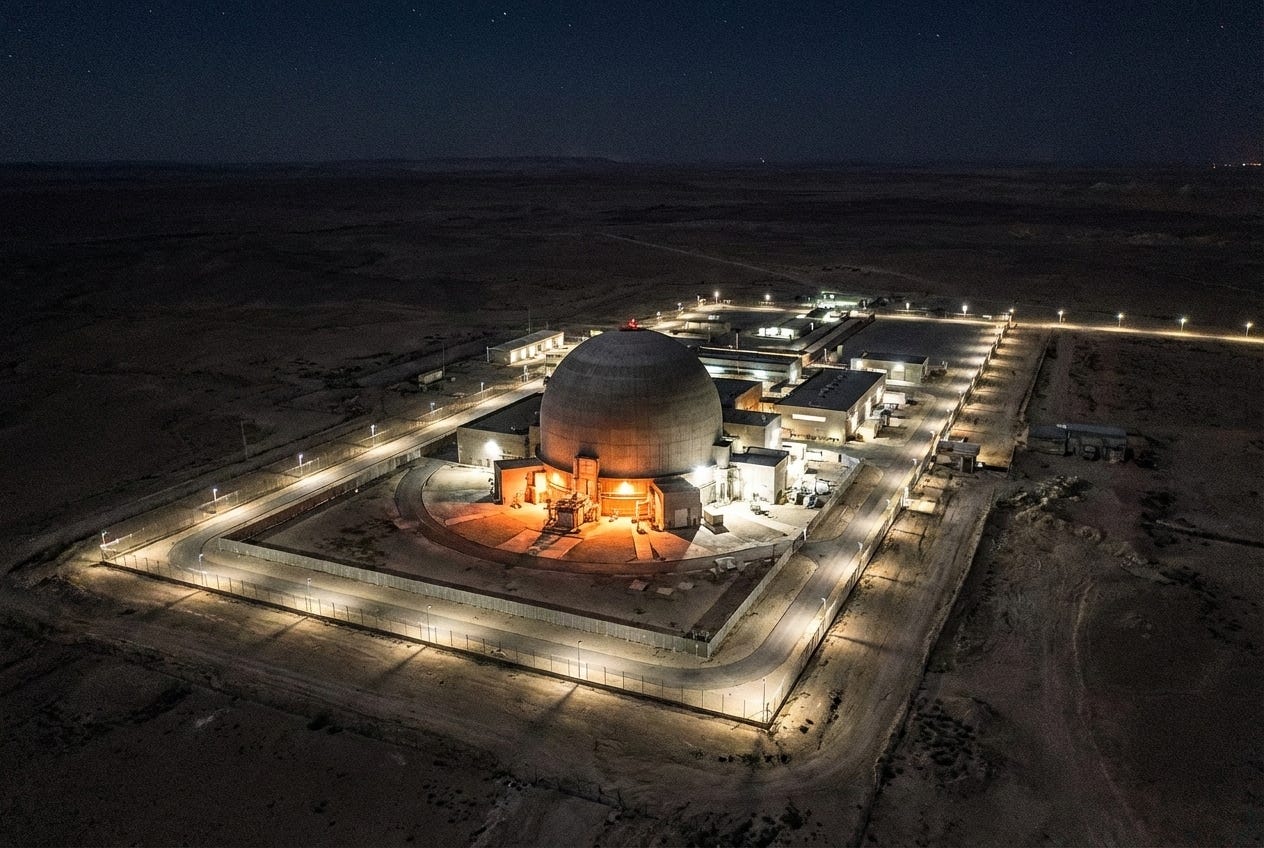
The second after... Israel pulls the trigger
This is the most plausible nuclear scenario, which is precisely why it deserves the most attention.
Israel has an estimated 90 nuclear warheads at Dimona - a facility that has never been subject to international inspection, that is not subject to the NPT, and that satellite imagery confirmed last September is being actively expanded, possibly with a new reactor. The “policy of ambiguity” is only ambiguous in the sense that no one is officially allowed to say it out loud. Everyone knows. Israel uses one. The US issues a statement of “deep concern” and says it “did not authorise this action.”
Everyone knows this is a lie.
The fig leaf matters for domestic scaffolding for approximately the duration of a news cycle. Then reality sets in. Israel, which possesses undeclared nuclear weapons at an uninspected facility while simultaneously waging war to prevent another country from developing nuclear capability, has just used one of those weapons. The US, which provided the intelligence, the logistics, the interceptor support, and the diplomatic cover for everything that led to this moment, is not a bystander.
Khamenei formally authorised development of miniaturised nuclear warheads for ballistic missiles in October 2025. The fatwa against nuclear weapons turned out to be flexible enough to accommodate thermonuclear warhead development once his country got bombed. Funny how existential pressure works on theological interpretation.
Iran’s response here is the scenario that makes everyone’s blood run cold, because the 440 kilograms of 60% enriched uranium - location unknown to the IAEA, the CIA, and the Pentagon - doesn’t need to produce a sophisticated weapon. It needs to produce a crude one. Hiroshima’s Little Boy ran on 80% enriched uranium. Iranian scientists were producing material at 83.7% purity at Fordow before the war. A crude fission device is not a Minuteman III. It doesn’t need to be. It needs to reach Tel Aviv once. A country of nine million people, 70% of whom live within the coastal strip between Tel Aviv and Haifa, cannot absorb a single nuclear detonation and continue functioning as a state. It doesn’t matter that the device is crude. It matters that it works once.
And that's even before considering the lower-tech option. A radiological dispersal device doesn't need precision engineering - no implosion geometry, no initiators. Pack that 440 kilograms around conventional explosives, deliver it by hypersonic missile, and Tel Aviv doesn't need to be destroyed. It needs to be rendered uninhabitable for decades. Iran has the material, the missiles, and at that point, nothing left to lose.
Pakistan publicly denied promising nuclear retaliation if Israel went nuclear, after an IRGC general claimed the opposite on Iranian state television. Pakistan’s nuclear doctrine is India-centric, they said. They also signed a mutual defense pact with Saudi Arabia in September 2025 with implied nuclear umbrella language, then walked that back too. The region’s nuclear architecture is in active flux in ways it wasn’t two years ago, and one Israeli first use reshuffles the entire deck.
Internationally, this scenario produces the worst possible outcome precisely because of the sequence. Israel fired first. With weapons it officially doesn’t possess. Against a country whose nuclear status is ambiguous specifically because Western strikes destroyed IAEA access to verify it. The legal and moral architecture for any response to Iran’s retaliation collapses before it can be assembled. China and Russia cannot be asked to condemn Iran’s reaction. Europe is split between its reflexive support for Israel and the horror of nuclear use in a war it opposed from the start. The United Nations is rendered permanently irrelevant. And every remaining illusion that the post-WW2 international order means anything, for anyone, anywhere, dissolves.
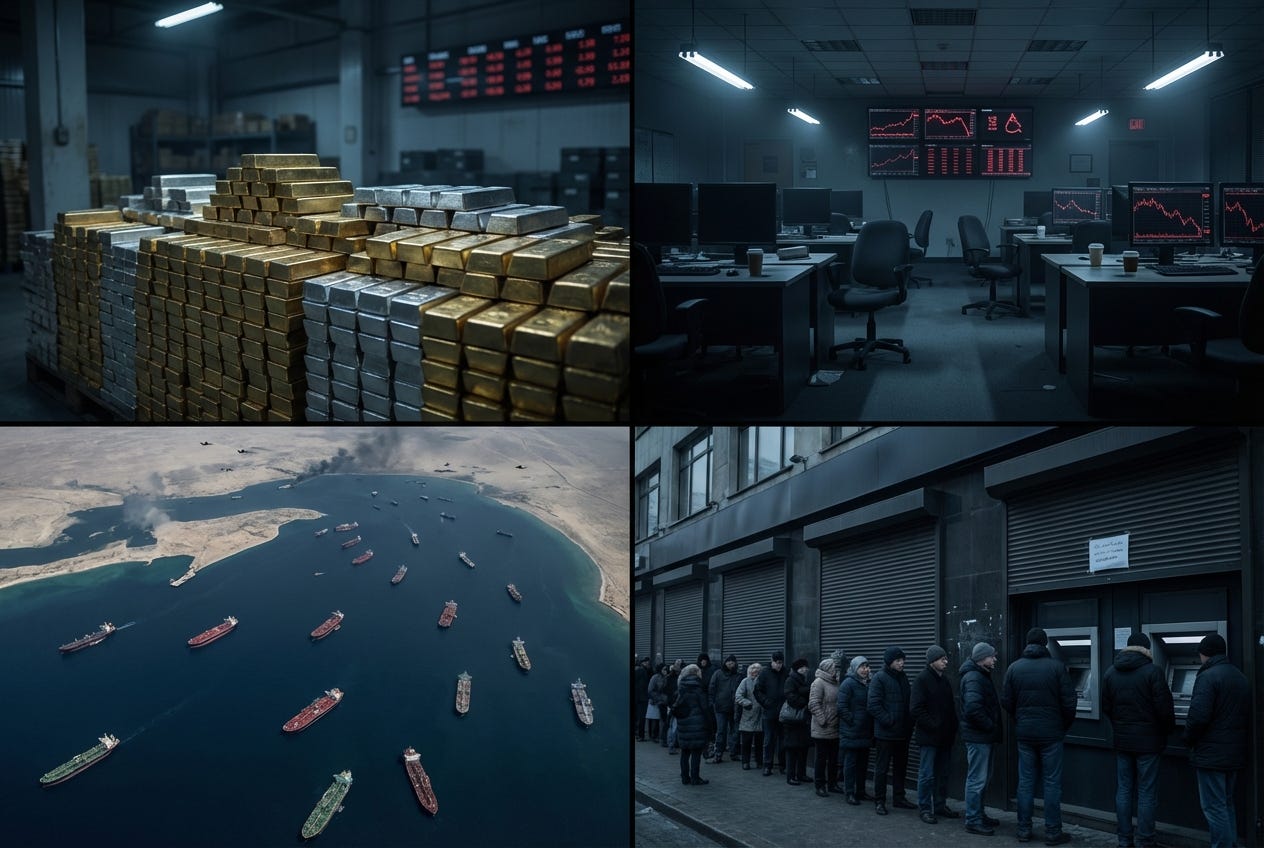
Now. What might happen to markets across all of this?
The question serious investors are wrestling with is not whether war is bullish for metals. It’s which kind of war - and whether a conflict that goes genuinely asymptotic produces the metals rally everyone assumes, or destroys the conditions under which that rally is even accessible.
In scenario 1, the standard thesis holds. Brief spike, sustained premium, metals outperform. This is the scenario historical patterns are built on.
In scenarios 2 through 7, it gets complicated fast.
Silver’s industrial demand is roughly 70% of annual consumption. Solar panels. Electronics. Medical equipment. None of that gets manufactured when the global economy seizes rather than wobbles. The safe haven bid and the industrial demand collapse happen simultaneously, pulling in opposite directions, and nobody has a clean answer to which one wins. The Hormuz closure that comes with any serious escalation takes 20% of global oil supply offline immediately - energy costs spike across every supply chain at once. Copper collapses as the industrial bellwether for a world economy in freefall. Wheat spikes as Black Sea and Middle East disruption compound simultaneously. China, watching all of this, restricts rare earth exports - because there is no crisis China won’t use strategically. And if the war comes home to a major US city, the question isn’t which way silver moves. The question is whether you can access it at all.
The initial commodity spike is real across all scenarios. What follows if the war runs genuinely hot is a different answer, and the honest version of that answer is: No1 knows. A nuclear exchange produces a world in which the pre-war investment thesis is simply irrelevant, because the world it was built on no longer exists. Herbert Hoover described the capital dynamics of civilisational shock in his 1931 memoirs as “a loose cannon on the deck of a ship in a hurricane.” He was writing about sovereign debt defaults. He hadn’t seen anything yet.
Martin Armstrong has been flagging April-May as the geopolitical catalyst window. The hardware is already in position. Two carrier strike groups, dozens of fighter jets repositioned to Jordanian bases, AWACS deployed - the same pre-war signature pattern as June 2025, except this time Israel has fewer interceptors, Iran has more missiles, and someone in Tehran has been authorised to miniaturise warheads.

Every version of this war ends in catastrophe.
The only variable is the scale.
I REALLY had to write this 8th scenario. It’s just too delicious to pass up on it!!
The second after… shit hits the fan
The USS Gerald Ford is literally full of shit.
I want to be clear: this is not a drill. THIS IS DEFCON BROWN.
The $13 billion crown jewel of American naval supremacy, the floating monument to Western engineering, is currently being slowly conquered by its own sewage. The state-of-the-art vacuum toilet system doesn’t work. Designed specifically to replace the gravity system. That also didn’t work. The most advanced warship ever built cannot handle a number two.
Sailing to start WW3, it gives a total different meaning to “shit hits the fan”.
The entire operation is - and I’m using the precise technical term here - in the toilet.
Witkoff is probably already spinning it. “Iran blinked”. Iran didn’t blink. Iran watched a $13 billion carrier get tactically overwhelmed by chili night.
One can imagine the counteroffer: two certified plumbers and a gravity system. Old school. Reliable. Witkoff calling it the best deal he’s ever seen.
Trump posts “IRAN FLUSHED. COMPLETE AND TOTAL VICTORY.”
The United States Navy has now lost to the Houthis, lost to maintenance schedules, and lost to a toilet. The only thing getting launched off that deck is the smell.
History will not know what to do with this.
References from June ‘25:


As a wise man once said, let us pray.
Another great essay! Congratulations!
I will just and some points about the most likely “unknown unknowns”, to quote Donnie Rumsfeld.
Many commenters have rushed to say that after the 12 day war and the failed coup attempt, the Israelis have lost all their assets inside Iran, have run out of undercover projects, etc. Sure, mate. Of course. The Iranians have been preparing for 40 years but I would bet Mossad & co have not been sitting on their hands, either. If anything, last year pager attacks in Lebanon have proved that these fuckers can penetrate anything and won’t stop at any means to kill their enemies.
The EMP thing. I am a humble industrial engineer, not a physicist or nuclear engineer or such, but from my understanding, a nuclear EMP does not need to be exploded at very high altitude (like the earliest US tests at 400km high). You only need to explode it high enough that most of the energy is converted to the fast electrons (?) that cause the EM effect. Also, apparently nuclear bombs can be customized to have a very large NEMP yield. All this meaning that most probably NEMP attacks could be restricted to smaller regions and not affect the US satraps in the region.
The escalation stuff. If there is one thing that these guys are good at -besides murdering, cheating and stealing- is at manipulating the public opinion. IMO the Empire managers have already conceded defeat in the media sphere in Asia and Africa. Fortunately for them, the European and Iberoamerican folks are easy to manipulate when everything they consume comes from one or another US platform. An important point is that it is not necessary to convince the public. You just need to provide a believable narrative. Expect false flags, outrage, and stories of at least 6 million Jewish babies bajonetted inside their incubators by the godless communist Ayatollahs on Viagra.