
The opening salvo
The day the Gulf changed

It started around 8:30 in the morning. Explosions in Tehran. Sirens across Israel. Trump at a podium talking about “defending the American people” from a country 9,800 kilometres away - a country that had not attacked the US in any way, and that Washington had been negotiating with just the day before.


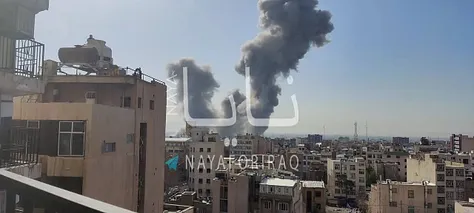

And just like that, we’re at war again.
The strikes were billed as Israeli “preemptive action”. The first wave hit Khamenei’s compound, the Ministry of Intelligence, the Ministry of Defense, the Atomic Energy Agency, the presidential palace, Parchin. Two waves, rapid succession. A decapitation attempt dressed up in the usual vocabulary - precision, surgical, necessary.
What followed was anything but.
The Iranian Defense Minister and IRGC commander Pakpour were confirmed killed. The Head of the Judiciary too. As for Khamenei himself - at the time of writing, nobody actually knows. Israeli media put the odds of him having survived at “slim to none”. An hour later, Iranian state TV announced he would “speak within minutes”. That was hours ago. He still hasn’t appeared. His Foreign Minister, when asked directly, said “he’s alive as far as I know”. Not exactly the confident “the Supreme Leader is in good health” you’d expect from a functioning government.
So either Khamenei is dead and they’re managing the information, or he’s in a bunker somewhere with limited communications. Neither is great for the “this will all be over in four days” thesis.
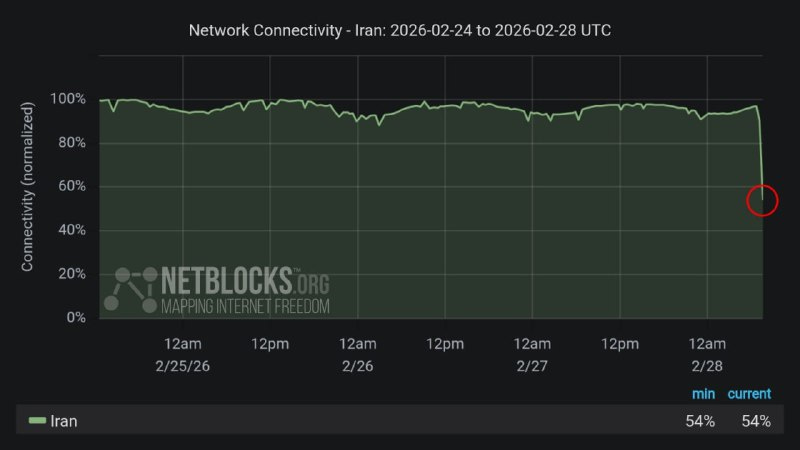
Worth noting: Iran’s internet was cut early on. Cyber attacks hit IRNA and other state media outlets in the opening hours. The regime went dark on communications almost immediately - which tells you they expected this and had protocols for it, but also means any information coming out of Tehran right now needs to be treated with serious skepticism.
Another thing that was noteworthy: Iran’s response was fast. Remarkably fast - coordinated strikes on US bases across seven countries within hours. Either they’re extraordinarily well-prepared - which they probably were - or they had some advance warning. China operates reconnaissance satellites that probably tracked the strike packages forming up over Israel and the Mediterranean. Beijing and Tehran share intelligence. Add to that the number of countries whose airspace US and Israeli aircraft transited, the communications that would have involved, and the known history of intelligence penetration in this region, and I wouldn’t rule out that Iran had foreknowledge of the timeline. Someone, somewhere, may have talked.
Then again, maybe they were just ready. They’ve been ready for years.
What’s not in doubt is the scale and speed of what came back.
Within hours, ballistic missiles were in the air. Not a trickle. Wave after wave after wave - at Israel, at Bahrain, at Qatar, at Kuwait, at the UAE, at Saudi Arabia, at Jordan, at Iraq. An Iranian parliamentary official put it succinctly: “We set fire to US bases in seven countries - and that was only a warm-up”.
He wasn’t obviously lying.

The US Navy’s 5th Fleet “Jufair” headquarters in Bahrain burned. A Shahed-136 kamikaze drone took out a radar dome inside the base before the ballistic salvos landed, leaving air defenses partially blind before the heavier hits came. Multiple confirmed impacts.
In Qatar, the Al-Udeid Air Base - home of CENTCOM - was hit:
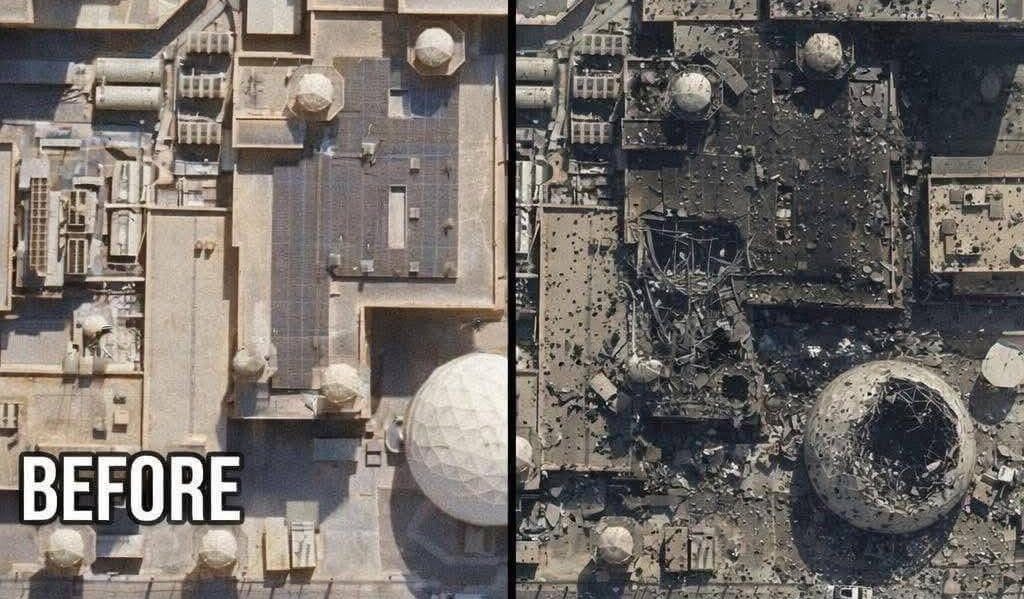
And then the strike that matters the most strategically: the IRGC announced the complete destruction of the AN/FPS-132 Block 5 early warning radar.
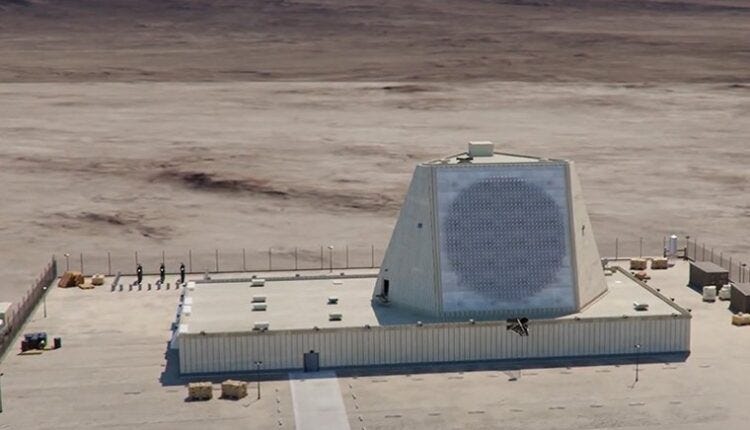
This is not a piece of equipment you replace next Tuesday. It cost $1.1 billion. Its range: 5,000 kilometres. Its sole function: detecting ballistic missile launches from deep inside Iran, Russia and China. It gives you the few precious minutes to scramble interceptors before the heavy ordnance arrives.
Gone.
Iran removed the smoke detector before lighting the match.
Kuwait wasn’t spared either. Ali Al-Salem Air Base confirmed hit. Kuwait International Airport struck by a Shahed drone (see below). The US Embassy in Kuwait issued an immediate “Shelter in Place” order. Kuwait - supposedly the logistical rear of any Gulf operation - is now in the middle of it.
Then the UAE. Explosions near the Marina. A missile hitting a hotel on the Palm. Loud bangs over Abu Dhabi, debris falling across Saadiyat Island, Khalifa City, the Bani Yas area. The UAE Ministry of Defense confirmed “successfully intercepting” a second wave - though what they called success involved debris raining on residential areas. Now, you might wonder why Iran would want to hit Dubai specifically. It’s not an obvious military target. But that’s precisely the point. Iran isn’t trying to destroy Dubai - it’s sending a message to the UAE that hosting US forces at Al-Dhafra, and positioning Jebel Ali as a logistical hub for American naval operations, comes with a price that shows up in hotel windows and insurance premiums. Iran doesn’t need to raze the Gulf states’ oil infrastructure to cause an economic catastrophe. It just needs to make their airspace and their skylines feel unsafe.
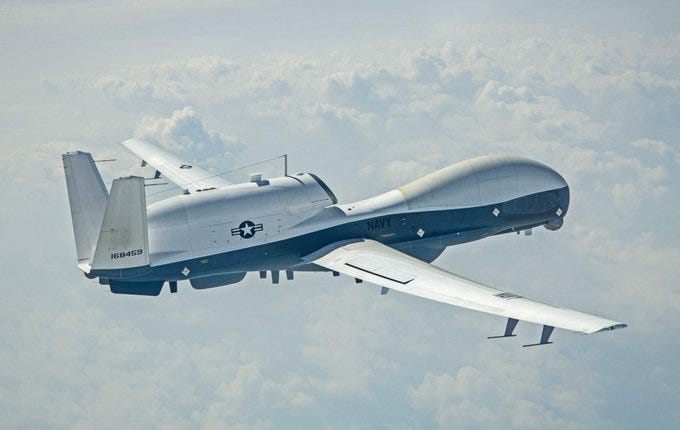
Over the Gulf, the world’s most expensive surveillance drone - MQ-4C Triton - squawked 7700, declared an emergency and fled toward Saudi Arabia during the fighting. Iran is imposing a partial no-fly zone over the Gulf that extends to giant US drones. That’s not supposed to be possible.
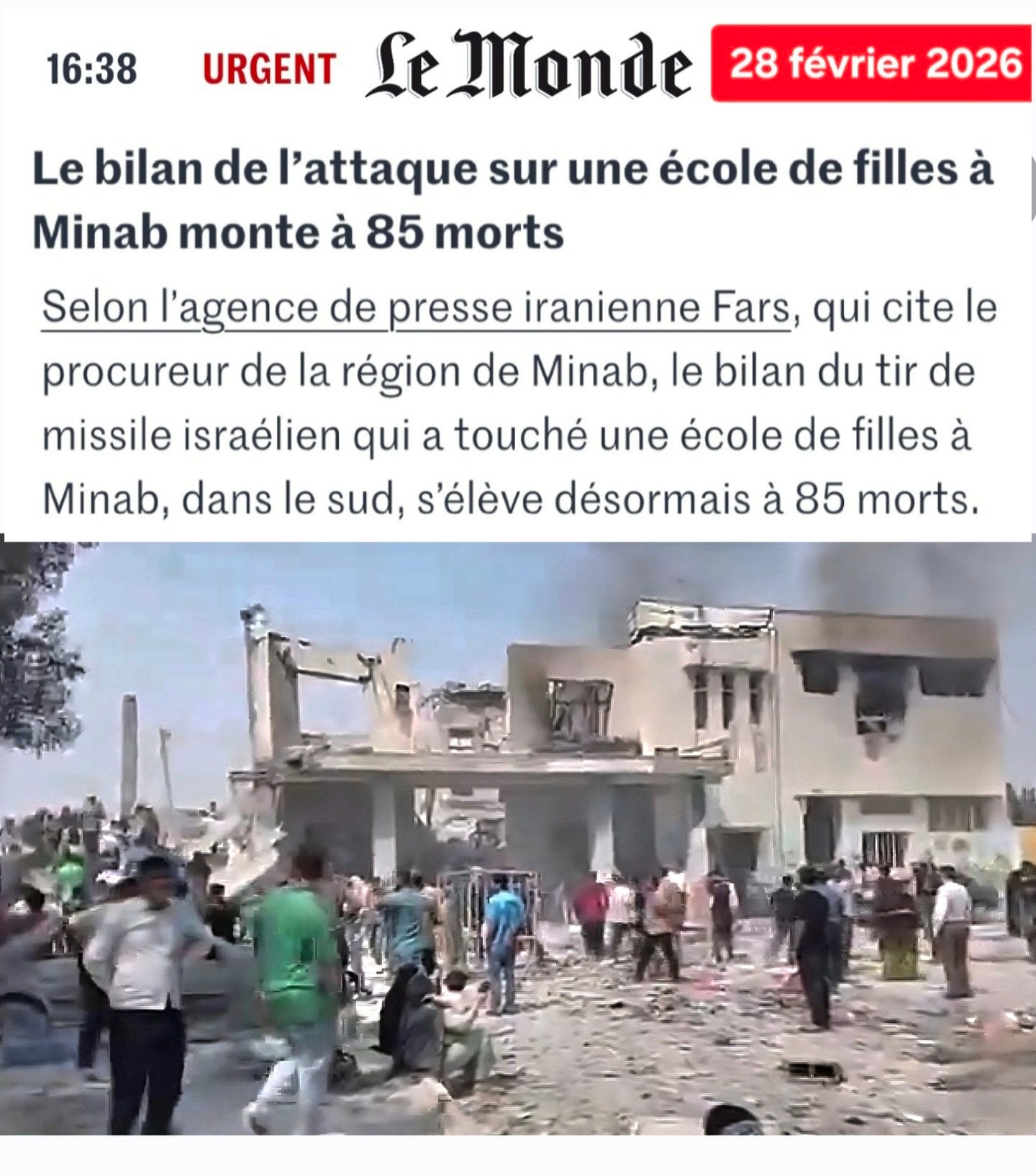
And the school in Minab. A girls’ elementary school in southern Hormozgan province, hit mid-morning when the classrooms were full. The death toll kept climbing throughout the day - 25 girls, then 51, then 70, then 80, and by early evening the Iranian Ministry of Education put the number at 86 students killed. That number may still be moving. I’m not going to editorialize at length on this one. Some things speak for themselves.
Now. Here’s my read on the military logic of what Iran is doing - and it’s more systematic than most of the commentary is giving it credit for.
The key insight is arithmetic, not tactics. We tend to obsess over interception rates: how many missiles were shot down, how well the air defense systems performed. But that’s the wrong question. The right question is: how long can the defense be sustained?
Ballistic missile defense interceptors are expensive, slow to produce, and exist in limited numbers. Offensive missiles - like the ones Iran uses - are comparatively cheap and can be manufactured at scale. In practice, defenders fire two interceptors per inbound threat to hedge against failure. Run that math across a multi-week campaign and you’re looking at an asymmetric depletion rate that the defender cannot win. Iran learned this in June, and we apparently didn’t.
In June, Israel’s Arrow interceptors were heavily expended in the first days. The US stepped in with THAAD batteries and ship-launched interceptors. The defense held a few days to a week, and then Iranian missiles were reaching targets with increasing regularity as stocks thinned. By the end of that conflict, Iran had achieved something more valuable than any strike: a complete map of US and Israeli defense systems, their reaction times, their radar links, their saturation thresholds. Scott Ritter called it Iran’s intelligence goldmine. He isn’t wrong. Every interceptor expended tonight is one that won’t be there tomorrow, and Iran probably calculated exactly how many “tomorrows” it takes. By most estimates, restoring stocks to pre-June ‘25 levels won’t happen until around 2027.
Iran knows this. The sequencing today - older missiles and cheap drones first to drain interceptors, heavier systems held in reserve for later - is not improvised. They mapped radar links and unified defense networks during June. Today they’re acting on that knowledge.
What makes this harder to counter than most Western analysis acknowledges is that Iran doesn’t operate these systems in isolation. Ballistic missiles, cruise missiles, strike drones - none is decisive by itself. But together they create an environment where defenders never get a clean engagement. Ballistic missiles force a massive response that drains interceptors. Cruise missiles fly low and slow, giving minimal detection windows, optimized for hitting fixed infrastructure - ports, oil facilities, airfields. Drones are cheaper still and exist to drain whatever’s left. A drone that gets shot down still cost a missile to kill. That’s the asymmetric arithmetic.
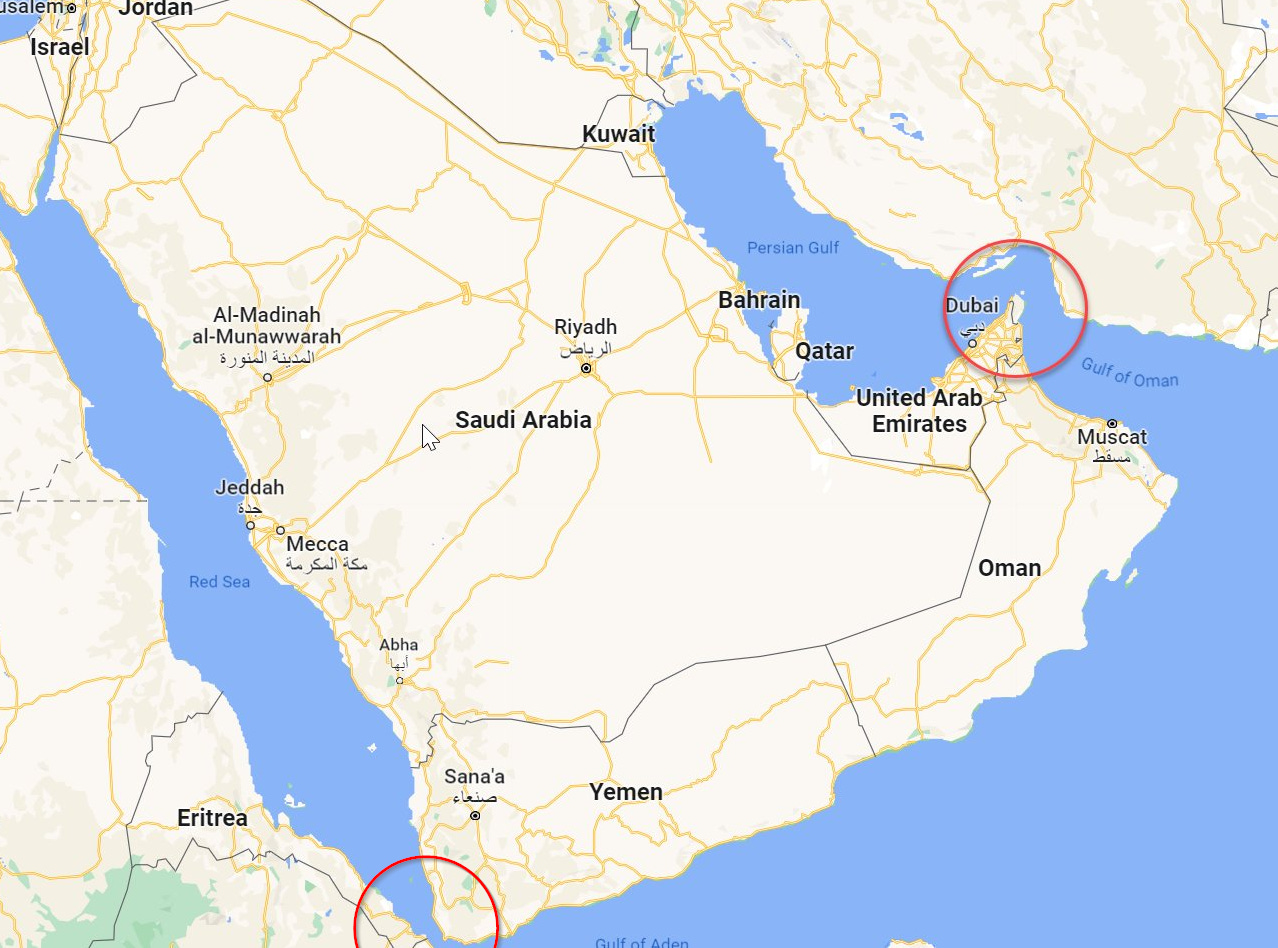
The IRGC Navy broadcast via VHF radio - open channels, every tanker captain in the Gulf heard it - that the Strait of Hormuz is closed. No vessels may cross. The Houthis simultaneously announced closure of Bab el-Mandeb in the Red Sea. Both chokepoints, simultaneously, for the first time in modern history. Weekend OTC crude markets - the thin, after-hours trading that runs when the main exchanges are dark - had Brent pricing around $120. Not official settlement, but it’s the only signal we have before Monday’s open. Most tanker traffic ground to a near-halt, though a few vessels were still attempting transit as of late afternoon - and whatever happens to them will be the next data point that matters.
Twenty percent of global oil supply. Fifteen percent of global LNG. Through a channel 21 miles wide.


The Chinese dark market spot gold was quoted at $5,560 per ounce by Saturday afternoon. Tokenized gold on-chain: $5,494. Traditional markets don’t open until Monday. Last Friday, silver hit $93.80 on futures, up nearly $7 on the day, against a backdrop where COMEX was already under serious stress. Lease rates up six consecutive days. SLV vaults being raided. The silver market had no air left going into the weekend. Now there’s a war.
That bodes well for Monday.
Trump had announced he’d address the nation - something which, given the morning’s events, he probably envisaged as a moment of strength. Then he didn’t appear. A US president doesn’t cancel that unless what’s coming in from the Situation Room is genuinely bad. The White House said he was “monitoring the situation” at Mar-a-Lago with his national security team. That’s political speak for “shit-hit-the-fan”, and I’m not talking about the Ford here… He’s reportedly furious. He ran on not doing this. Three quarters of Americans didn’t want it either.
Tucker Carlson called it “absolutely disgusting and evil”. Thomas Massie immediately called for a congressional vote. Rand Paul quoted John Quincy Adams. Senator Mark Warner, the top Democrat on the Intelligence Committee, said after a classified briefing that he had “seen no evidence that Iran posed a direct threat to the US”. Senator Warner saying this after a classified briefing is not nothing.
The Omani Foreign Minister - who had been directly mediating nuclear talks, briefing JD Vance the day before with what he described as significant progress - issued a statement saying he was “dismayed”. He urged the US “not to get sucked in further”.
We all know how that went…
“Peace is within our reach” is what Omani diplomats said just yesterday - it’s their job after all. I still think those Oman talks were real, the Omani FM going on CBS was unusual though, and Iran apparently made genuine concessions on its enriched uranium stockpile. But whether the deal was solid enough that blowing it up constituted actual sabotage - rather than a convenient talking point for everyone wanting to avoid being called the aggressor - I genuinely don’t know. “Israel panicked because a deal was coming” serves Iran, serves anti-war commentators, and serves anyone wanting to pin this entirely on Netanyahu. It may be true. It may also just be the cover story.
What I’m more confident about is this: the US went in believing it could achieve a quick, controllable outcome. Destroy missile sites, cripple production, decapitate leadership, create the conditions for regime change from within - Trump literally told Iranians to “seize your destiny” and “take over your institutions” from the comfort of Mar-a-Lago. That’s the theory of change. And Iran’s strategy is specifically designed to defeat that theory of change, not by matching it militarily, but by making the conflict long, expensive, and politically unbearable.
Iran doesn’t aim for a knockout. It aims to draw the enemy into a prolonged engagement that drains resources, erodes political capital, and ultimately exhausts even the most powerful military. It’s been building this posture for twenty years. Dispersed, mobile missile launchers. Hardened and underground facilities that heavy penetrating bombs - which require aircraft operating close to contested airspace, not standoff munitions - are needed to destroy. A “use it or lose it” doctrine after the 12-day war saw Iran revise its military posture entirely, shifting from defensive to explicitly offensive. Cheap isn’t weak. Exhaustion is the point.
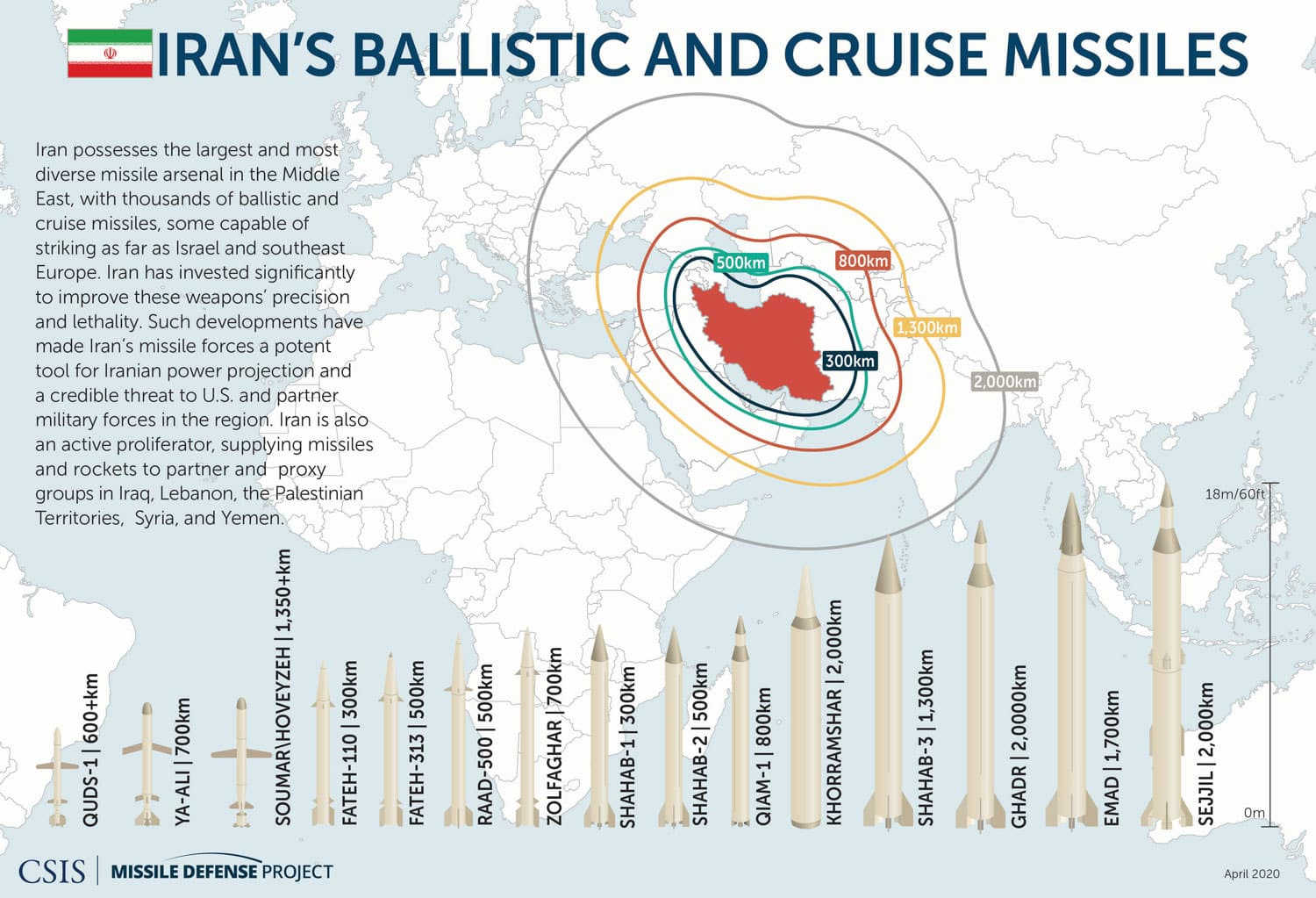
And now, with the FPS-132 gone and air defense interceptors depleted across the Gulf, the more capable systems - Fattah, Kheibar, hypersonic glide vehicles - don’t face the same intercept environment they would have faced this morning.
An IRGC advisor was explicit: “What we fired today were our last-stock missiles. What comes next are systems and weapons you have never seen before”.
Maybe that’s bravado. Maybe it’s a statement of fact. Probably somewhere in between.
What happens overnight matters more than what happened today. The blinding phase was preparation, not conclusion. Once you’ve confirmed the eyes are gone and the interceptor stocks are degraded, you bring in what you’ve been holding back. We’re almost certainly looking at an escalated barrage in the coming hours - into Israel, possibly at the remaining US naval assets in the Gulf. Iran has explicitly threatened to sink the USS Abraham Lincoln. US warships have reportedly been pulling back toward the Indian Ocean. That tells you something about how the US military is reading the situation.
The path out of this - if there is one - requires one of two things. Either Iran sustains enough damage to its command structure that it sues for terms, which hasn’t happened and shows no sign of happening, or the US finds a way to declare sufficient success and withdraw before the cost becomes politically catastrophic for Trump. Alex Christoforou put the timeline bluntly this morning: Trump needs a knockout or technical knockout in roughly two weeks, or the situation reverses on him politically. He’s now past the first round, and nothing looks like it’s landing clean.
Still devolving…
The bombing of the girl's school in Minab, Iran is horrific. Words are inadequate to describe evil like this.
Well summarized, NO1.
When I look at all the silliness going on in the world, everything going the opposite of how it is or should be (example, like the board of peace), I'm now convinced that my reality has traversed into a parallel (string theory) inverted universe. I want out of here, now. How do I get myself back to reality? Beam me up the hell outta here, Scottey. 😂 This planet is too screwed up for me.
Will do, Jim.