
The drone incursion
Questions without answers

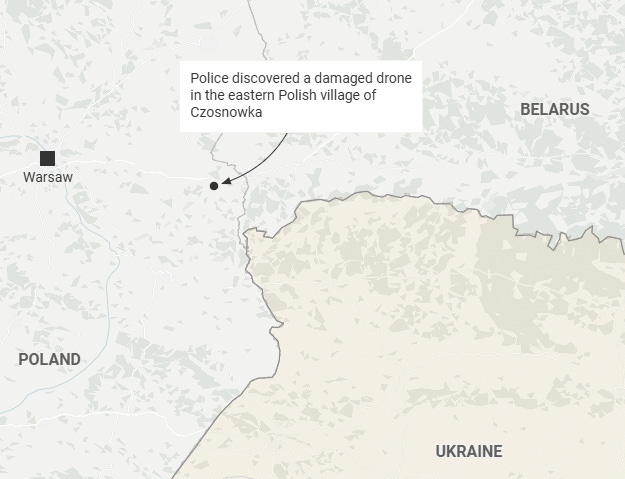
On the night of September 9 to 10, allegedly 19 drones violated Polish airspace in what officials termed as the most serious European security breach since Russia's invasion of Ukraine. Poland's subsequent invocation of NATO’s Article 4 triggered an emergency alliance consultation. But the incident raises fundamental questions about air defense (AD) capabilities, evidence transparency, and the convenient timing of events that could potentially justify deeper Western involvement in the Ukraine conflict.
Beneath this official narrative lies a maze of unanswered questions, operational failures, and suspiciously convenient timing that demands closer scrutiny. The incident's strategic implications—occurring precisely when Ukraine faces potential defeat and Western support wavers—merit examination of all possible explanations, not just the most politically convenient ones.
The most glaring inconsistency involves the seven-hour duration across hundreds of kilometers of Polish territory. How do 19 drones traverse from the eastern border to within 50 kilometers of Warsaw? A distance of over 400 kilometers! While supposedly being "tracked" by NATO's most advanced AD systems?
Polish authorities claim the violations lasted from 11:30 PM to 6:30 AM, yet they managed to only intercept 8 out of the 19 targets. This represents a 58% failure rate against slow-moving drones using NATO’s best. Poland's F-16s, Dutch F-35s, German Patriots, and Italian AWACS coordination. Either NATO's eastern flank defense architecture is fundamentally broken, or something else entirely occurred.
The geographic spread of impact sites—from Wyryki-Kolonia on the Ukrainian border to Oleśno 400 kilometers north—suggests either a complete failure of NATO’s AD or a carefully orchestrated event designed to maximize political impact. No serious AD system should allows such extensive penetration without a massive intercept effort or immediate escalation protocols.
Why did the detection system fail to identify multiple aerial targets for hours?
Why were civilian aircraft not immediately grounded across eastern Poland?
Why did Warsaw's airports remain operational during an alleged mass drone attack heading toward the capital region?
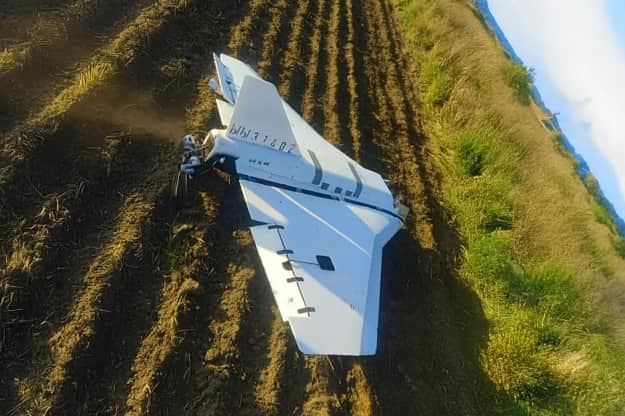
The physical evidence raises as many questions as it answers. Gerbera drone wreckage photographed in Tomaszów Mazowiecki appeared remarkably intact for an allegedly "shot down" target, showing minimal impact damage inconsistent with air-to-air interception. The drone's foam-and-plywood construction might explain its survival, but not the pristine condition of other critical components.
Additionally, no explosive payloads were found in the recovered wreckage—unusual for Russian offensive operations but perfectly suited for creating a violation incident without incurring actual casualties. This might suggest either a reconnaissance mission, testing NATO’s ADs, or a deliberate provocation designed to justify a political response rather than inflict military damage.
Polish authorities have not provided much technical details about the intercept methods, drone specifications, or any payload analysis. For an incident triggering NATO’s Article 4, this lack of transparency prevents independent verification of a potential Russian origin, the control mechanism, or any operational intent.
Belarus claimed responsibility for some of the drones, stating they shot down several "lost drones" that had veered off course due to electronic warfare interference. This explanation—drones redirected by GPS spoofing or jamming—could account for the unexpected flight paths.
But the incident's timing proves suspiciously convenient for multiple Western interests. Brussels wants to increase defense spending. Ukraine faces multiple military setbacks. Thus, September 2025 marks one of those critical moments to keep the money flowing: renewed U.S. congressional debates over Ukraine funding, European budget preparations including military aid allocations, and growing public fatigue with the conflict's duration and costs.
In three days, there will be Russian-Belarusian military exercises. This provides yet another perfect justification for enhanced NATO eastern flank deployments and emergency defense spending. The conspicuous timing enables politicians to argue for increased military budgets during their annual budget talks when such requests typically face scrutiny.
Ukraine's desperate military situation—facing huge territorial and troop losses as well as reduced Western weapon supplies—creates another strong incentive for an escalatory incident that could justify direct NATO involvement. Zelensky repeatedly calls for NATO peacekeeping forces, which Poland had previously resisted.
The incident occurred during Russia's largest aerial assault on Ukraine since the war began, providing cover for any electronic warfare or cyber operations that might redirect drone navigation systems. Such a timing could mask third-party intervention in drone control systems.
Russian escalation remains one possibility, though the limited scale and non-lethal payload seems inconsistent with Moscow's typical operational patterns. If Russia intended to test NATO resolve, why use decoy drones instead of actual weapons? Why risk Article 5 invocation for minimal tactical gain when Ukraine isn't yet defeated?
An Ukrainian false flag operation represent a more likely scenario worth examining. Kiev possesses significant electronic warfare capabilities and demonstrated cyber expertise. Redirecting Russian drones toward Polish territory could justify the NATO intervention Ukraine desperately needs. Or captured and repurposed drones could be launched during the massive air raids. The timing coincides all too conveniently with Ukrainian requests for (more) direct Western military involvement.
Another possibility is third-party intervention by Western intelligence services. France and Britain have previously proposed a multilateral security force for Ukraine which Poland rejected. An incident demonstrating Polish vulnerability might alter Warsaw's position on those direct interventions. The technical capabilities for drone hijacking—proven possible since Iran's 2011 capture of the U.S. RQ-170—surely exist within NATO intelligence agencies.
Occam’s Razor: accidental redirection through electronic warfare represents one the most likely explanations. Combat zones feature intensive GPS jamming and spoofing that could genuinely scramble drone navigation systems. Belarus's explanation about electronic warfare interference causing course deviations has the technical plausibility.
Or of course a combination of any of the scenarios above.
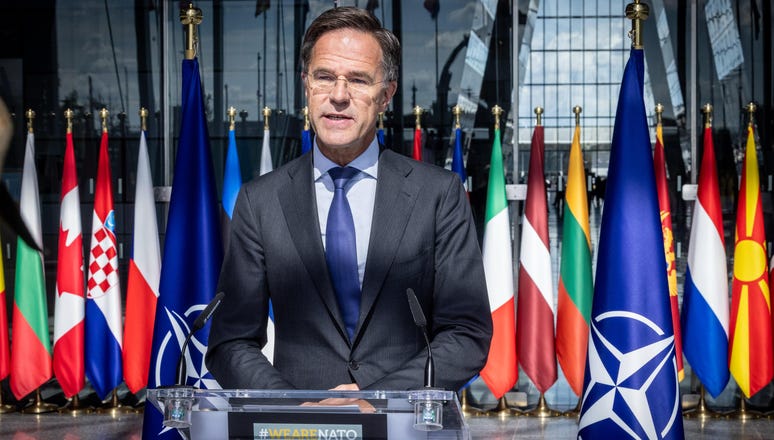
NATO Secretary-General Mark Rutte's response emphasized alliance unity while carefully avoiding commitment to some undetermined retaliatory action. His characterization as "absolutely reckless" provided political rhetoric without military consequences—suggesting either deliberate escalation management or awareness that retaliation might be inappropriate.
I think what we have seen last night was a very successful reaction by NATO and Allies, including of course, Poland itself, but also the Dutch and the Italians and the Germans, everybody involved. And I'm really impressed. So of course, we always have to make sure that we are one step ahead. But I think last night showed that we are able to defend every inch of NATO territory including, of course, its airspace.
— Mark Rutte
The Article 4 rather than Article 5 invocation indicates even Polish authorities recognize the incident's ambiguous nature. Article 4 consultations allow diplomatic responses without triggering the automatic collective defense obligations, suggesting Poland is uncertain about the incident -actual aggression versus accident. Or if they’re suspecting third-party intervention.
Alliance member reactions proved notably uniform—almost suspiciously so—with Germany, France, Britain, Netherlands, and Italy all immediately characterizing the violations as deliberate provocation. Such instant consensus suggests either prior coordination or a shared interest in a particular interpretation.
Expert consensus claiming "deliberate escalation" should be viewed skeptically given these same experts' frequent alignment with official narratives and institutional interests. Military analysts depends on government access and defense industry relationships. As such, they rarely challenge convenient explanations that would justify increased spending and involvement.
Regardless of the reason, this incident exposed catastrophic AD failures that NATO cannot simply ignore. Seven hours of penetration across hundreds of kilometers represents either systemic incompetence or deliberate inaction that demands investigation. (I guess Ruttes ‘inch’ is a bit longer than for most of us)
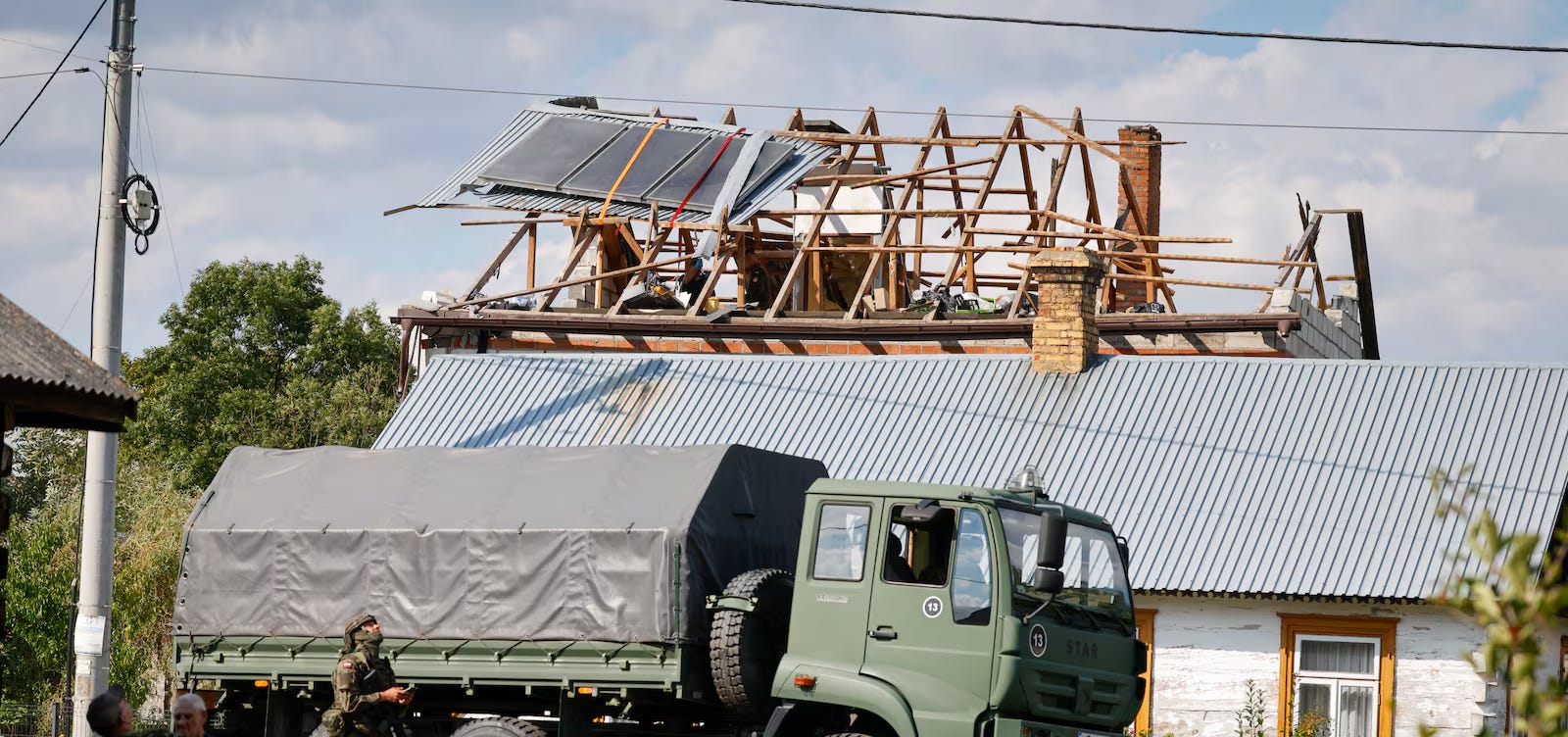
Detection system gaps allowed multiple aerial targets to traverse the world’s most sophisticated radar networks unimpeded. Either NATO's integrated AD architecture requires a complete overhaul, or those operators deliberately allowed penetration for political purposes.
Coordinating the response between Polish, Dutch, German, and Italian assets failed which would suggest either inadequate training or intentional delays in engagement authorization. Professional AD operations should achieve a 100% intercept rate against such slow-moving targets.
Verification of any claims made by system mouthpieces are prevented because of the limited public disclosures surrounding the successful intercepts, drone specifications, or just about any operational details. Such opacity obviously serves political narratives while preventing a technical analysis that might reveal additional inconvenient truths.
Conclusion
This incursion raises more questions than it answers, with the official narrative failing to address certain critical operational inconsistencies and a suspiciously convenient timing. While the Russian escalation angle remains a possibility, more likely alternative explanations involving a Ukrainian false flag operation, Western intelligence interventions, or simple electronic warfare redirecting the drones are much more likely and should be given serious consideration.
The incident's political utility for justifying NATO involvement, increase its defense spending, and a potential direct intervention in Ukraine cannot be ignored. Seven hours of air defense failures across hundreds of kilometers suggests either catastrophic incompetence or deliberate inaction that undermines the official narrative.
Until Polish authorities provide comprehensive technical evidence, transparent operational details, and a credible explanation for its massive AD failures, we should maintain a healthy skepticism about convenient explanations that serve a particular political interest during this critical phase in the Ukraine conflict.
Supposedly ten thousand Polish mercenaries have already perished in the West's war with Russia. Why should the Russians step gingerly around a people (the composite West) who believe their own lying narrative? Alex Krainer makes the point that the Brits, French and Germans are in very serious financial difficulties. The lost souls in Western governance need to gin up troubles to serve as a distraction as the wheels come off their creaky economies. "Look over there! A squirrel". They can also lock down any dissent. Discretion is only seen in the Chinese and Russian camps. The West has really stepped in it this time. Centuries of Western piracy and murder finally gets called out. It's difficult for me to believe that this cluster-f*ck doesn't go nuclear. Hope dies last.