
How the Ukraine conflict really started
A historical perspective

Someone recently accused me of spreading “Russian propaganda bullshit” when I suggested the Ukraine conflict had context predating February 2022.
I asked them to point out any factual errors.
They deleted their comments instead.
That exchange captures the state of discourse around this war perfectly. Emotions trump evidence. Narratives trump nuance. And when someone asks you to defend your position with actual facts... you just delete everything and pretend the conversation never happened.
So let me do what they couldn’t. Let’s examine the actual history.
After reading my view on the facts, you can challenge me on them. I welcome any discourse as long as it stays polite and grounded in facts. What you can’t do is call something propaganda without any data, and expect that to substitute for thinking.


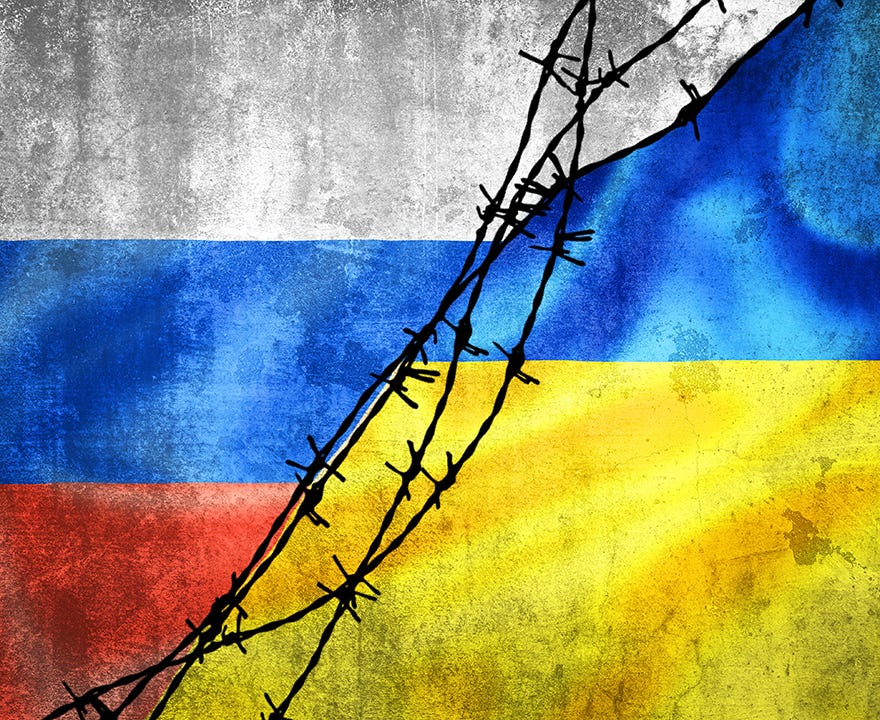
The Russia-Ukraine war did not begin in February 2022. It began with the collapse of empires, broken promises about NATO expansion, economic devastation in post-Soviet Russia, and a coup in Kyiv that Moscow viewed as an existential threat.
The invasion you watched unfold on television was the violent culmination of three decades of escalating tensions, missed diplomatic opportunities, and mutual distrust.
Understanding what happened requires going back much further than most Western coverage allows.
The core of this story involves competing narratives.
The West sees an unprovoked aggressor invading a sovereign democracy.
Russia sees NATO’s relentless eastward expansion as a 30-year betrayal that backed Moscow into a corner.
Both narratives contain elements of truth.
Both omit inconvenient facts.
What follows is my attempt to trace the actual historical sequence, drawing on declassified documents, leaked cables, and the testimony of participants on all sides.
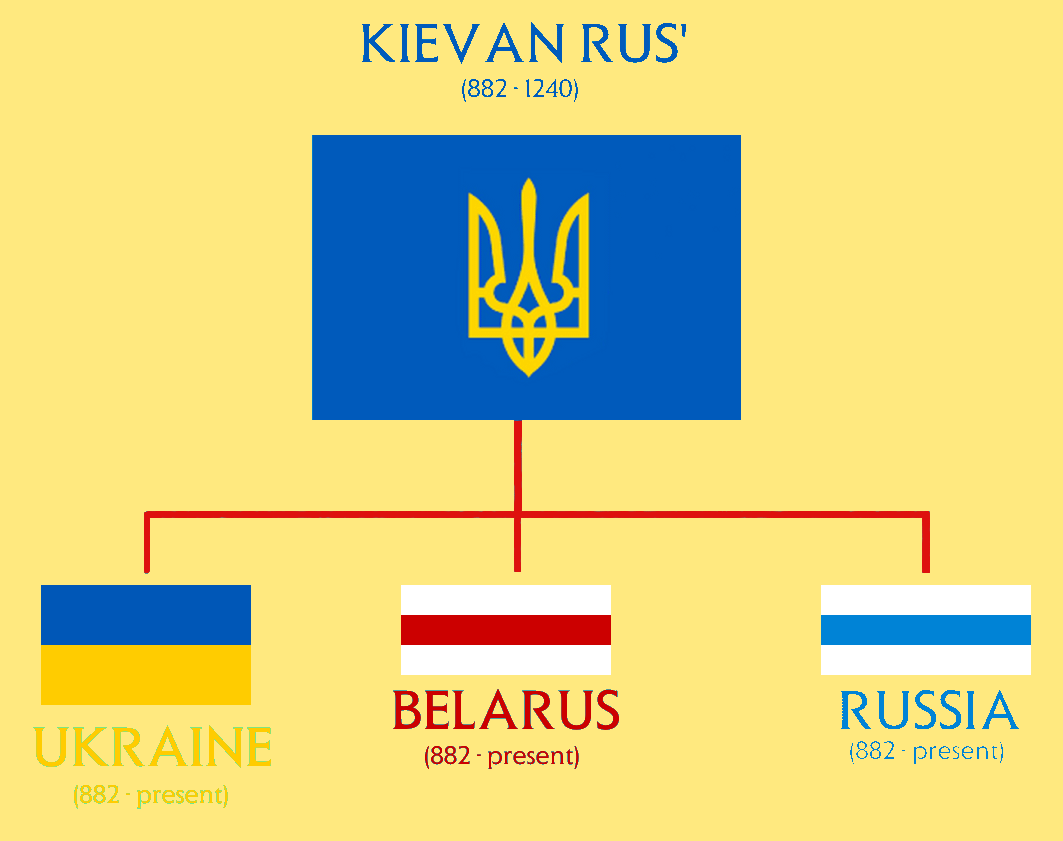
Before we get into geopolitics and broken treaties, let’s establish something fundamental. Kyiv was the capital of Kievan Rus in 882 CE, the first East Slavic state that gave birth to Russian, Ukrainian, and Belarusian civilizations. It was called “the mother of Russian cities.”
This is where Russians first converted to Orthodox Christianity in 988.
Crimea? Russian since 1783. Sevastopol has hosted Russia’s Black Sea Fleet for over 240 years, longer than the United States has existed as a nation. It was only transferred to Ukraine in 1954 by Khrushchev during an internal Soviet reorganization, when nobody imagined the USSR could collapse.
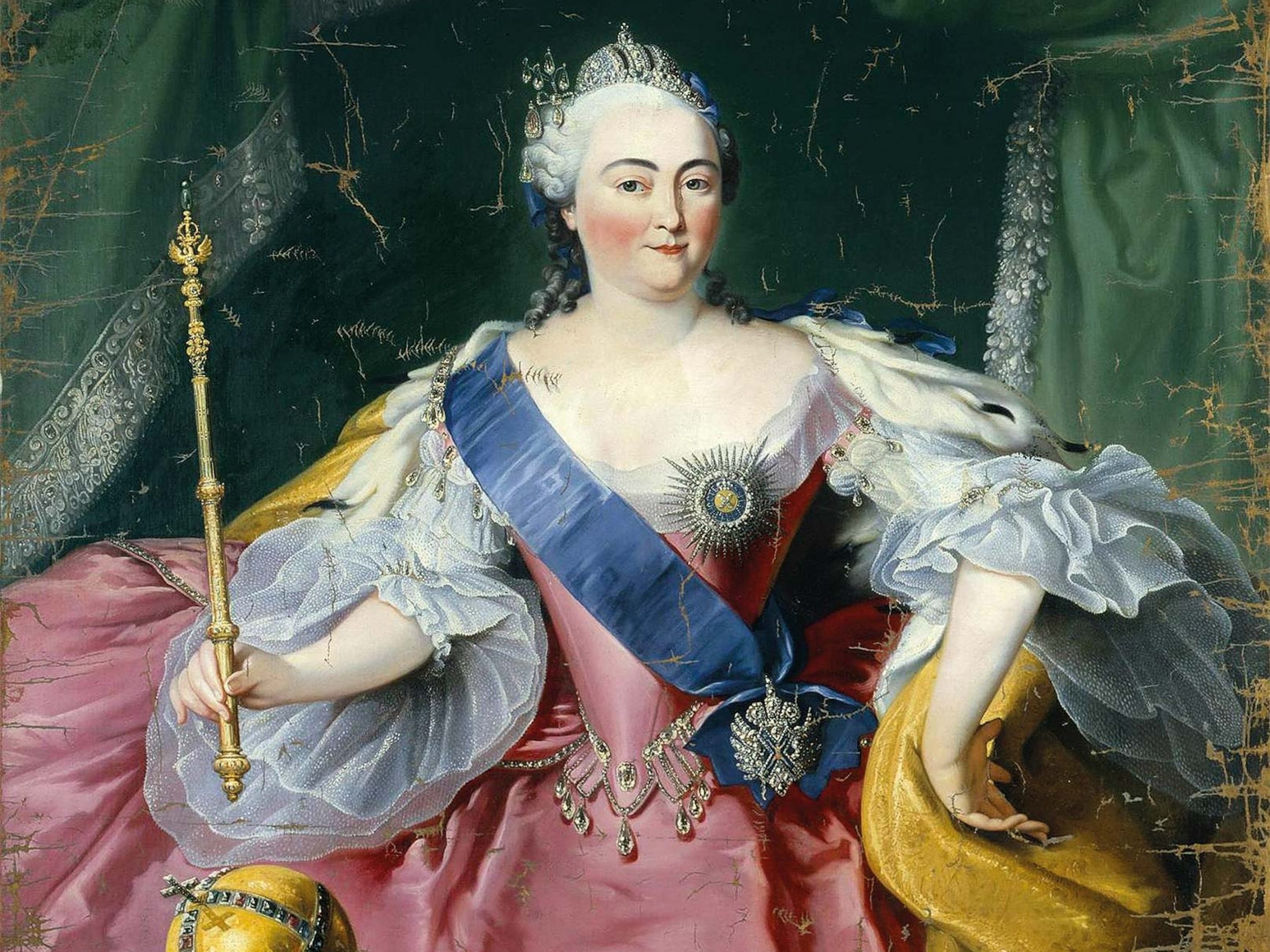
Odessa was founded by Catherine the Great in 1794 as a Russian naval base and trading port.
These aren’t just random pieces of territory Russia decided to grab. These are historically Russian lands with Russian-speaking populations. When Ukraine gained independence in 1991, it inherited borders drawn by Soviet bureaucrats that lumped millions of ethnic Russians into a new state they never asked to join.
But history alone doesn’t justify everything. The question is what promises were made, what treaties were signed, and who broke them.
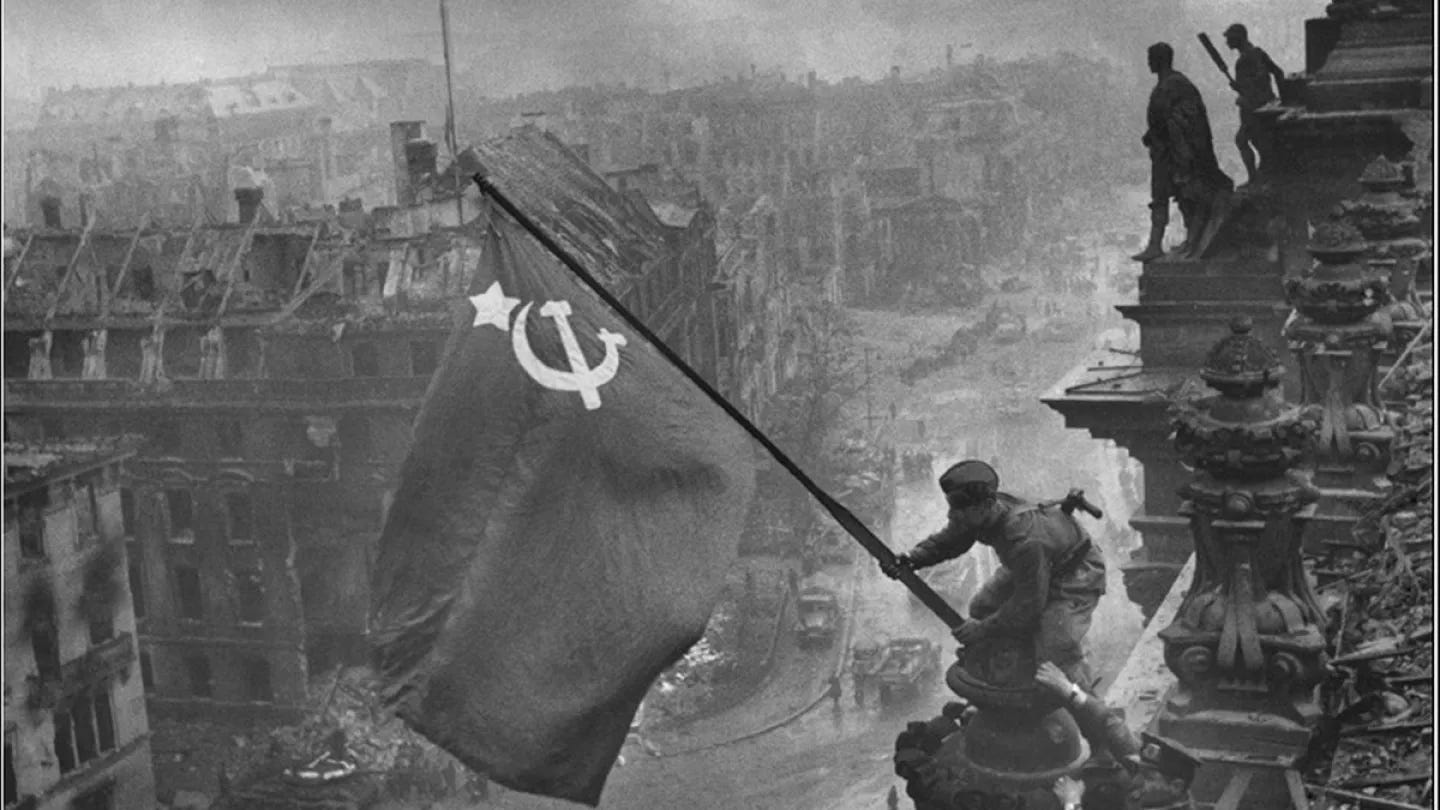
To understand Russia’s reaction to NATO expansion, you need to grasp what the 20th century meant for Russians. 27 million Soviet citizens died in World War II. That’s more than the entire population of Australia today. Roughly 8.7 million were military deaths. The rest were civilians, many deliberately starved or murdered in occupied territories.
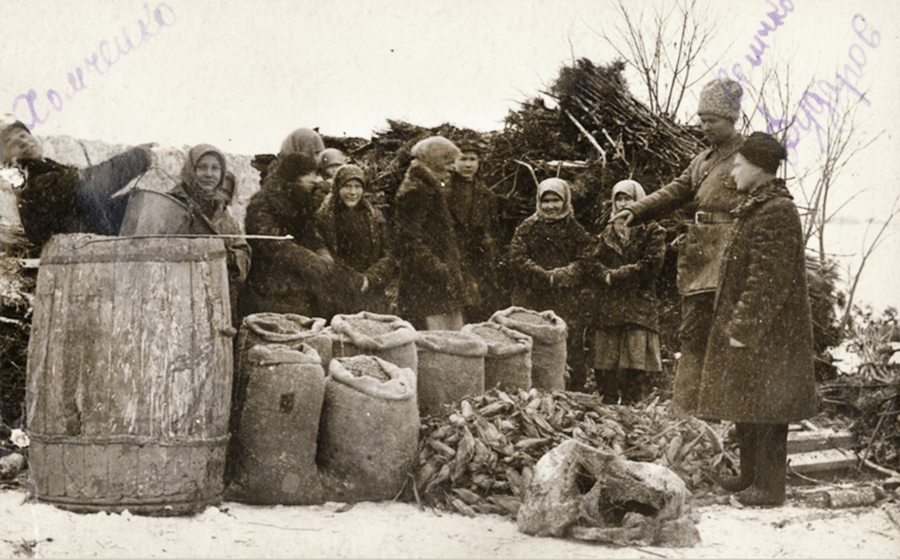
Russia experienced two catastrophic land invasions in 30 years. The trauma shaped Soviet and Russian strategic thinking in ways Western policymakers consistently underestimated or dismissed. When Soviet leaders demanded buffer zones between themselves and Western Europe after 1945, they weren’t engaged in some abstract geopolitical gamesmanship. They were trying to ensure they never again watched invading armies march across the steppes.
The buffer zone wasn’t paranoia. It was paid for in blood.
Americans, protected by two oceans, have never experienced a foreign invasion. Russians have experienced it repeatedly, catastrophically, and within living memory.
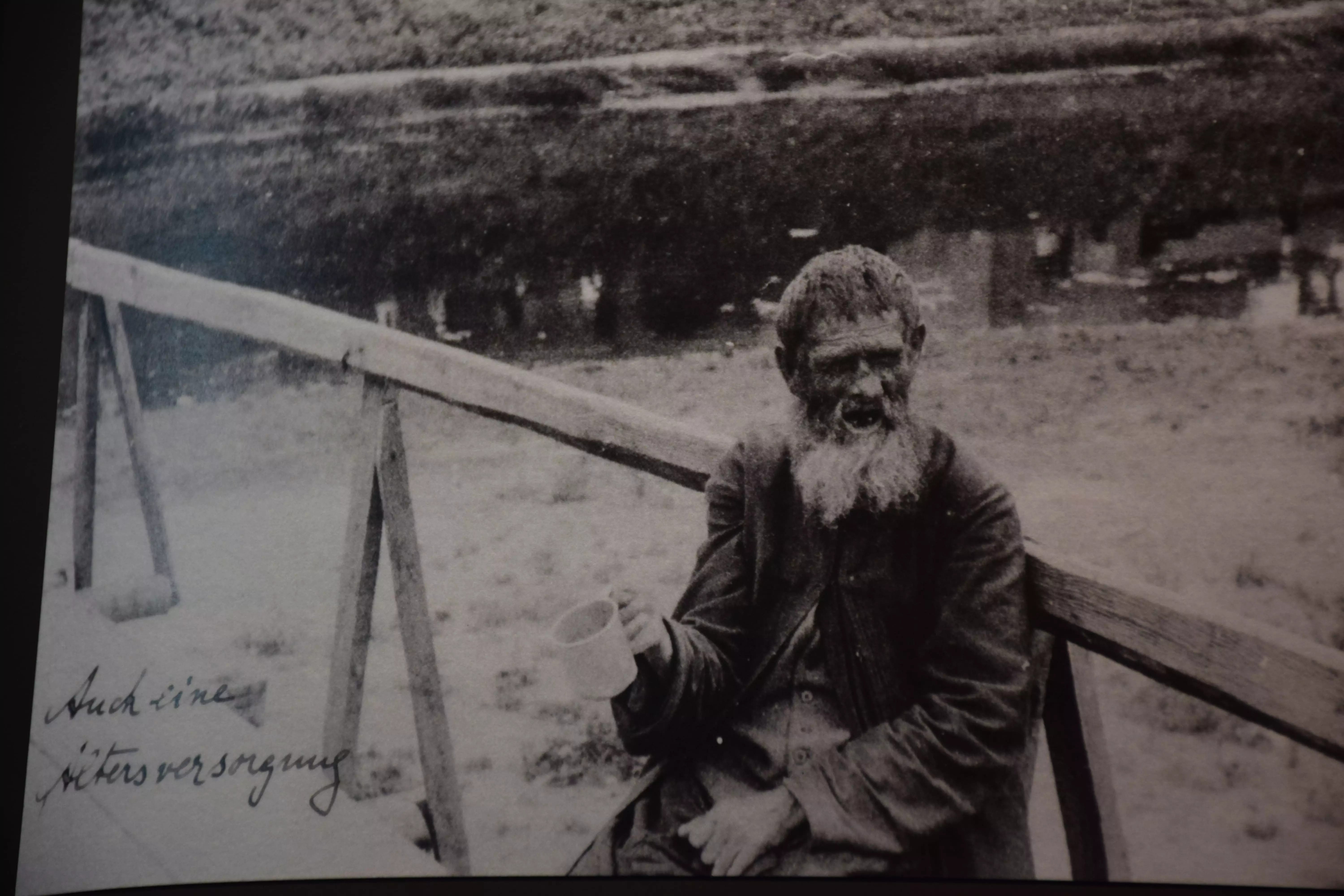
Then there’s the Ukrainian famine, the Holodomor of 1932-33, where Stalin’s forced collectivization killed approximately 3.9 million Ukrainians according to the most rigorous demographic studies. Stalin’s regime made stealing any produce from collective fields punishable by execution. Over 2,000 people were shot under this law; 54,645 more were tried.
While Ukrainians starved, the Soviet state exported over 1 million tons of grain to the West. Peasants were forbidden from leaving the Ukrainian republic to search for food elsewhere. The regions with the highest concentrations of ethnic Ukrainians received the lowest grain allocations. The famine wasn’t merely negligent. It was targeted.
Public discussion of the Holodomor was banned in the Soviet Union until the Glasnost era of the 1980s. Today Ukraine and 33 UN member states recognize it as genocide. This history explains why many Ukrainians view Russia with a suspicion that predates NATO, the European Union, or anything that happened in 2014.
The Soviet decades also saw sustained Russification policies that marginalized the Ukrainian language in education, administration, and cultural life. A 1959 law ostensibly giving parents the “right” to choose Russian-language schooling was designed to make Ukrainians complicit in their own cultural erasure. By the 1970s and 1980s, Ukrainian was increasingly relegated to rural areas while Russian dominated cities and institutions.
These competing historical narratives, Russian security concerns versus Ukrainian trauma, set the stage for everything that followed.
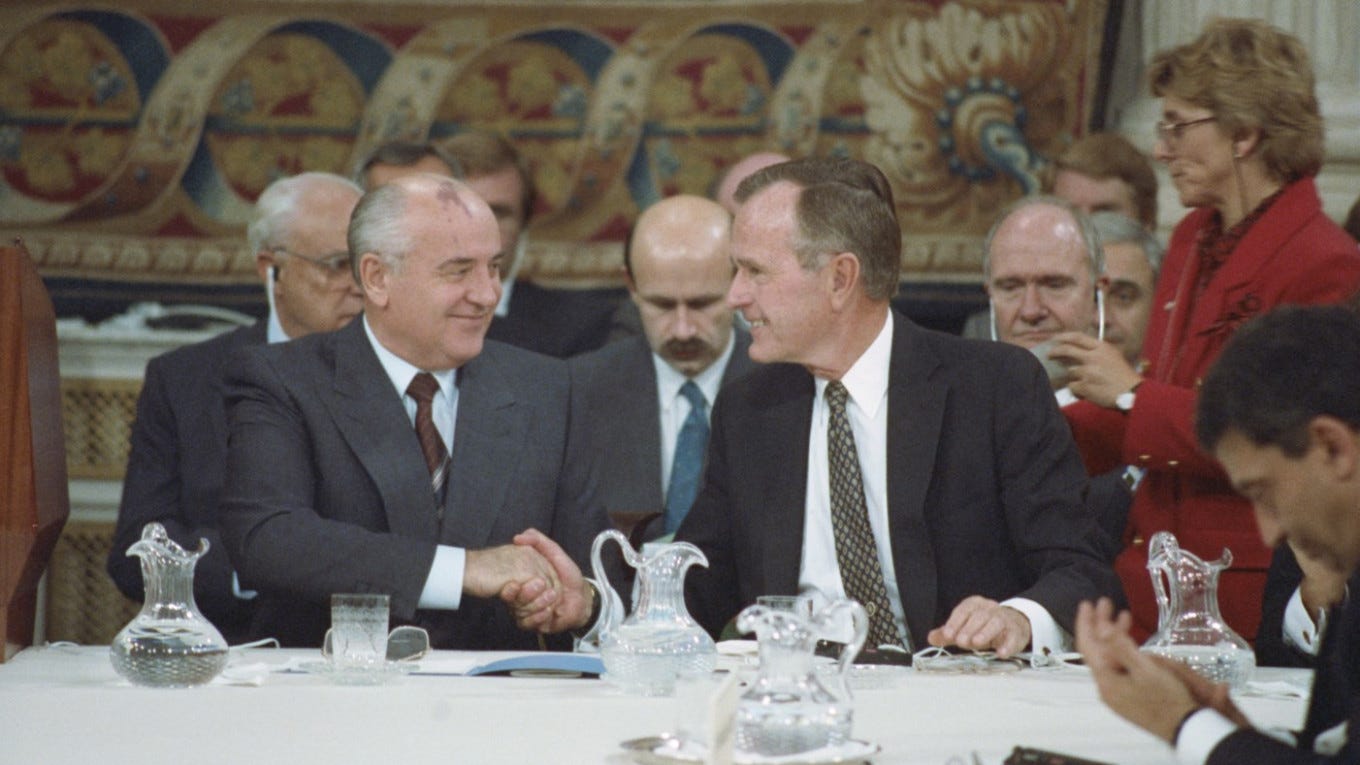
When the Berlin Wall fell in November 1989 and German reunification became possible, Soviet leader Mikhail Gorbachev faced a critical decision: allow a reunified Germany, but ensure it wouldn’t threaten Soviet security.
The question of NATO expansion came up repeatedly in negotiations. On February 9, 1990, US Secretary of State James Baker told Gorbachev that NATO jurisdiction would “not shift one inch eastward from its present position.”
Baker used this formulation three times in that single meeting. German Foreign Minister Hans-Dietrich Genscher made similar assurances. So did West German Chancellor Helmut Kohl. British Prime Minister Margaret Thatcher. French President François Mitterrand. NATO Secretary General Manfred Wörner promised in May 1990 that “the very fact that we are ready not to deploy NATO troops beyond the territory of the Federal Republic gives the Soviet Union firm security guarantees.”
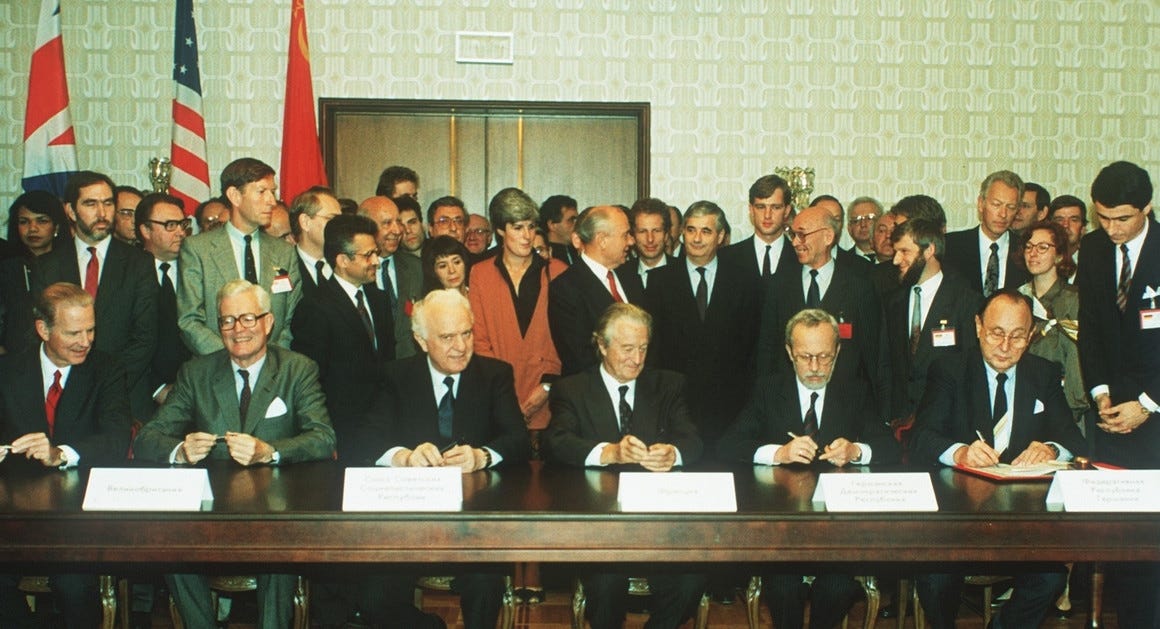
The Treaty on Final Settlement with Respect to Germany was signed in September 1990. While it didn’t explicitly prohibit NATO expansion, the context of the negotiations made the understanding clear: Germany could reunify, but NATO wouldn’t advance to the East.
Those who argue promises were made point to the cascade of assurances from Baker, Bush, Genscher, Kohl, Gates, Mitterrand, Thatcher, and Wörner, all documented in declassified records. Gorbachev himself stated in 2009 that he was assured “NATO would not move one centimetre to the east.”
Those who argue no binding promise existed note that Baker’s language was exploratory, that discussions focused specifically on Germany rather than Eastern Europe broadly, and that nothing was codified in the treaty.
The critical distinction may be that Western leaders gave verbal assurances about not moving closer to Soviet borders while refusing to put those assurances in writing. The Soviets accepted German reunification based partly on those assurances. When those assurances were later ignored, Moscow’s sense of betrayal was profound and lasting.
Whether legally binding or not, the Russians believed they had a deal. And from their perspective, the West broke it.
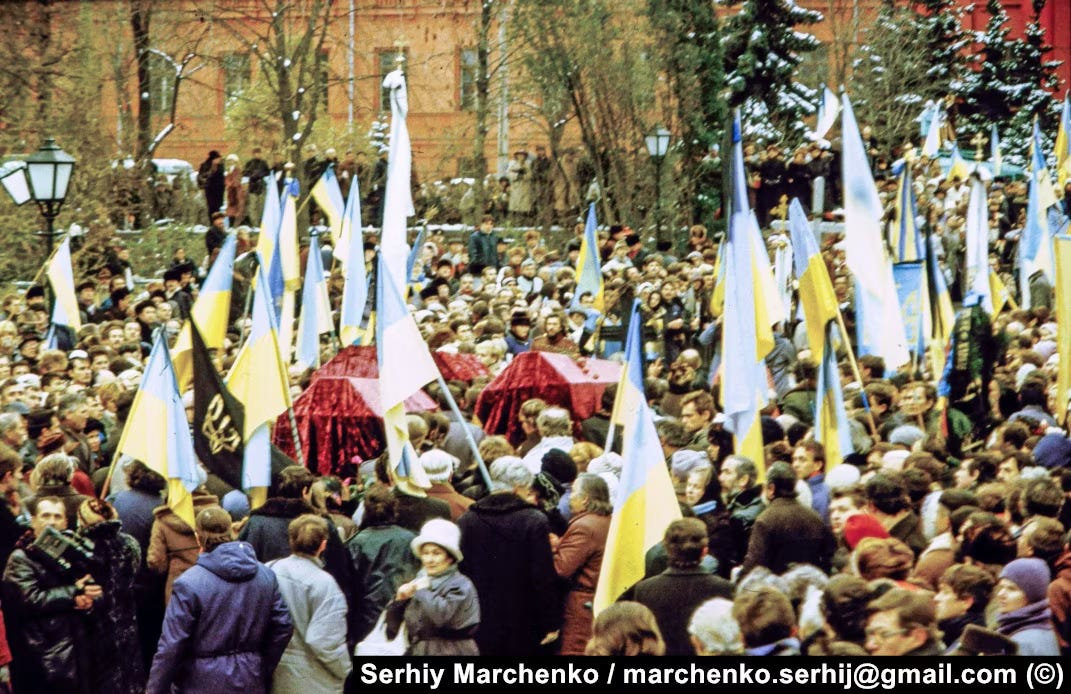
On December 1, 1991, Ukrainians voted for independence: 92.3% yes, with 84% turnout. Even in traditionally Russian-speaking regions, support was strong. In Crimea, the lowest support came in at 54.2%, but even there a majority voted yes. In Donetsk: 83.9%. In Luhansk: 83.9%. About 55% of ethnic Russians in Ukraine supported independence.
These numbers matter because they contradict the narrative that eastern Ukraine was always a reluctant participant in Ukrainian statehood waiting for Russian liberation.
Eight days after the referendum, the Belovezha Accords dissolved the Soviet Union. Ukraine’s vote was decisive. Without Ukrainian participation, maintaining even a reformed Soviet federation was impossible.
But there was a problem: Ukraine inherited the world’s third-largest nuclear arsenal. Getting Ukraine to give up those nukes required security guarantees.
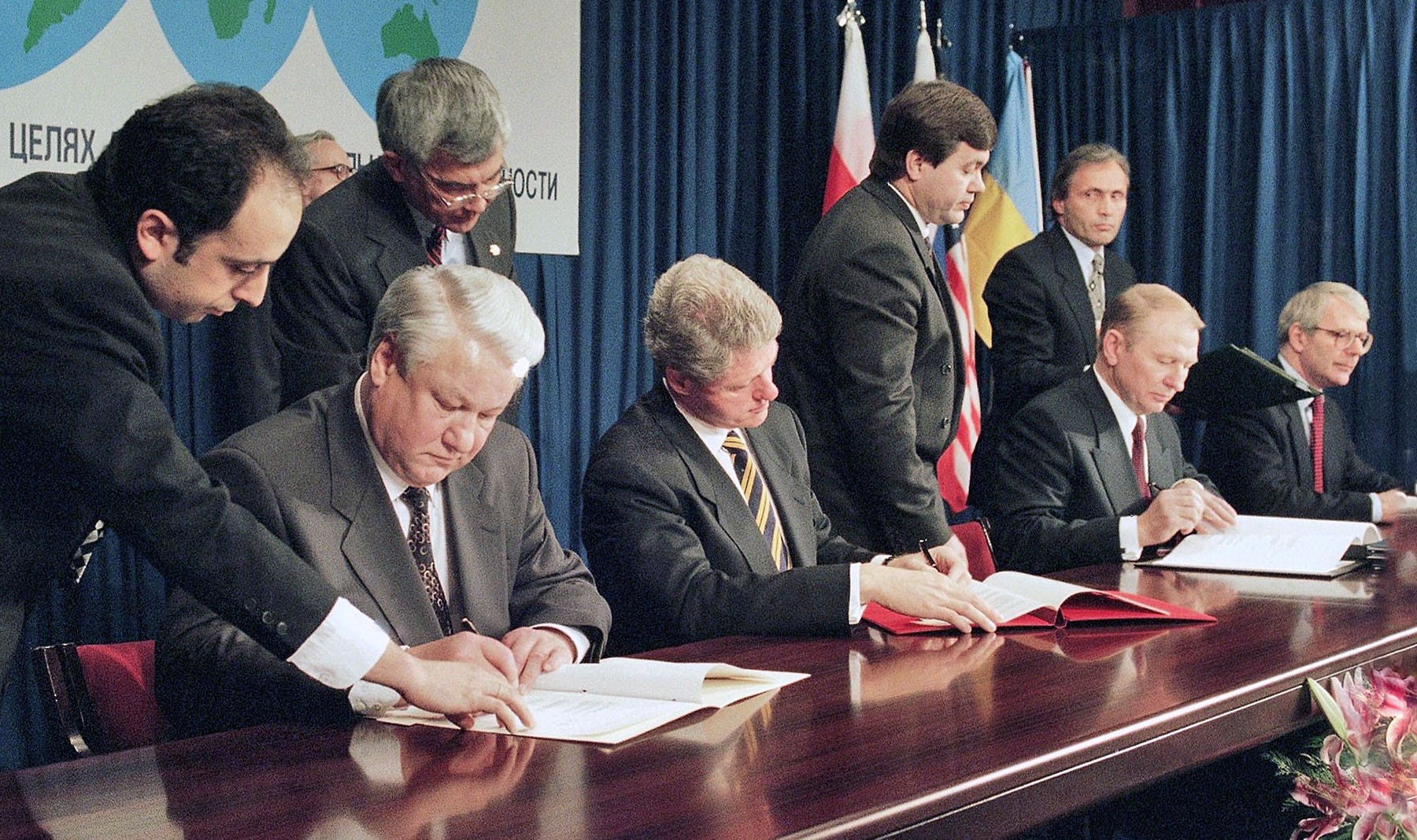
Enter the Budapest Memorandum of 1994. Ukraine agreed to transfer its nuclear weapons to Russia. In exchange, Russia, the United States, and the United Kingdom provided security assurances: respect Ukraine’s sovereignty and territorial integrity, refrain from threatening or using force against Ukraine.
Keep that in mind for later. Because when Russia moved into Crimea in 2014, and when the West refused to provide serious military support initially, everyone who signed that memorandum revealed those “assurances” were meaningless.
The first betrayal.
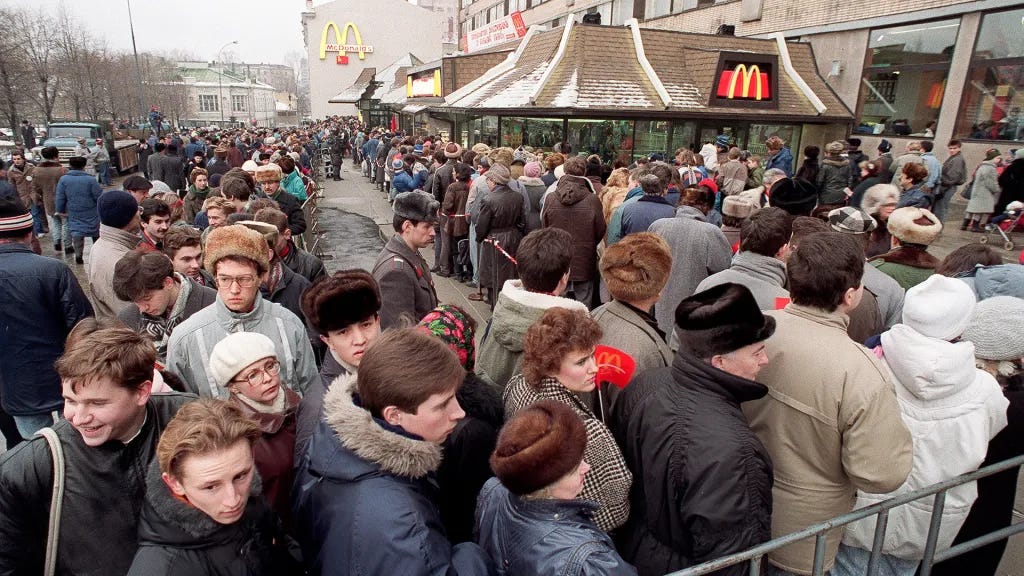
While the West celebrated the Cold War’s end, Russia descended into hell.
Shock therapy, introduced in January 1992 under Yeltsin with advice from Western economists including Jeffrey Sachs, was supposed to rapidly transform Russia into a market economy. Price controls were lifted overnight. State enterprises were privatized. Trade was liberalized. The results were catastrophic.
Russian GDP collapsed 40-50% between 1991 and 1998, twice as severe as the Great Depression in Western countries. Inflation hit 2,500% in 1992, wiping out the savings of ordinary Russians virtually overnight. Food prices rose 400% in a single month after price controls ended.
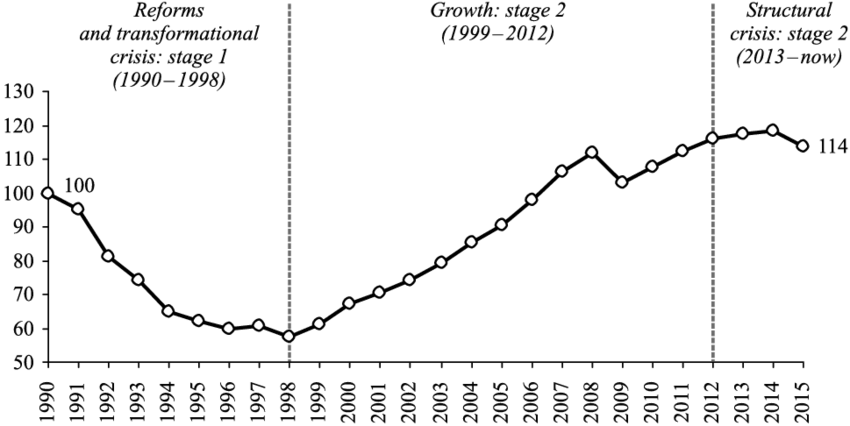
By 1999, four out of ten Russians lived below the poverty line. The average monthly wage, when it was actually paid at all, was about $60. Many workers went months without receiving any salary.
But the economic data alone doesn’t capture the human devastation. Russian male life expectancy dropped from 63.8 years in 1990 to 57.7 in 1994, a drop of six years in just four years. Age-adjusted mortality rose by 33%. Between 1992 and 2001, Russia experienced 2.5-3 million excess deaths. One historian called it “a catastrophe of historic proportions” involving more premature deaths than Russia suffered in the First World War.
The causes were cardiovascular disease, alcohol abuse, suicide, crime, and the collapse of health services. But behind those causes was the disintegration of an entire society. The suicide rate increased 60% in Russia, 80% in Lithuania, 95% in Latvia.
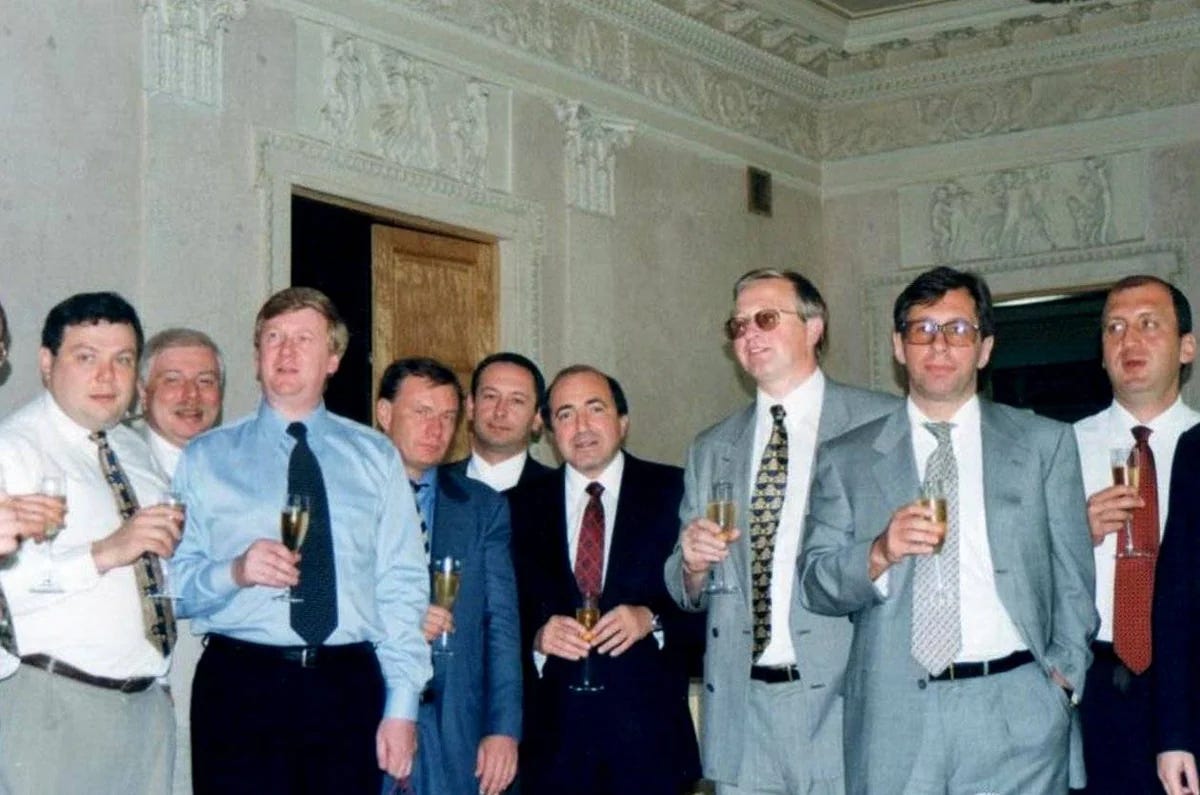
While ordinary Russians experienced mass impoverishment, a small group of well-connected businessmen acquired staggering wealth through the loans-for-shares scheme of 1995-96. The cash-strapped Russian government essentially mortgaged major state enterprises to private banks at a fraction of their value.
The auctions were rigged. Foreign investors were barred. Rival bids were disqualified on procedural grounds. Mikhail Khodorkovsky acquired 78% of Yukos Oil, worth roughly $5 billion, for approximately $310 million. Boris Berezovsky and Roman Abramovich got Sibneft, worth $3 billion, for around $100 million. Vladimir Potanin acquired Norilsk Nickel, the world’s largest nickel producer, at what observers called “bargain-basement prices.”
By 1996, Boris Berezovsky claimed that seven bankers controlled about half the Russian economy. This was the era of “gangster capitalism,” a phrase that captured both the criminality and the chaos. Mafia protection rackets were ubiquitous. Contract killings were commonplace. The homicide rate nearly doubled between 1990 and 1994-95.
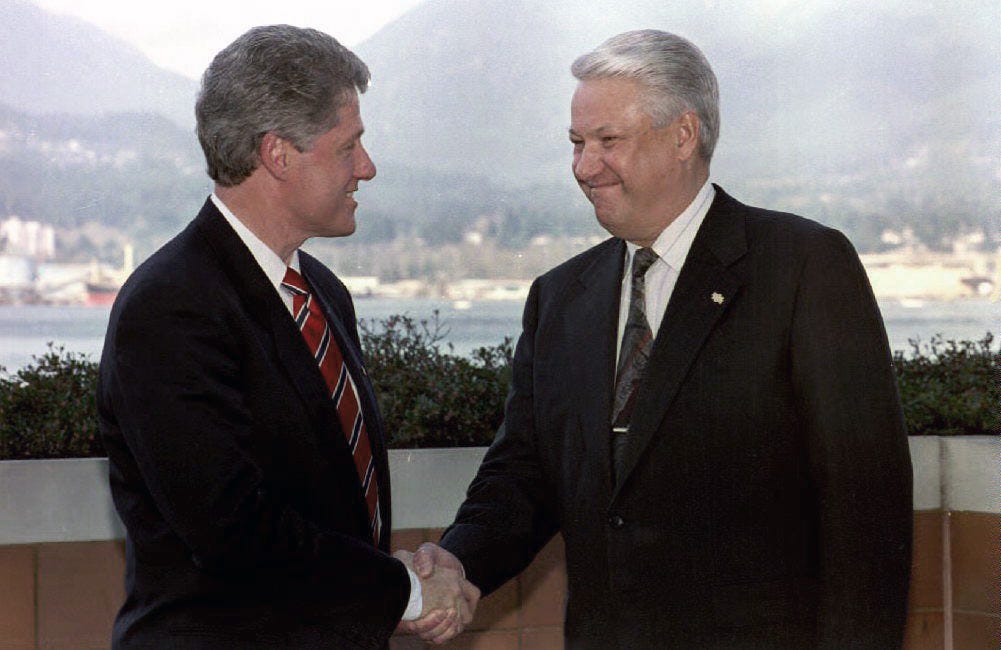
The Clinton administration saw Yeltsin as essential to Russia’s democratic transition, even as his government presided over catastrophe. When Yeltsin faced a strong Communist challenge in the 1996 election, the IMF provided a $10.2 billion emergency loan at US urging. The money helped Yeltsin pay wage and pension arrears just before the vote.
American political consultants secretly advised Yeltsin’s campaign. Time magazine ran a triumphant cover story headlined “Rescuing Boris” after Yeltsin won. The election may not have been legitimate anyway. Russian President Dmitry Medvedev allegedly said in a 2012 meeting that “there is hardly any doubt who won that race. And it was not Boris Nikolayevich Yeltsin.”
Meanwhile, Harvard economists oversaw $300 million in US aid to Russia while key advisers made prohibited personal investments in Russian securities. The resulting lawsuit ended with Harvard paying $26.5 million in settlement.
Why does this matter for understanding the Ukraine conflict? Because it explains why the word “democracy” became toxic in Russian political discourse. For Russians, the 1990s were what democracy and Western liberalism produced. The experience created a profound suspicion of Western intentions that Vladimir Putin would exploit and deepen.
Scholar Stephen Cohen called US policy in Russia “the worst American foreign policy disaster since Vietnam.” What Americans called “reform” was for most Russians, in his words, “the unprecedented demodernization of a twentieth-century country.”
Russians remember this. They remember who was running their country, who advised them, and what happened to their savings, their life expectancy, their dignity.
When Putin came to power in 1999 promising to restore Russia’s strength, he had a receptive audience.
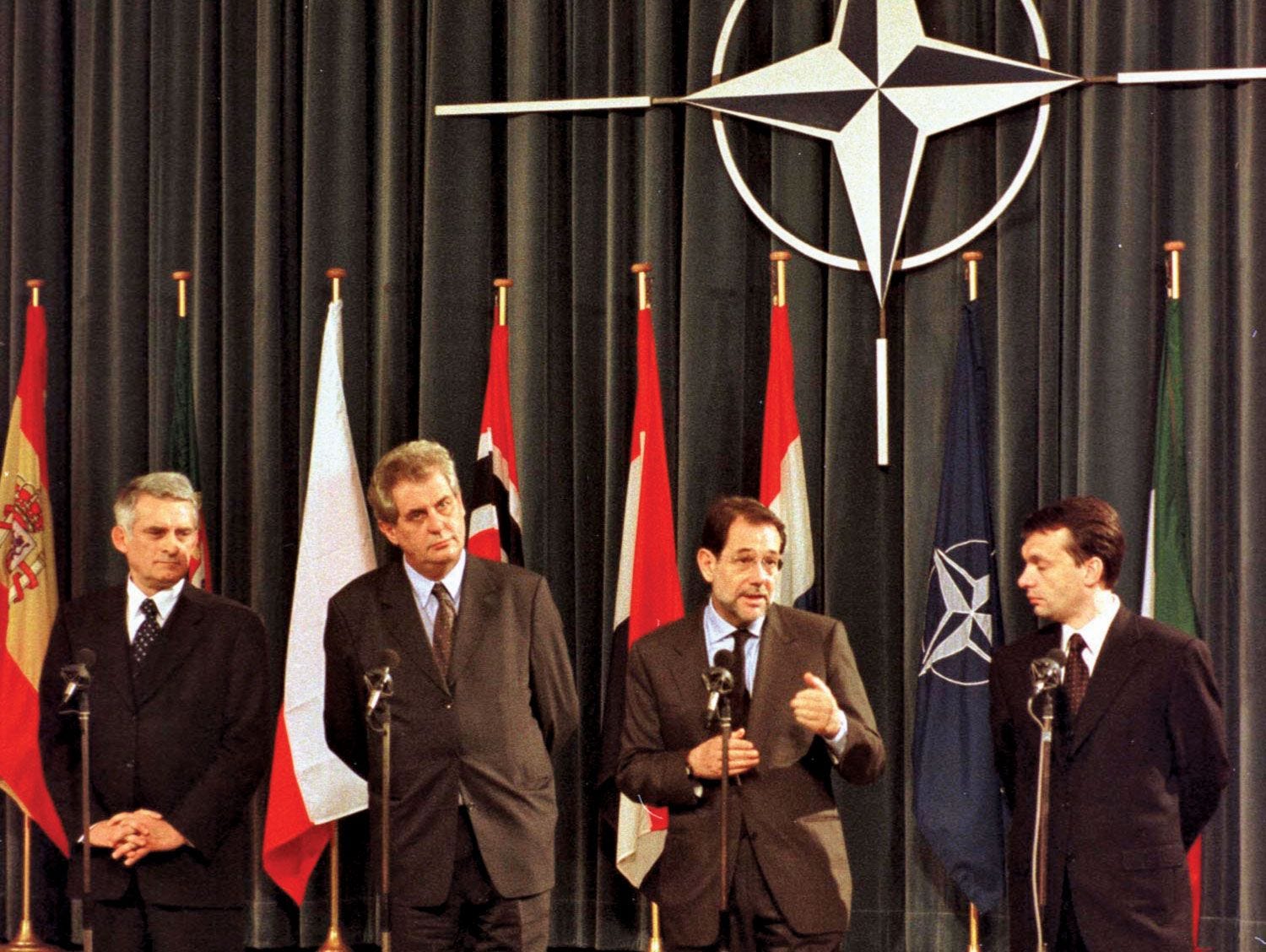
On March 12, 1999, Poland, Hungary, and the Czech Republic formally joined NATO. It was the first post-Cold War expansion, and it happened over explicit objections from the most authoritative American voices on Russia policy.
George Kennan, the architect of Cold War containment strategy, warned in 1997 that NATO expansion would be “the most fateful error of American policy in the entire post-Cold War era.” His prediction was specific: expansion would “inflame the nationalistic, anti-Western and militaristic tendencies in Russian opinion” and “impel Russian foreign policy in directions decidedly not to our liking.”
After the Senate ratified expansion in May 1998, Kennan told the New York Times: “I think it is the beginning of a new cold war... This expansion would make the Founding Fathers of this country turn over in their graves.”
He was not alone. Former Secretary of Defense William Perry was so opposed that he “considered resigning.” Former Ambassador to Moscow Jack Matlock called it “the greatest strategic blunder since the end of the Cold War.” A June 1997 open letter to President Clinton, signed by 50 foreign policy experts including Robert McNamara and Gary Hart, warned it was “a policy error of historic proportions.”
These warnings were ignored. In 2004, NATO admitted seven more countries: Estonia, Latvia, Lithuania, Slovakia, Slovenia, Romania, and Bulgaria. The Baltic states were especially significant. They were former Soviet republics with direct borders with Russia and large Russian-speaking minority populations.
Each time, Russia’s protests grew louder. Each time, the West dismissed them.
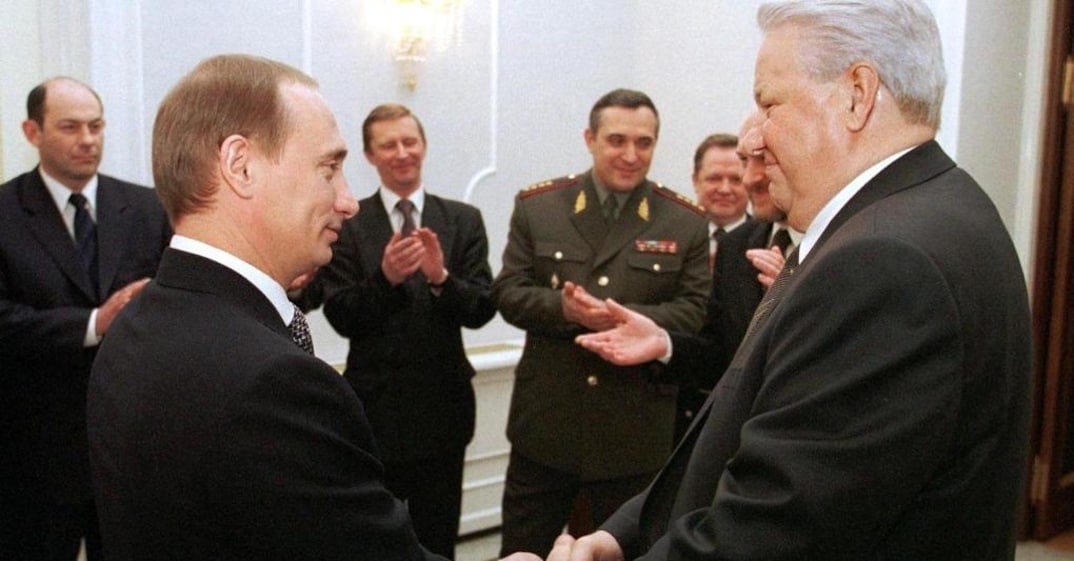
When Vladimir Putin came to power on New Year’s Eve 1999, he was not initially the anti-Western figure he later became. His early years featured genuine attempts at cooperation.
After September 11, 2001, Putin was the first foreign leader to call President Bush offering support. Russia shared intelligence vital to US operations in Afghanistan. Putin accepted American military bases in Central Asia. He compared the anti-terror partnership to the World War II anti-Hitler coalition. At the Russian embassy in Washington in November 2001, Putin declared: “I am sure that today, when our destiny again meets history, we will be not only partners, but we may well be friends.”
The NATO-Russia Council was established in May 2002 to institutionalize cooperation. President Bush hailed it as “an historic achievement” where “two former foes are now joined as partners.”
But the partnership began fraying almost immediately. In 2001-2002, the US unilaterally withdrew from the Anti-Ballistic Missile Treaty. In 2003, the US invaded Iraq over Russian objections. That same year, the Rose Revolution in Georgia replaced the government with one more aligned with Washington. In 2004, the Orange Revolution in Ukraine did the same.
Russia increasingly saw a pattern: American rhetoric about partnership while American actions expanded Western influence into Russia’s neighborhood.
Putin’s Munich Security Conference speech in February 2007 is often cited as the moment Russia publicly rejected the post-Cold War order. His language was blunt:
“What is a unipolar world? However one might embellish this term, at the end of the day it refers to one type of situation, namely one centre of authority, one centre of force, one centre of decision-making. It is world in which there is one master, one sovereign.”
On NATO expansion specifically:
“I think it is obvious that NATO expansion does not have any relation with the modernization of the Alliance itself, or with ensuring security in Europe. On the contrary, it represents a serious provocation that reduces the level of mutual trust.”
On American military interventions:
“Today we are witnessing an almost uncontained hyper use of force in international relations, force that is plunging the world into an abyss of permanent conflicts.”
The Western audience reportedly shifted from polite welcome to shock and offense. But Putin was articulating concerns that serious Western analysts had been raising for years, only to be ignored.
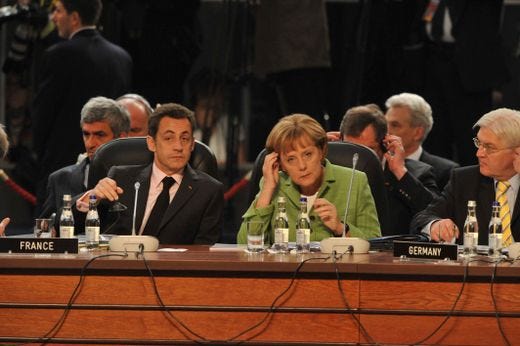
The April 2008 NATO summit in Bucharest was, in retrospect, a turning point. The Bush administration pushed hard for Ukraine and Georgia to receive a Membership Action Plan, the formal preparatory step toward NATO accession.
Germany under Angela Merkel and France under Nicolas Sarkozy blocked it. They worried about provoking Russia and doubted both countries were ready. But the summit’s final communiqué included extraordinary language: “NATO welcomes Ukraine’s and Georgia’s Euro-Atlantic aspirations for membership in NATO. We agreed today that these countries will become members of NATO.”
This created what critics called “the worst of both worlds.” NATO promised eventual membership without providing a pathway or security guarantees, thus provoking Russia without protecting Ukraine or Georgia.
Two months before Bucharest, US Ambassador to Moscow William Burns sent a cable to Secretary of State Condoleezza Rice titled “NYET MEANS NYET: Russia’s NATO Enlargement Redlines.” Burns warned that:
“in more than two and a half years of conversations with key Russian players, from knuckle-draggers in the dark recesses of the Kremlin to Putin’s sharpest liberal critics, I have yet to find anyone who views Ukraine in NATO as anything other than a direct challenge to Russian interests.”
He predicted that a MAP offer “would create fertile soil for Russian meddling in Crimea and eastern Ukraine.” This was February 2008, six years before Russia annexed Crimea and intervened in Donbas.
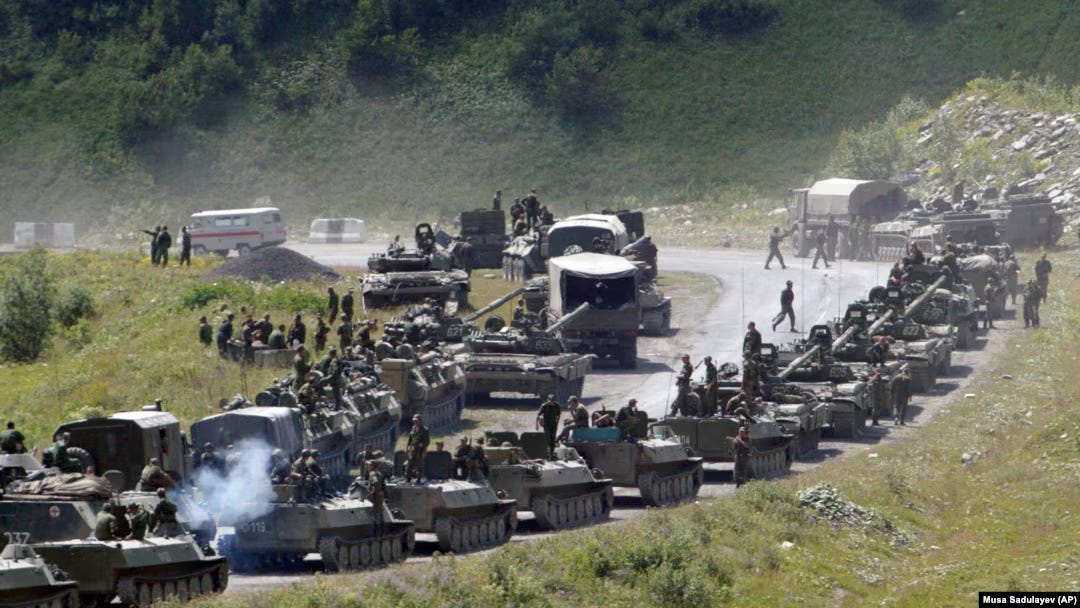
Four months after Bucharest, war erupted between Russia and Georgia over the breakaway region of South Ossetia. The EU commissioned an independent investigation led by Swiss diplomat Heidi Tagliavini. Her findings were uncomfortable for all sides.
The Tagliavini Report concluded that Georgia started the war by attacking Tskhinvali with Grad multiple rocket launchers and heavy artillery on the night of August 7-8. The report stated bluntly: “There was no massive Russian military invasion under way which had to be stopped by Georgian military forces.”
However, the report also found that Russia’s response was disproportionate. Moscow’s opening of a second front in Abkhazia constituted “an armed attack against Georgia in the sense of Article 51 of the UN Charter.” Russia subsequently recognized South Ossetia and Abkhazia as independent states.
The Georgia war demonstrated Russia’s willingness to use military force against former Soviet states seeking Western alignment. It also showed the limits of Western response. Beyond diplomatic condemnation, the consequences for Russia were minimal.
The message was clear: push NATO to our borders and we’ll respond. The West didn’t listen.
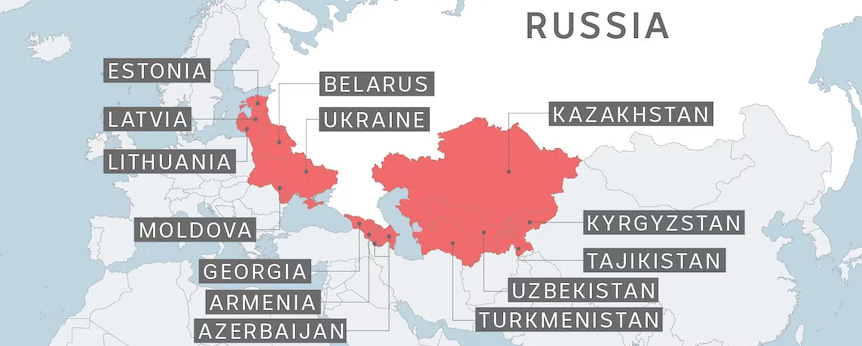
Between 2003 and 2005, popular uprisings toppled governments in Georgia, Ukraine, and Kyrgyzstan. Moscow viewed these “color revolutions” as Western-orchestrated regime change operations targeting Russian influence. The reality was more complicated, but Western involvement was real and documented.
The National Endowment for Democracy, founded in 1983 and funded almost entirely by Congressional appropriations, played a significant role. NED co-founder Allen Weinstein told the Washington Post in 1991: “A lot of what we do today was done covertly 25 years ago by the CIA.”
Around the 2004 Ukrainian Orange Revolution, the US allocated approximately $65 million to Ukrainian opposition groups through NED and related organizations. USAID funded civil society programs, election monitoring, and exit polling. Freedom House and Open Society Foundations funded by George Soros supported democracy promotion efforts.
Perhaps most significant was the training. Serbian activists from Otpor, who had helped overthrow Milosevic in 2000, traveled to Ukraine to train members of the youth group Pora in nonviolent resistance techniques. These included crowd control, media messaging, and documenting electoral fraud. The techniques had been refined across multiple “successful” regime changes.
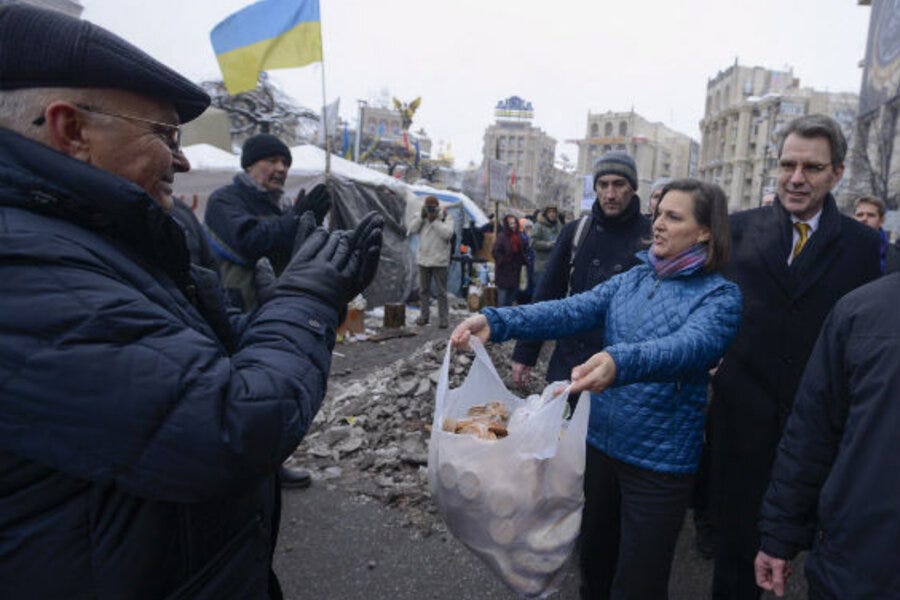
Victoria Nuland, then a State Department official, noted in December 2013 that the US had “invested over $5 billion” in Ukraine since 1991 for “democratic development.” This figure covers 22 years of total assistance across multiple agencies, not specifically the protests. But it reflects sustained American engagement in Ukrainian civil society.
Whether this constitutes legitimate democracy promotion or illegitimate interference depends on your perspective. To Washington, it was supporting civil society and free elections. To Moscow, it was orchestrating coups against governments friendly to Russia.
Russia responded by restricting NGOs. A 2012 law required organizations receiving foreign funding to register as “foreign agents,” deliberately evoking Soviet-era terminology for spies. In 2015, NED was designated an “undesirable organization” and banned.
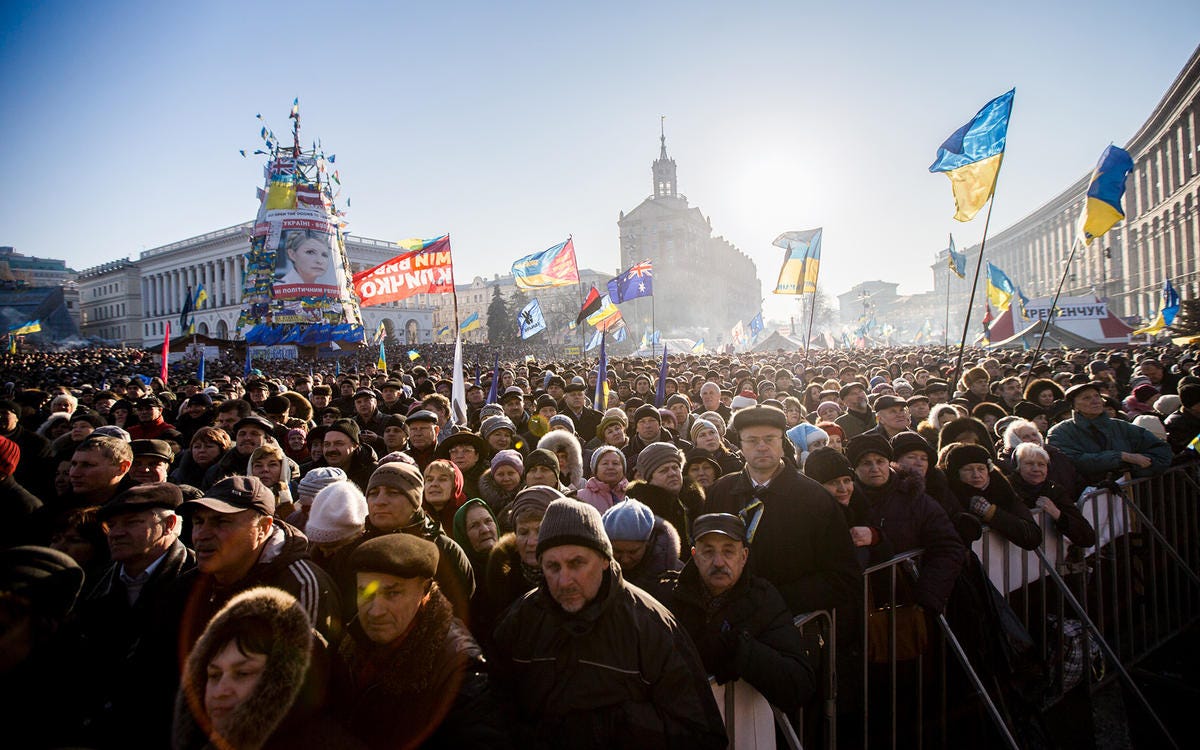
Viktor Yanukovych won Ukraine’s 2010 presidential election legitimately. International observers from the OSCE called it “an impressive display of democracy.” He was corrupt and increasingly authoritarian, but he was the elected president.
The crisis began on November 21, 2013, when Yanukovych suspended negotiations on an EU Association Agreement. His stated reasons included inadequate European financial support (Ukraine wanted €160 billion; the EU offered €610 million) and Russian pressure threatening trade sanctions. Four days earlier, Russia had offered a $15 billion bond purchase and a gas price reduction with no reform conditions attached.
Protests began that same evening after journalist Mustafa Nayyem posted on Facebook calling people to gather at Independence Square. Within days, tens of thousands were in the streets.
The critical escalation came on November 30, when Berkut special police attacked several hundred peaceful protesters, many of them students, at 4 AM. The violence was gratuitous. People were beaten even after falling to the ground. This brutality transformed a modest protest into a mass movement. By December 1, between 400,000 and 800,000 people flooded Kyiv.
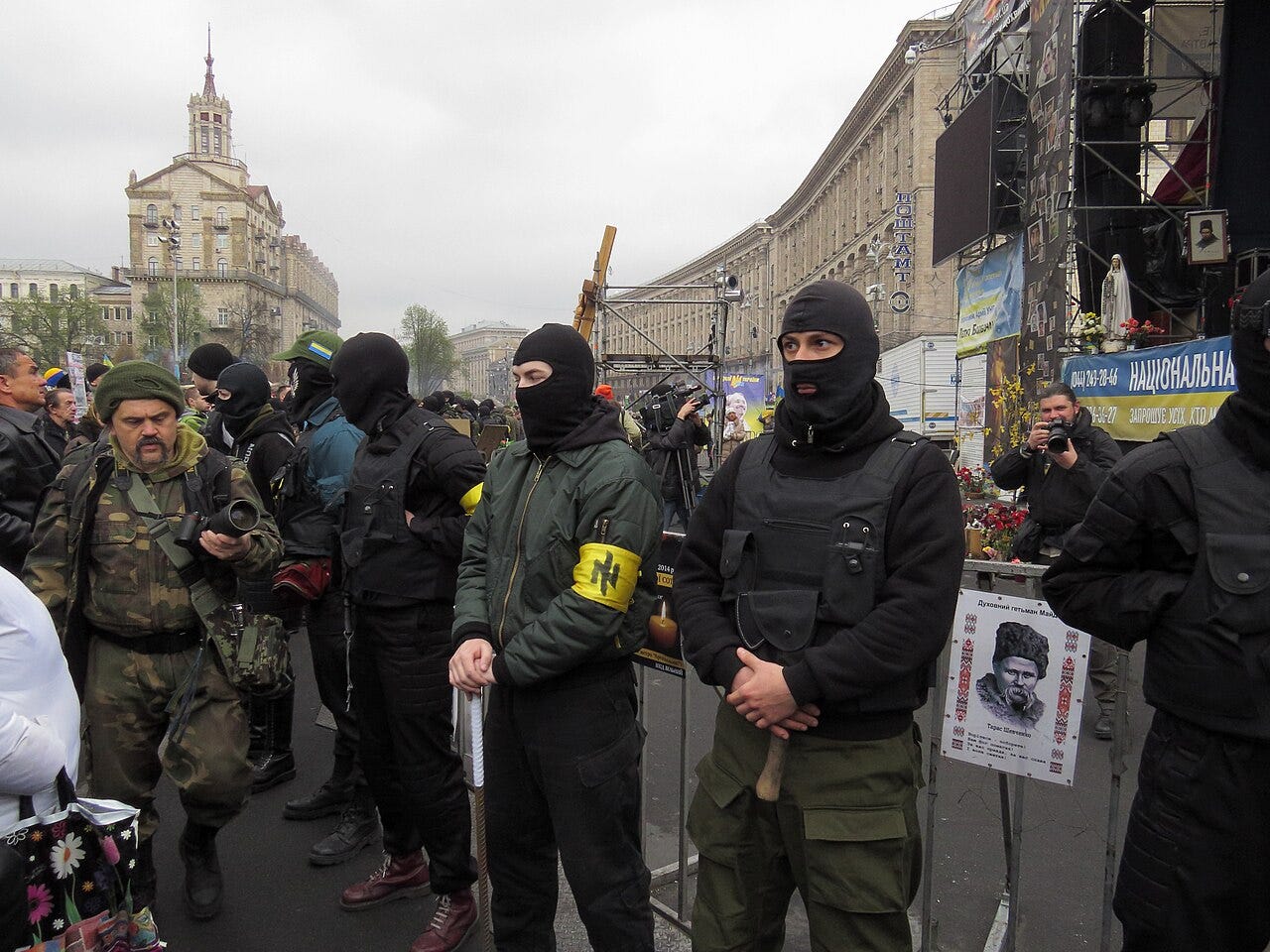
As protests continued through January and February 2014, far-right groups became increasingly prominent. Right Sector emerged as a paramilitary confederation including organizations with neo-fascist roots. Svoboda, the ultranationalist party that had won 10% in 2012 elections, controlled several occupied buildings.
The far-right played a disproportionate role in the violent confrontations with police, particularly during the January and February escalations. Research found them “most organized and effective” in fighting Berkut forces. They were not the majority of protesters, but they were a significant and visible minority.
After Yanukovych fled, three Svoboda members received cabinet positions including Deputy Prime Minister. This provided ammunition for Russian propaganda portraying the entire revolution as a “fascist coup,” which overstated their influence. But dismissing far-right involvement entirely, as some Western coverage did, was also inaccurate.
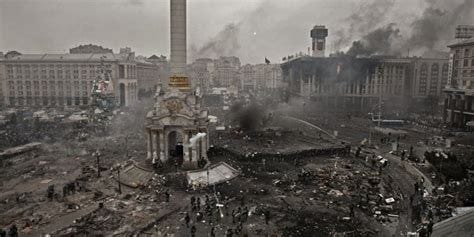
The bloodiest days came February 18-20. On February 20 alone, at least 48-53 protesters were killed, along with 2 police officers. Berkut used Kalashnikov assault rifles. Snipers fired from elevated positions. The total death toll from the revolution reached approximately 108 protesters and 13 police.
Who was doing the shooting remains contested. The official Ukrainian investigation charged Berkut members. But a leaked phone call between Estonian Foreign Minister Urmas Paet and EU foreign policy chief Catherine Ashton complicated the narrative. Paet reported that a doctor on the scene believed “the same snipers killing people from both sides.” Academic research by Ivan Katchanovski from the University of Ottawa examined evidence suggesting some shootings came from areas controlled by the opposition. This remains disputed. A 2023 Ukrainian court verdict reportedly confirmed at least 10 killed protesters were shot “not by Berkut or other law enforcement personnel” but from opposition-controlled locations.
On February 21, European foreign ministers brokered an agreement. Yanukovych would return to the 2004 constitution, hold early elections, and remove security forces. The opposition would disarm and vacate occupied buildings. Russian representative Vladimir Lukin refused to sign.
The agreement collapsed within 24 hours. Right Sector leader Dmytro Yarosh rejected it publicly. Protesters continued advancing. Yanukovych fled to Russia. On February 22, parliament voted 328-0 to remove him, citing “self-removal from duties.”
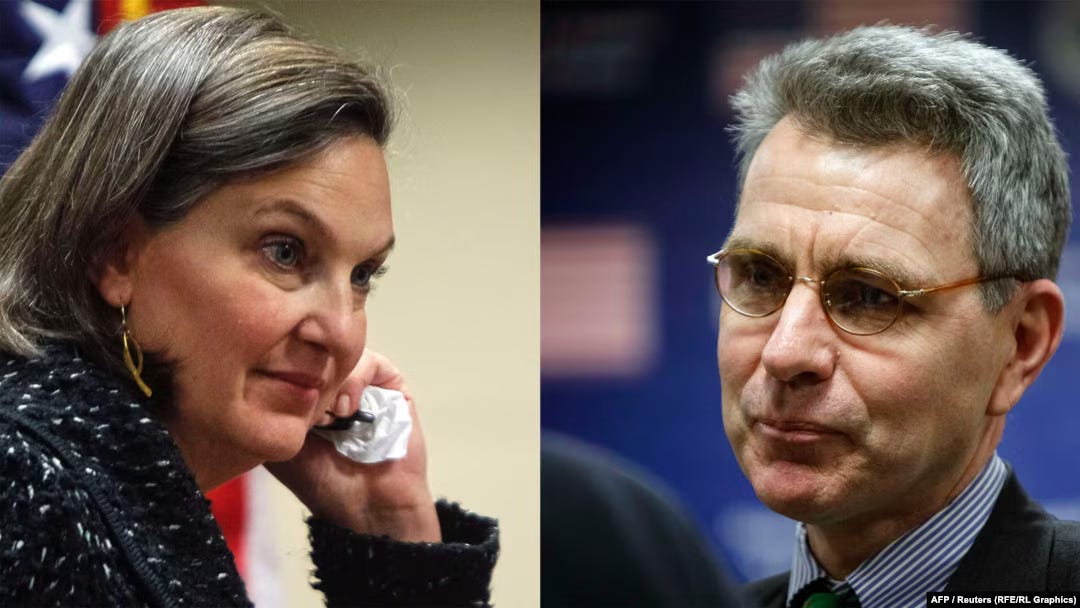
Before the revolution concluded, a leaked phone call between Victoria Nuland and US Ambassador Geoffrey Pyatt provided a window into American thinking. Discussing which opposition figures should enter the post-Yanukovych government, Nuland said: “I think Yats is the guy who’s got the economic experience, the governing experience.”
“Yats” was Arseniy Yatsenyuk, who indeed became Prime Minister after Yanukovych fell. When Nuland expressed frustration with EU approaches, she said “Fuck the EU.” The State Department did not deny the call’s authenticity.
Did this prove the US orchestrated the coup? Critics argued it showed American officials selecting Ukraine’s next government before Yanukovych even left. Defenders noted that Nuland’s preferences were not fully realized; Vitali Klitschko, whom she wanted kept out of government, eventually became Kyiv mayor.
The debate over whether Maidan was a legitimate revolution or a Western-backed coup has never been resolved. A December 2016 Ukrainian poll found 56% regarded events as “popular revolution” and 34% saw “illegal armed coup.” Both assessments contain truth. Mass popular participation was genuine. So was Western involvement. The constitutional procedure for removing Yanukovych was not followed. But he had also fled the country after ordering live fire on protesters.
Both things are true.
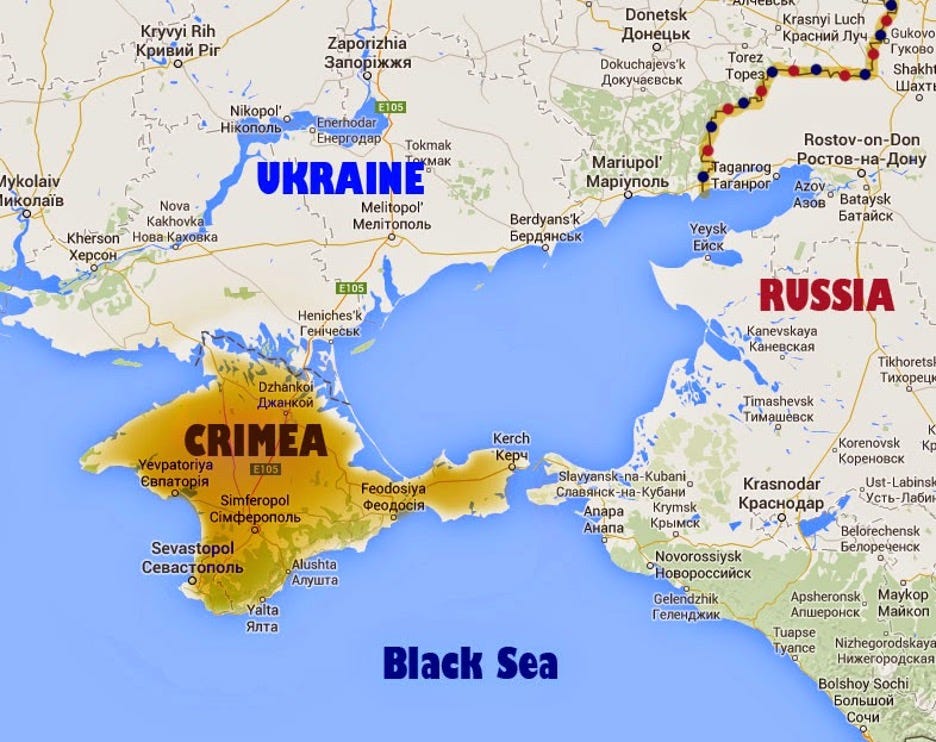
Russia moved immediately after Yanukovych’s fall. On February 27, 2014, heavily armed soldiers without insignia, the “little green men,” seized the Crimean parliament building in Simferopol.
Initially Putin claimed they were “local self-defense units” who bought uniforms at military shops. By March 2015, he acknowledged ordering the operation. The forces were Russian Spetsnaz, naval infantry from the Black Sea Fleet, and airborne troops. By mid-March, approximately 20,000 Russian military personnel were operating in Crimea.
Crimea held a referendum on March 16. Official results claimed 96.77% support for joining Russia with 83% turnout. But Putin’s own advisory body, the Presidential Council on Civil Society and Human Rights, later reported that turnout was actually only 30-50% and support for joining Russia was 50-60%. Independent analysis of Sevastopol showed 474,137 voters claimed when the total population, including children, was only 385,462.
The referendum was held under military occupation, called only 10 days before the vote, with no option to remain part of Ukraine under the existing constitution. OSCE monitors were denied access. The UN General Assembly declared it invalid by a vote of 100-11.
What’s undeniable is that Crimea was majority ethnic Russian (58.3% in the 2001 census), had voted for independence from Ukraine in a 1991 referendum that Kyiv ignored, and consistently elected pro-Russian politicians. When Ukraine’s government was overthrown and the new parliament immediately moved to downgrade Russian language status, Crimeans panicked.
The annexation violated international law and Ukrainian sovereignty. The Budapest Memorandum became a dead letter.
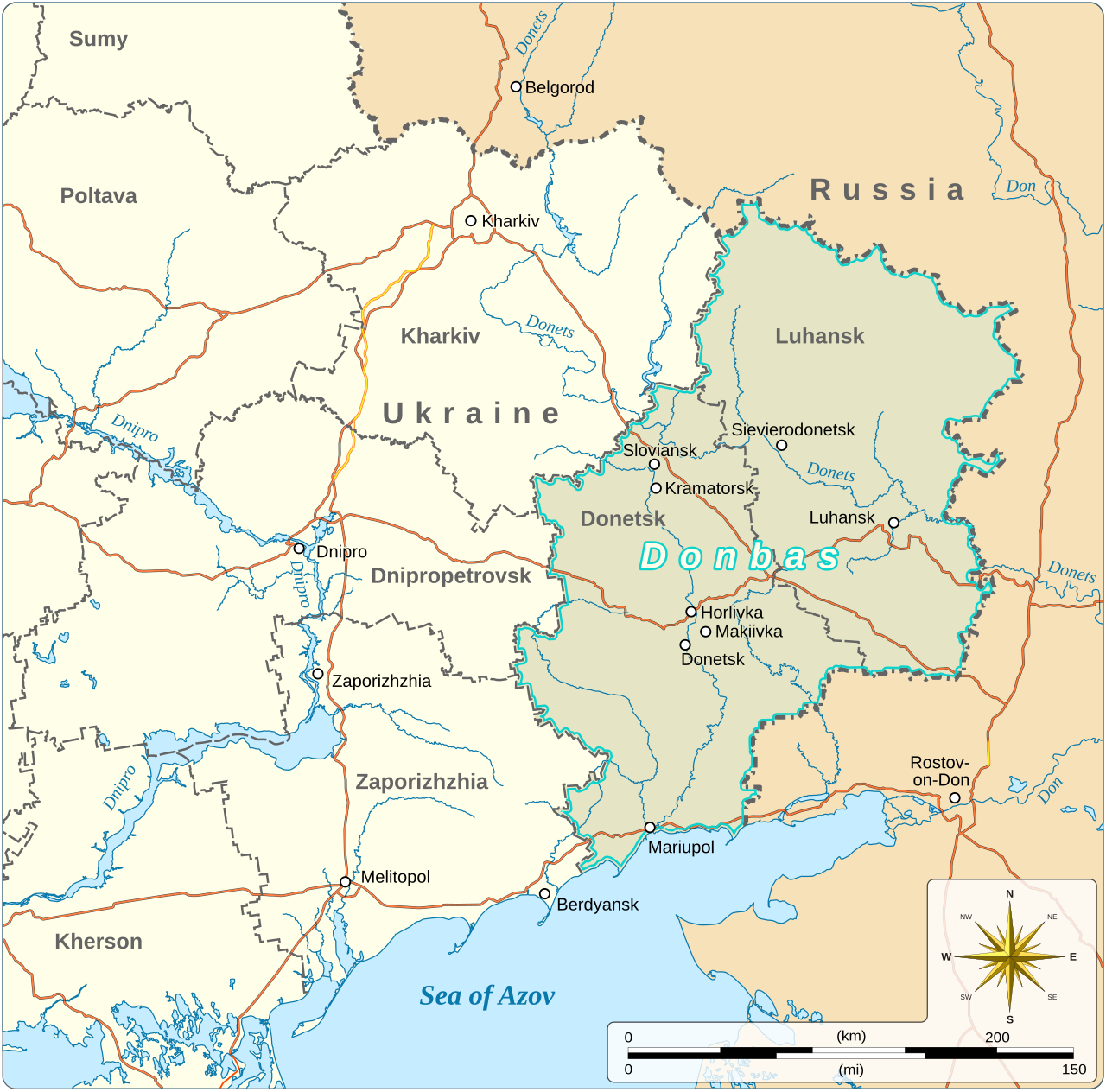
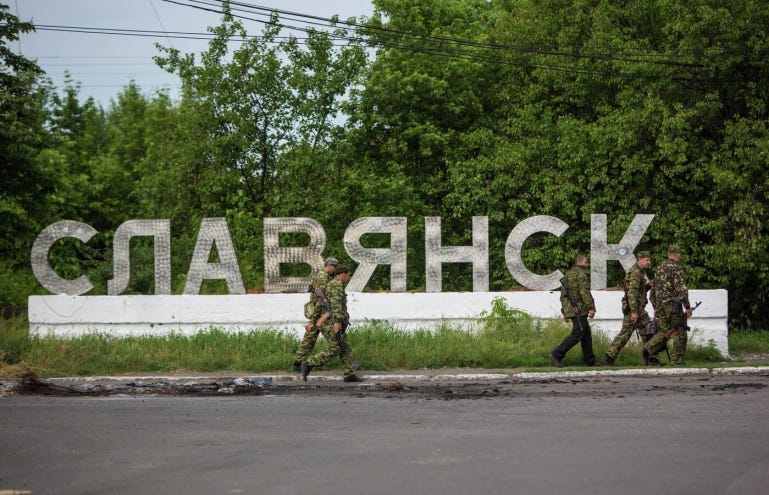
While the world focused on Crimea, the war in eastern Ukraine was ignited by a specific individual. On April 12, 2014, Igor Girkin, a former FSB officer using the alias “Strelkov,” led 50 armed Russian militants across the border and seized the town of Sloviansk.
Girkin later admitted explicitly: “I was the one who pulled the trigger of this war. If our unit hadn’t crossed the border, everything would have fizzled out.” This was not grassroots separatism. It was a Russian intelligence operation that created facts on the ground.
But Girkin didn’t create the Donbas uprising out of nothing. Eastern Ukraine, Donetsk and Luhansk oblasts, had never been nationalist heartland. These were heavily industrialized, Russian-speaking regions that had consistently voted for Yanukovych and pro-Russian politicians. When Maidan toppled their elected president and the new government immediately threatened Russian language rights, many saw it as a coup by Western Ukrainian nationalists.
Regular people took up arms. Miners, factory workers, veterans, local cops who defected. They weren’t all Russian special forces, though Russian operatives like Girkin certainly provided leadership and training. Many were ordinary citizens who wanted autonomy from what they saw as an illegitimate government in Kyiv.
Separatists seized government buildings in Donetsk, Luhansk, Kramatorsk, and other cities. Ukraine launched what it called an “Anti-Terrorist Operation.” The conflict escalated through the summer of 2014 with increasingly direct Russian military involvement.
The Battle of Ilovaisk in late August 2014 proved decisive. Ukrainian forces had entered the strategic railway junction and were on the verge of cutting separatist supply lines. Then, according to multiple sources, eight Russian battalion tactical groups crossed the border and encircled the Ukrainian position.
When Ukrainian forces attempted to withdraw through a supposed “humanitarian corridor” on August 29, Russian forces opened fire. Estimates suggest 366-1,000 Ukrainian soldiers were killed. Captured Russian soldiers and equipment from the 331st Airborne Regiment and other units proved direct Russian military intervention beyond any reasonable doubt.
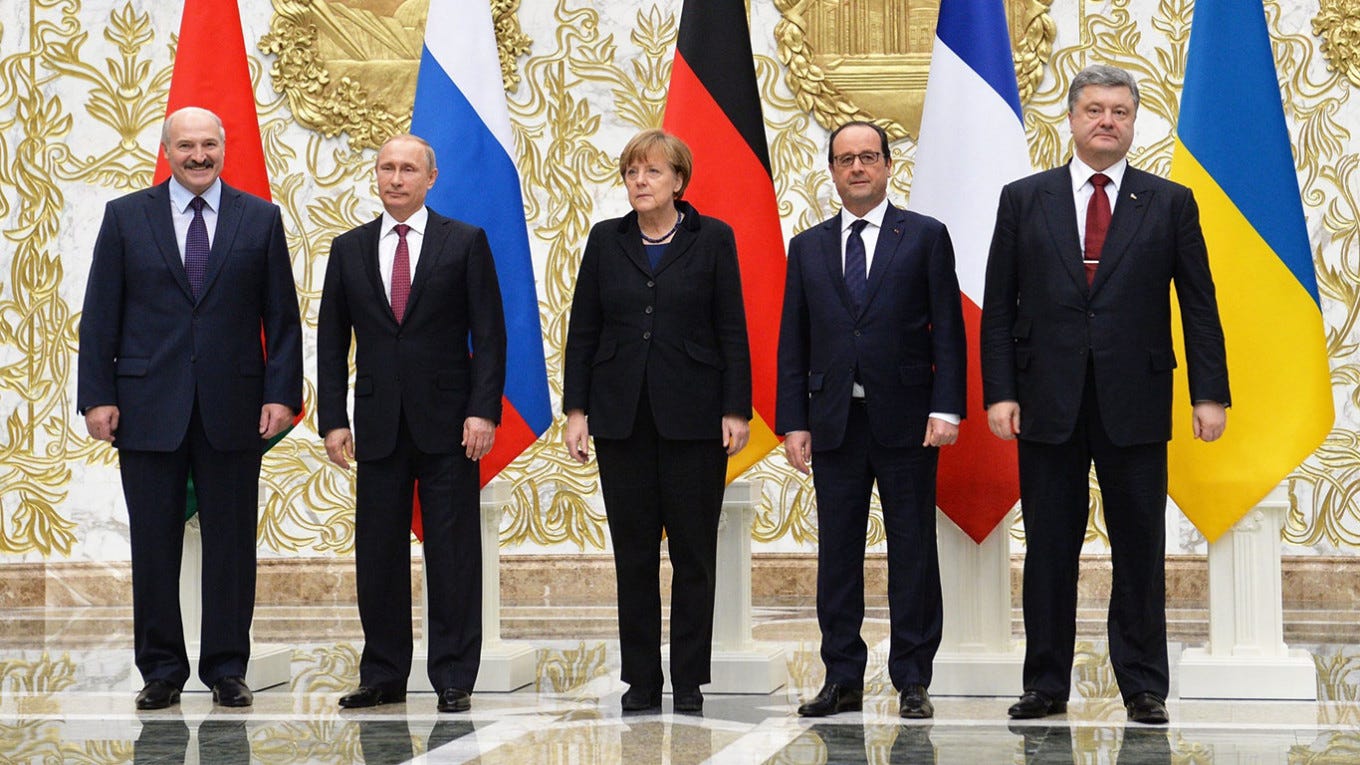
After the Minsk II agreement in February 2015, the front line largely stabilized. But the war never stopped. The OSCE Special Monitoring Mission documented continuous violations: 36,686 explosions, 26,605 projectiles in flight, and over 54,000 bursts and shots in 2021 alone.
Between April 2014 and December 2021, the UN documented 14,200-14,400 deaths: approximately 3,400 civilians, 4,400 Ukrainian forces, and 6,500 separatist fighters. The vast majority of casualties occurred in 2014-2015, but people continued dying every year. Close to 90% of civilian deaths resulted from indiscriminate shelling.
The Minsk agreements were supposed to resolve the conflict through a combination of ceasefire, autonomy for Donbas, and eventual Ukrainian control of the border. They failed because each side interpreted the sequencing differently. Ukraine insisted on security and border control before elections in separatist areas. Russia insisted on elections and constitutional changes before border control. Neither would move first.
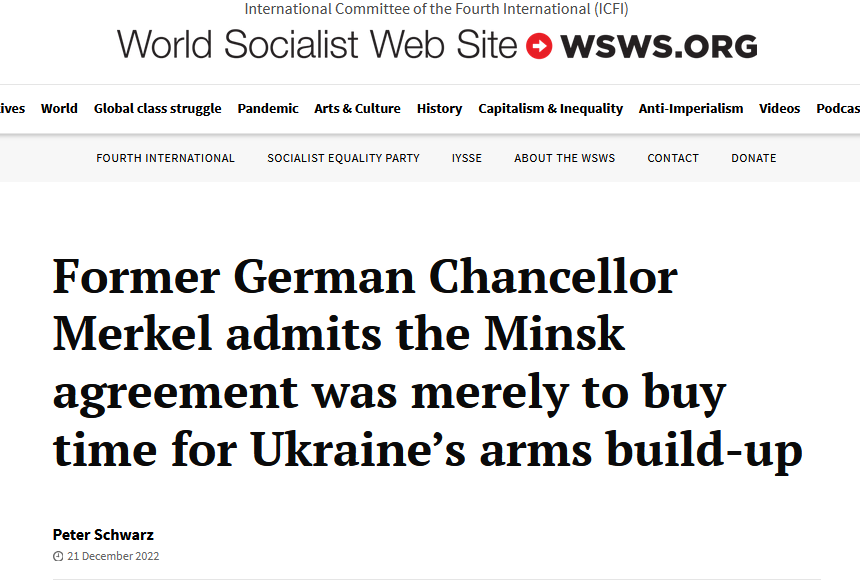
In December 2022, former German Chancellor Angela Merkel told Die Zeit: “The 2014 Minsk agreement was an attempt to give Ukraine time... It also used this time to become stronger, as you can see today.”
Former French President François Hollande confirmed: “Since 2014, Ukraine has strengthened its military posture... It is the merit of the Minsk Agreements to have given the Ukrainian Army this opportunity.”
Petro Poroshenko was even more direct: “Our goal was to stop the threat, or at least to delay the war, to secure eight years to restore economic growth and create powerful armed forces.”
For Russia, these admissions confirmed years of suspicion that the West had negotiated in bad faith. Putin responded: “Perhaps we should have started all this sooner, but we still simply hoped to come to terms under these Minsk peace agreements... We did everything right by starting the special military operation.”
Whether Merkel and Hollande were stating obvious realities about a frozen conflict or admitting to deliberate deception depends on interpretation. But the statements fundamentally undercut any future Russian trust in Western diplomatic commitments.
The Minsk agreements weren’t a genuine peace process. They were a way to arm and train Ukrainian forces while maintaining a frozen conflict.
During the eight years of frozen conflict, Western countries trained and equipped Ukrainian forces extensively. UK Operation Orbital trained 22,000 Ukrainian military personnel between 2015 and 2022. Canadian Operation UNIFIER trained over 33,000. The US Joint Multinational Training Group trained additional thousands at the Yavoriv training center in western Ukraine.
The Trump administration provided the first lethal weapons, approving sales of 210 Javelin anti-tank missiles in 2018 with restrictions that they be stored away from the conflict zone. The Obama administration had refused lethal aid, fearing escalation.
Annual Sea Breeze exercises in the Black Sea grew increasingly large. The 2021 edition involved 32 countries, 5,000 troops, 32 ships, and 40 aircraft. Russia warned it would “respond adequately.”
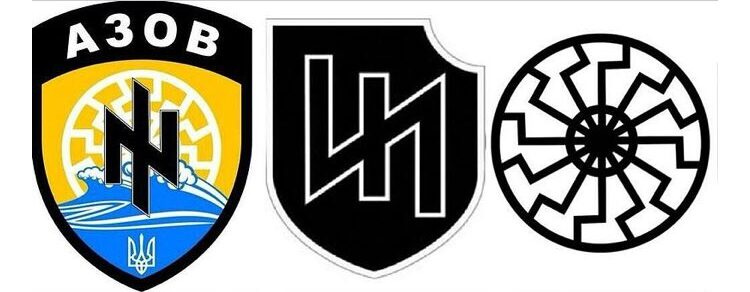
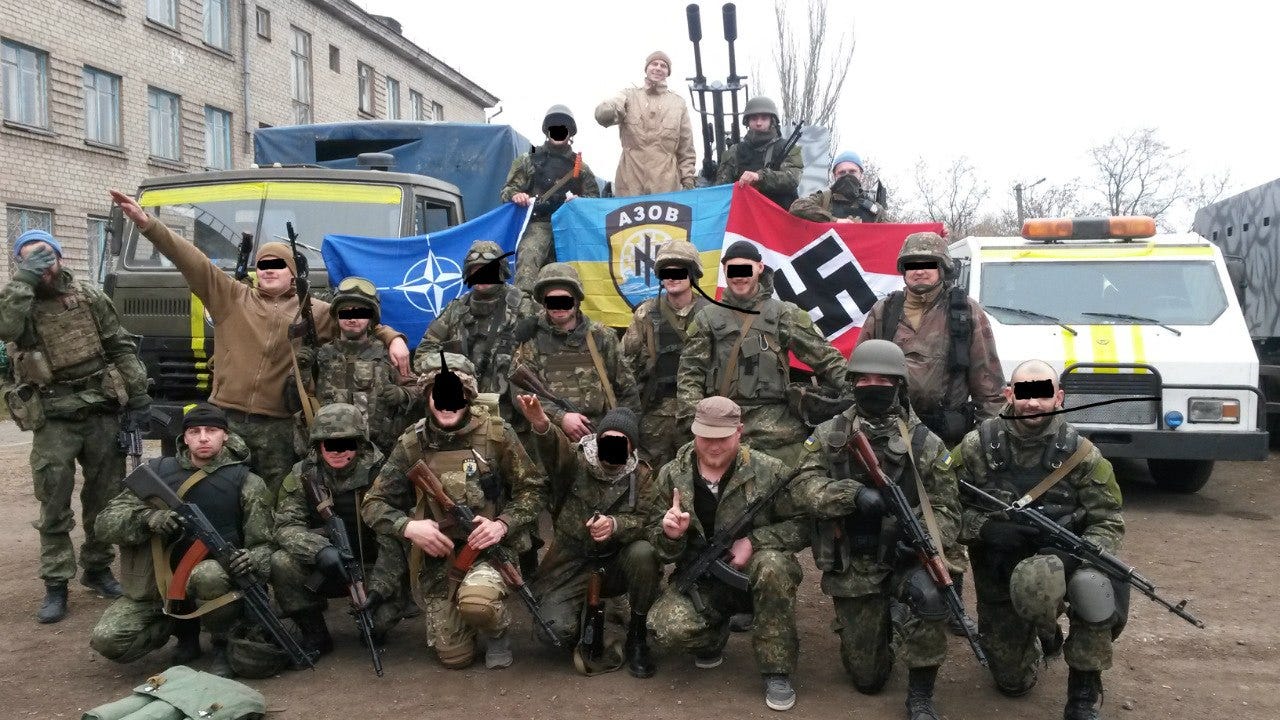
One persistent controversy involved the Azov Battalion, formed in May 2014 by Andriy Biletsky, who had previously led neo-Nazi organizations. The unit’s symbols included the Wolfsangel and Black Sun, both associated with Nazi SS units. Biletsky had written in 2010 about Ukraine leading “the white races of the world in a final crusade.”
The battalion was integrated into Ukraine’s National Guard in November 2014. Congress banned US military assistance to Azov from 2015-2018. That ban was lifted in June 2024 after a State Department review.
Defenders argue Azov has been “depoliticized” since integration, with recruits joining for military reputation rather than ideology. Critics note original leadership remained connected and Nazi symbols persisted. A 2015 spokesman admitted 10-20% of recruits were Nazis. The truth is probably that both characterizations contain elements of accuracy.
While Donbas residents died, the West armed Ukraine and Russia watched NATO creep closer to the border. And all the while, everyone knew Minsk was a lie.
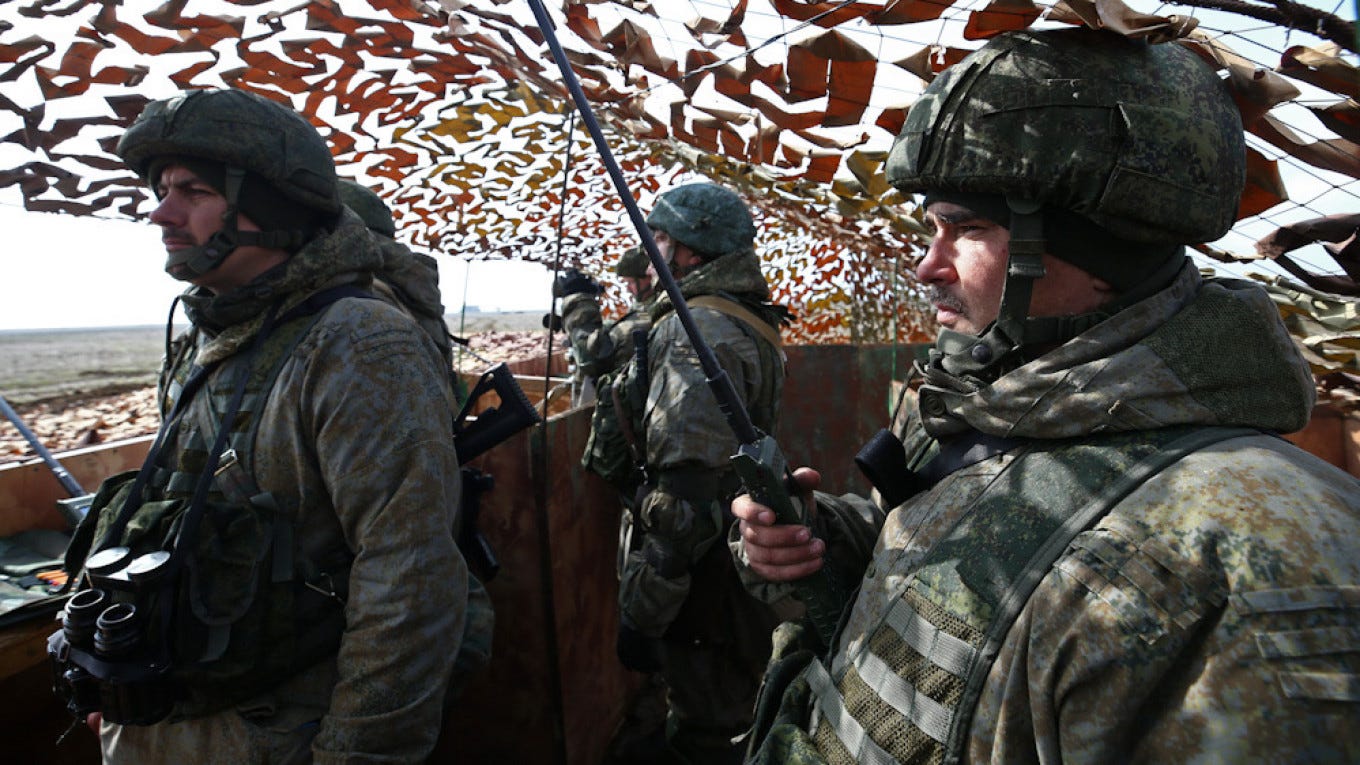
By late 2021, Russia had massed approximately 100,000 troops on Ukraine’s borders. On December 17, Moscow published draft treaties demanding:
No NATO expansion to Ukraine and other ex-Soviet states
No weapons deployments near Russian borders
Return of NATO forces to 1997 positions, before Eastern European expansion
Legally binding guarantees
The US and NATO rejected the core demands in January 2022, arguing Russia had no veto over alliance membership decisions. They offered to discuss intermediate-range missiles and military exercise protocols. Russia characterized the response as “not constructive.”
Russia had been saying this for 15 years. At Munich in 2007. At Bucharest in 2008. In the cables William Burns sent warning about redlines.
Everyone knew what would trigger a Russian response. The West chose to ignore it.
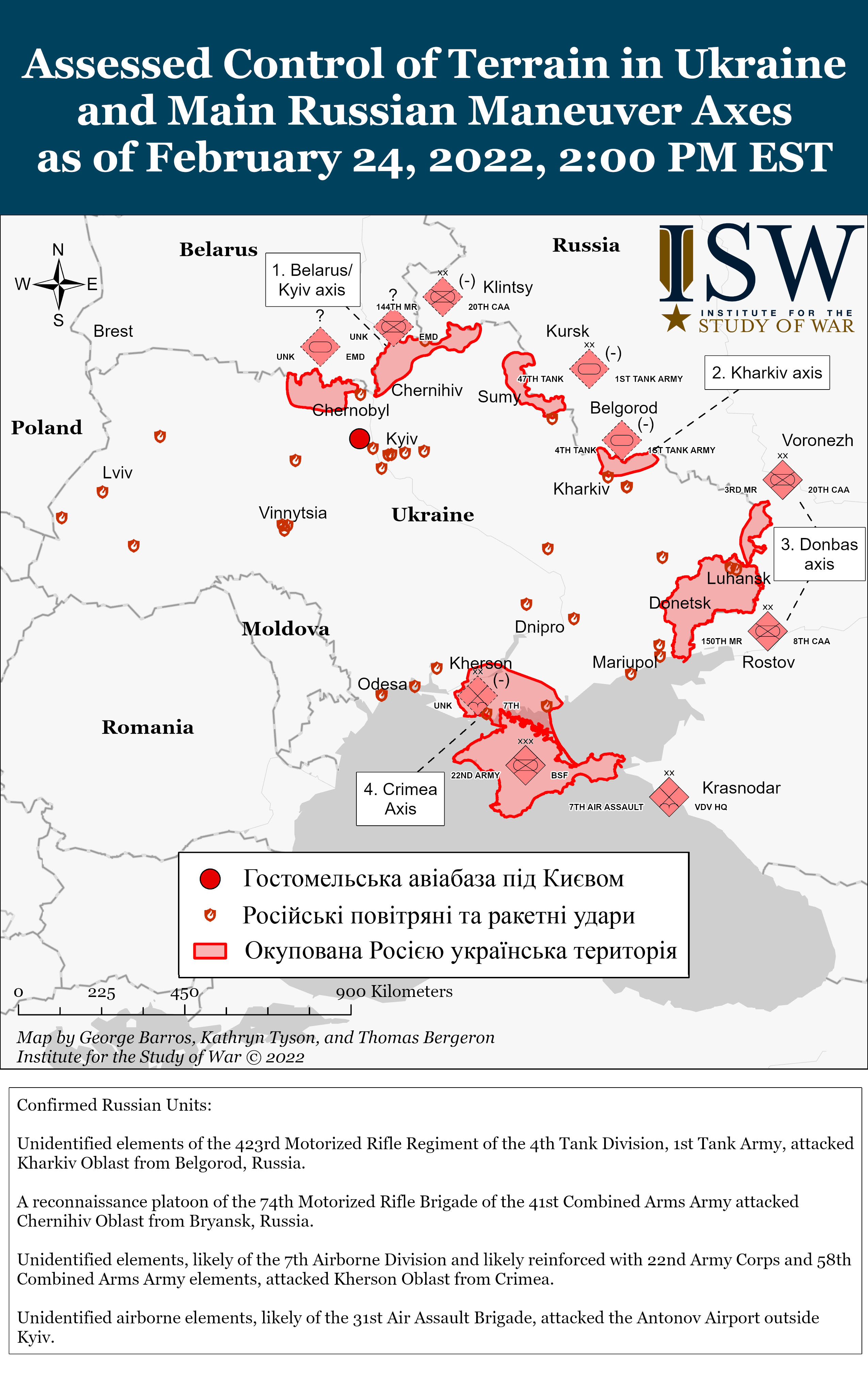
On February 24, 2022, Russian forces crossed into Ukraine from multiple directions. The justifications Putin gave, denazification, protecting Russian-speakers, preventing NATO membership, were immediately labeled as propaganda by Western media.
Russian forces pushed immediately towards Kyiv from the north, apparently expecting the government to collapse quickly. But they didn’t level the city. They didn’t carpet bomb civilian areas like the US did in Iraq or like Russia later would in Mariupol.
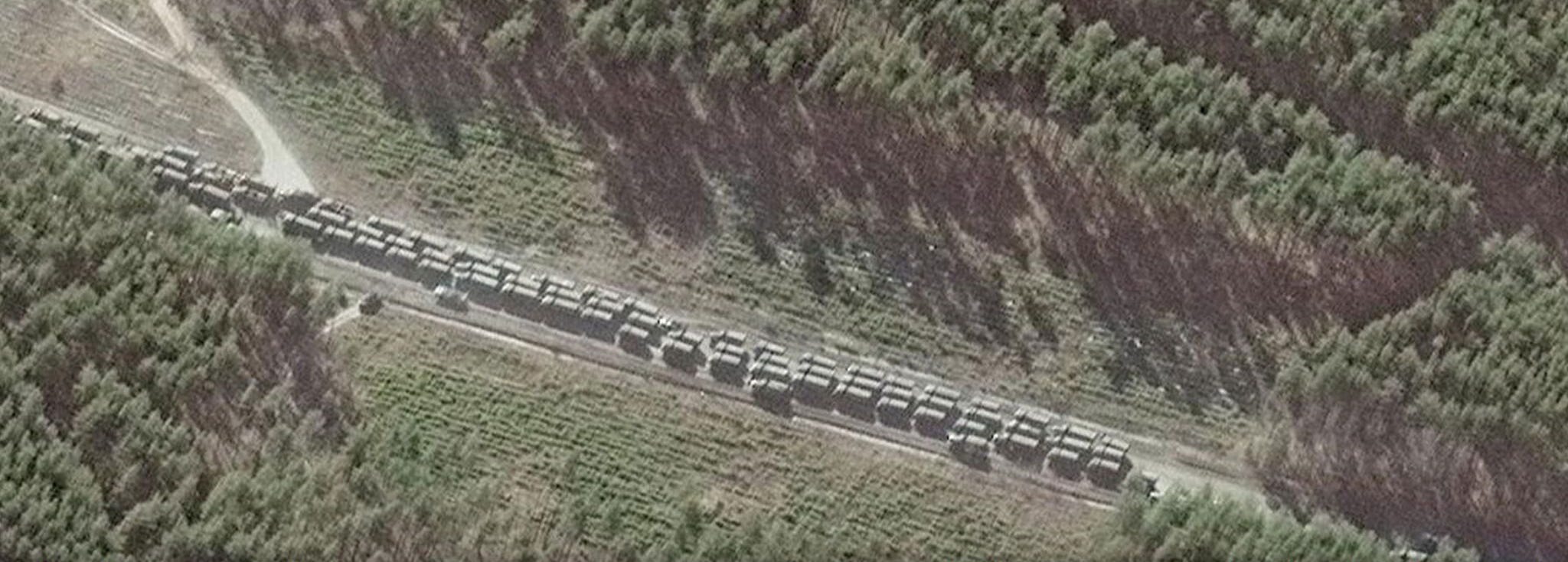
The column approaching Kyiv stretched for miles, poorly supplied, vulnerable to ambush. It was the deployment of a military expecting minimal resistance, not a force prepared for sustained combat.
Many observers noted the Russian forces appeared to be waiting. Waiting for negotiations. Waiting for a political settlement. Waiting for the fall of Zelensky’s government.
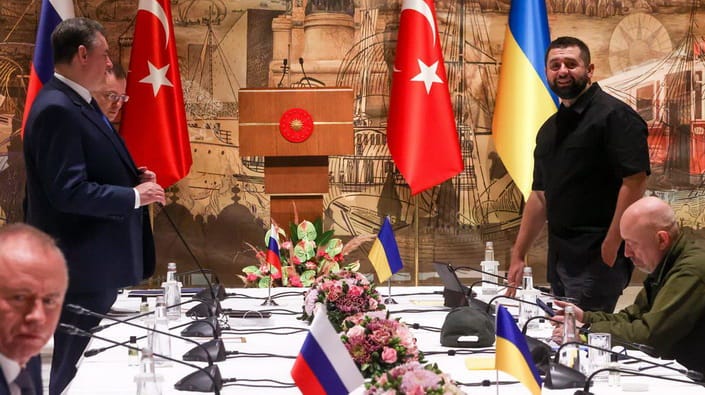
By late March 2022, peace talks were underway in Istanbul. According to multiple participants, significant progress was made. Ukraine would adopt permanent neutrality, no NATO membership. Ukraine could join the EU. No foreign military bases or weapons on Ukrainian soil. Russia would withdraw to February 23 positions. Security guarantees from multiple countries including the US, UK, France, and China.
Fiona Hill and Angela Stent wrote that “Russian and Ukrainian negotiators appeared to have tentatively agreed on the outlines of a negotiated interim settlement.”
Then, on April 9, 2022, UK Prime Minister Boris Johnson arrived in Kyiv with a message, according to Ukrainian sources: “Don’t sign anything with Putin. We’ll keep fighting and provide weapons.”
Three days later, Putin declared the negotiations had reached a “dead end.”
Ukrainian negotiator Davyd Arakhamia confirmed in November 2023 that neutrality was Russia’s key demand and that Western countries advised against signing. Israeli PM Naftali Bennett said Western powers “blocked” the deal.
After the Istanbul talks collapsed, Russia pulled back forces from northern Ukraine, including the Kyiv region, in what Putin framed as a gesture of good faith to facilitate negotiations. Western media called it a military defeat. Maybe it was both. But the timing, immediately after talks failed, suggests Russia genuinely believed a negotiated settlement was possible and withdrew to demonstrate willingness to compromise.
Instead, the West promised unlimited weapons and Ukraine prepared for a long war. The window for peace closed.
Hundreds of thousands of people have died since that window closed.
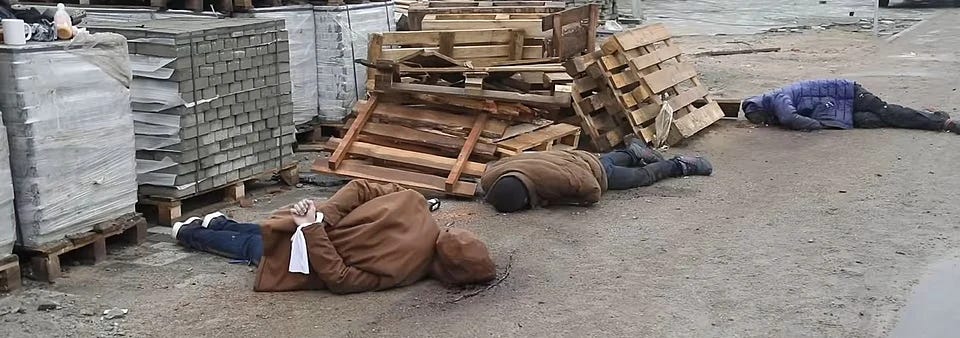
After Russian forces withdrew from the Kyiv region, Ukrainian forces entered Bucha on April 1, 2022. Photos and videos emerged showing bodies of civilians lying in the streets.
The Western narrative solidified immediately: Russian war crimes. Massacre. Genocide. These images made any peace negotiations politically impossible. How could Ukraine negotiate with genocidal war criminals?
Though the timeline of events points more to a falseflag by Ukranian forces.
What’s certain is that Bucha ended any chance of reviving the negotiations. Whether that was the intended result or a tragic coincidence, the effect was the same: total war became inevitable.
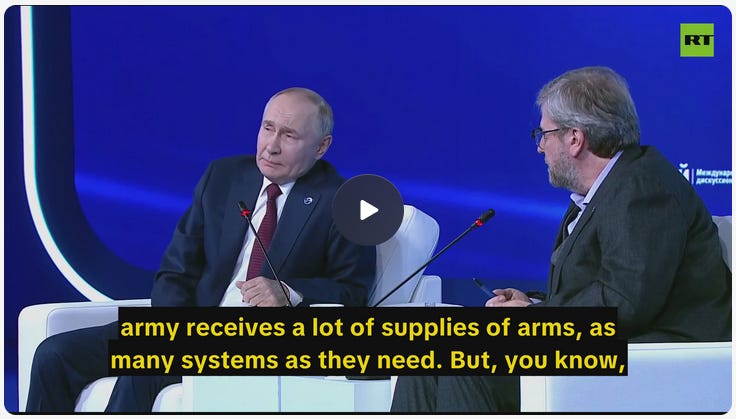
Official casualty figures are propaganda from both sides. Ukraine claims minimal losses. Russia claims hundreds of thousands of Ukrainian casualties.
In October 2025, Putin revealed some rare insights: Ukraine suffered 44,700 total casualties in September alone - roughly 350 killed daily. Russia likely loses 125-200 killed per day. Over 43 months of war, that means hundreds of thousands dead. Hundreds of thousands maimed. 160,000 Ukrainian desertions since January 2025 alone.
Over 6 million Ukrainians have become refugees, fleeing to Europe. Millions more are internally displaced. Ukraine’s infrastructure is shattered. Russia faces increasing casualties and economic isolation.
This is what the refusal to negotiate achieved. This is what broken promises and geopolitical gambling cost.

So who started it?
If you’re looking for a simple answer, Russia invaded and therefore started it, you have your narrative. It’s legally clean, morally straightforward, and requires no uncomfortable questions about Western policy.
However, the actual story is hundreds of years of mutual grievance, decades of broken promises, and a West that believed its own propaganda about the end of history.
Every warning was ignored. Every redline was crossed. Every diplomatic off-ramp was blocked.
And now hundreds of thousands are dead.
You can call this Russian propaganda if it makes you feel better. You can dismiss every documented fact, every leaked cable, every admission from Western officials as Kremlin talking points.
Or you could ask yourself why George Kennan, William Burns, and Angela Merkel all warned this would happen. Why the architect of containment strategy called NATO expansion “the most fateful error of American policy.” Why the US Ambassador to Moscow predicted Russian intervention in Crimea six years before it occurred.
They weren’t Russian agents. They were people who understood that actions have consequences.
The question isn’t whether Russia is the aggressor. It is. The question is whether this war was inevitable or whether thirty years of different choices could have prevented it.
The war grinds on. The casualties mount. And the people who made those choices are all safely retired, writing memoirs, collecting speaking fees.
While Ukrainian and Russian mothers bury their sons.
Great overview!
Note that the region now called "Ukraine" was part of the "pale of settlement" during the Tsarist period, and Odessa became the "gateway to Zion" during the Rothschild-sponsored colonization of Palestine. See the writings of Alexander Solzhenitsyn for a recap of that history, essential to today's conflicts.
For more on the looting of Russia in the 1990s with the "advice" of Jeffrey Sachs and fellow CFR member Larry Summers see "The Harvard Boys Do Russia" (1998): thenation.com/article/world/harvard-boys-do-russia/
Thank you for the essay.
I had the opportunity to study the Russian language when I was in boarding school (similar to high school in the US) back in the 1980s and picked it up again after my retirement in 2021. The last time I was in Moscow was last summer. With this background, I have a few comments to make.
My understanding is the word "ukraine" in the Russian language means borderlands. There was never a collective nation state known as "Ukraine" as we now know it. The present Ukrainian nation was created by Lenin after the revolution as a soviet republic and the Donbass and lands east of the Dnieper were added to it to make it viable as a republic. The lands west of the Dnieper especially those in the western most regions used to be parts of the Austro-Hungarian Empire and were of a different language and culture and that is where Bandera and his ilk originated who collaborated with the Nazis and the CIA after WWII. After WWII, many of the Galician Legion were settled in Canada by the Brits.
You rightly pointed out Crimea was added by Khruschev to Ukraine who was from Ukraine and where his power base was.
The fear of invasion from the west is not only limited to WWI and WWII. They include:-
The Great Northen war when Sweden invaded that lasted for decades.
The invasion by the Polish-Lithuanian Commonwealth that led to the time which Russians called "The Troubles" leading to the end of Rurik Dynasty and the beginning of the Romanovs.
The Napoleon invasion containing a coalition of many European sovereign entities.
The Crimean war when Sevastopol was taken, embodied in Tolstoy's work, "The Sevastopol Sketches" which I read in my teens.
The western intervention in the Russian civil war between the Reds and the Whites by the French, Brits and Czechs which I recall from my memory but there may be others.
I am not too sure about the Holodomor in the context you have stated and the consequences thereof bearing in mind the source you cited is from Encyclopedia Brittanica which is not a credible source on matters with a political bent. I have read works that present a more balanced view but I need to dig up and revisit those sources before I can say anything.
Ukraine had no nuclear weapons to give up. Although, nuclear weapons were placed in several Soviet Republics, de facto control, de jurre control and operational control was with Moscow. An analogy is the placing of missiles in Cuba in response to missiles placed in Turkey by USA. Just because nuclear weapons are placed in a territory it does not mean the said territory has legal possession of them.
Since 2000s, Ukraine was already a de facto proxy of NATO. Many offensive NATO exercises were carried out in Ukraine. I remember late 2021 and early 2022 very clearly. USA wanted to place missiles in Ukraine and there was a phone call between Putin and Biden when Biden promised not to do so. Soon thereafter, Blinken walked it back and said they can discuss the number that will be placed. Russia wanted talks for a security architecture under the principle of "indivisibility of security" under the Helsinki Accords and Biden won't even discuss it and told the Russians to take a hike. Soon thereafter, Russia moved troops to the Ukraine border including the 1st Guards Tank Army and that was when I knew this was serious.
Although, I have many other comments, I think I have gone on long enough. The only serious divergence I have is Ukraine had to give up its nuclear weapons in exchange for the Budapest Memorandum. The idea that Ukraine had any nuclear weapons to give up is pure fiction and propaganda.